One of the most important things I learned early on in grad school was to simply keep my notes. All of them. Because, at some point, I’m going to remember a keyword that could lead me to an important quote … if I can find it.
 Finding it is usually the problem. Past Rebecca was good about making notes, but she also tended to write them longhand. Take a look here – these are my notes from my independent study course on Jack the Ripper’s victims from way back in 2011. The box is full. That’s a lot of information. And at least it’s divided by subject, with sources up front, and at least Past Rebecca had neat handwriting, but … that’s not the easiest thing to search. It’s a nice physical representation of the research that went into that paper, which turned into my first conference presentation and then my first book. Still, it’s not very user-friendly.
At the time I wasn’t thinking about future projects or what all it might become. I was focused on getting through the semester, so it was all fresh in my head. I hadn’t yet made the shift to thinking long-term. What if I want to come back to it? What if I have a vague memory of a certain phrase from a certain book? At least all the cards are labeled by source, but …
Digital. Digital is your friend. Digital is how you make sure Future You doesn’t curse your name.
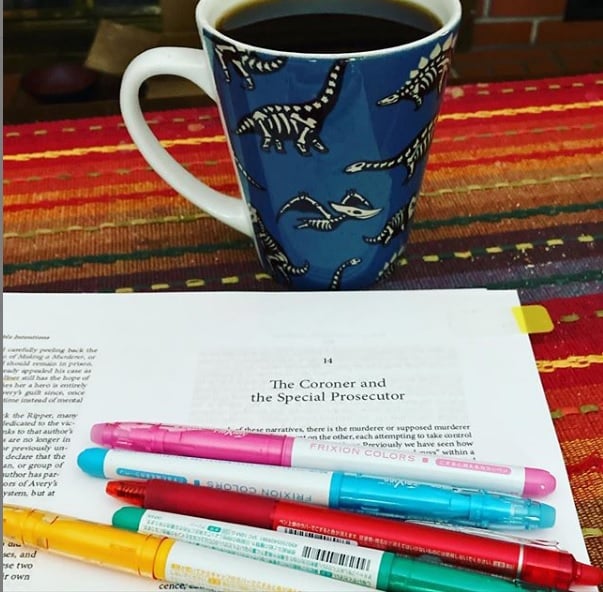
 Oh, I still print things off. Here’s my notebook that I worked from while writing Ripper’s Victims. You can see some of my quirks – teeny font, two columns, printed sideways and then stuck in sheet protectors so I can scribble over it with markers. I find it’s easier to have the pages sitting by my laptop when I’m working on that specific section, and if you know me, you know I love my colored pens.
But all of the files with notes from all of those books on my shelf – over 100 of them – are saved in a single folder on my computer, and there’s that lovely search function. Now when I just know someone called Mary Jane Kelly an “Amazon queen,” I can type the phrase in and pull it up, no sweat. (Cullen, Autumn of Terror, 1965, page 166: “It was among such flotsam that Mary Kelly drifted on Thursday night, 8 November, borne along by the tide, yet remaining aloof, as befits an Amazon Queen.” Boom.)
And they’re saved in multiple places, too. I’ve got the printed version as a sort of fail-safe, but it’s also on my computer and in the cloud and on a USB stick. Part of taking the time to make the notes is also making sure you won’t ever have to repeat the same task again.
Now, this doesn’t mean that I won’t ever go back to the books themselves. When I took these notes, I took them for a very specific project, with that project’s focus. Even trying to narrow things down like that, I’ve got a very full binder. But, if I want to look at a different angle of the same topic … I’ll probably have to go back to the books and compile more notes with the new research question in mind.
Digitally, of course. I have to look out for Future Rebecca’s research needs.

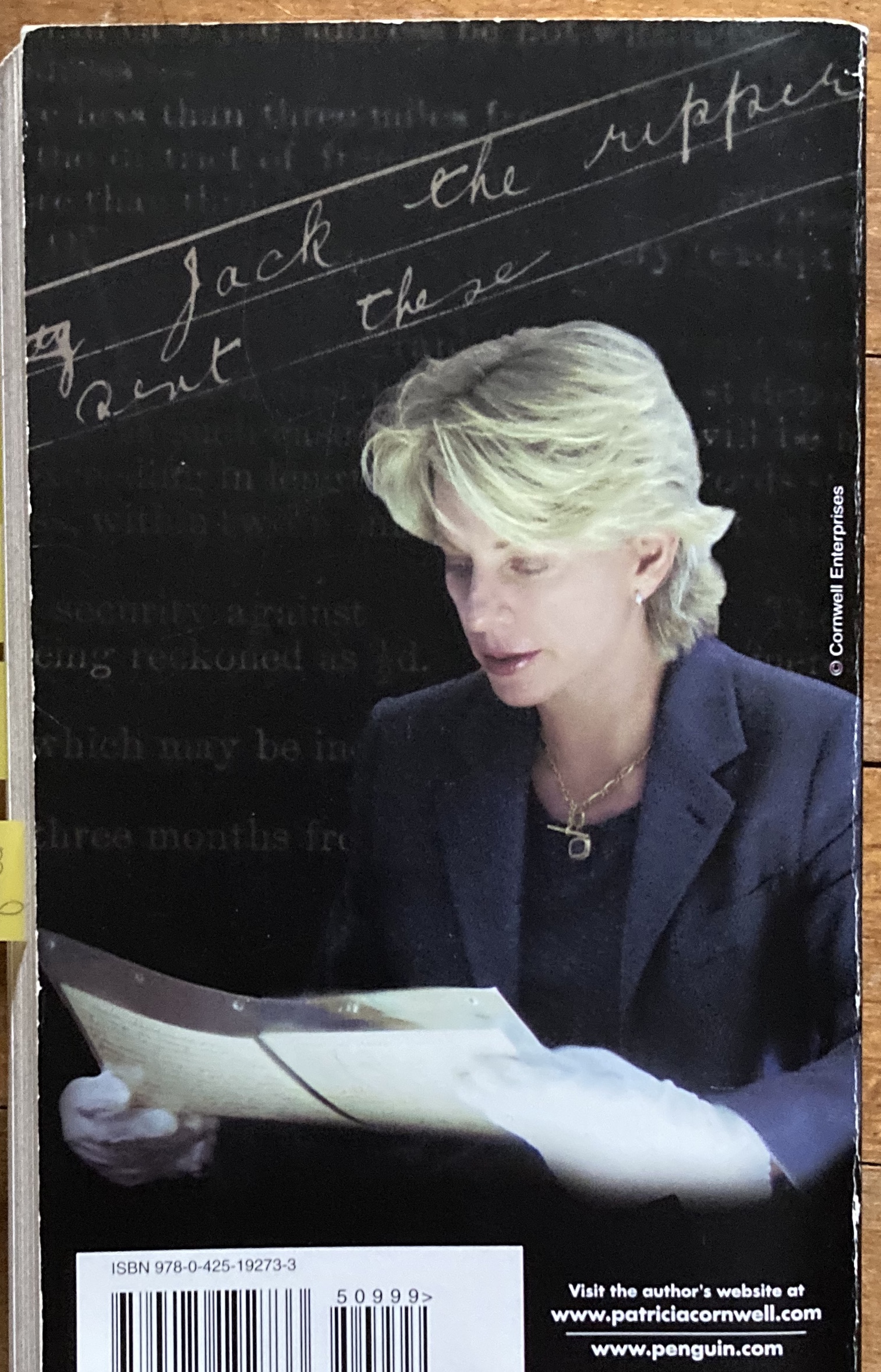 If you’ve only read one book about Jack the Ripper, chances are it’s Patricia Cornwell’s 2002 Portrait of a Killer: Jack the Ripper – Case Closed. Here she is on the back, examining a document carefully while wearing clean white gloves to apparently indicate she’s in an archive. Known for her fiction, especially her series about medical examiner Kay Scarpetta, Cornwell decided to use her personal wealth to investigate the Ripper crimes. Her research, which was updated first in a Kindle single and in a 2017 follow-up book, directed her toward accusing artist Walter Sickert as having been Jack the Ripper.
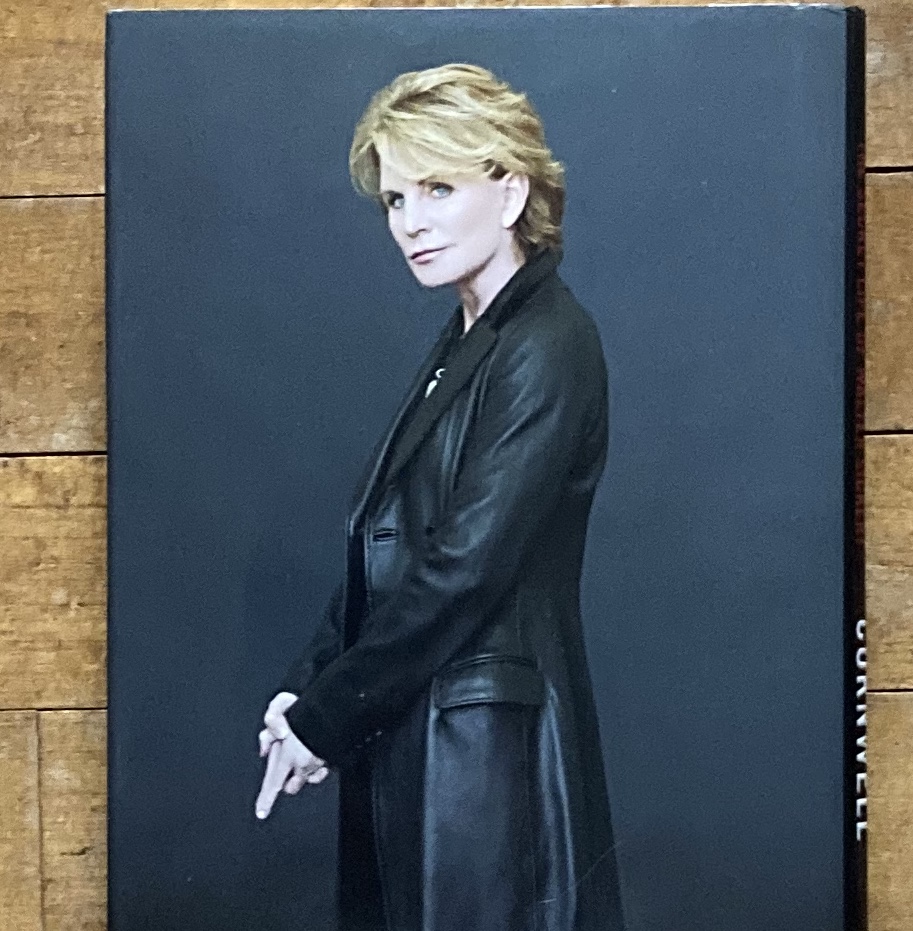 There are a couple issues here, in spite of how cool she might look on the back cover of the second book in her Matrix-style coat. First, her methods assume that the Ripper himself licked the stamps and the envelopes. This means both that the letter wasn’t handed over to an employee who sold the stamp and did the honors, and that the Ripper actually wrote the letters. And second, because of the age of the letters, only mitochondrial DNA could be tested. At best, mDNA showed that Sickert could not be excluded from the tens (or possibly hundreds) of thousands of possible people who could have licked the envelope. Cornwell’s experts told her she had narrowed the Ripper down to about 1% of the Victorian British population, and in her book she translates this as indicating that yes, it was Sickert.
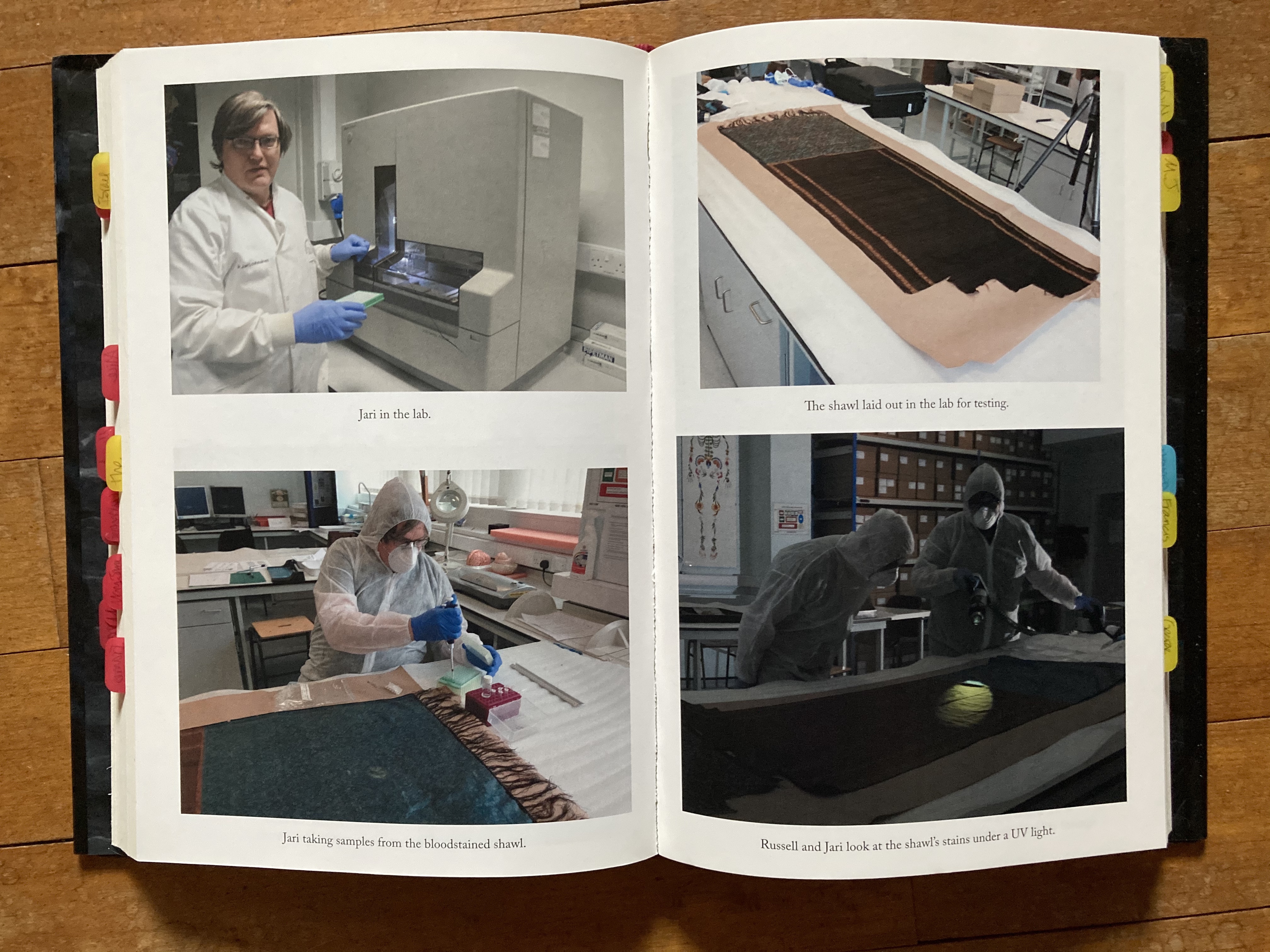 In 2007, Russel Edwards bought the shawl at auction, believing the story of its provenance when other Ripper scholars present scoffed at the idea. Like Cornwell, he had DNA tests run, this time checking for matches to two people. (Again, note the CSI-style photographs.) Edwards concluded that the blood found on the shawl could indeed have come from Catherine Eddowes, and that the semen did not exclude his personal choice for Ripper, Polish barber Aaron Kosminski.
 3. A progress keeper. This one is for Book Four, which is due to my editor in October, and it’s super pretty because it’s so consistent. Most of mine aren’t, but it’s important to keep track of your progress no matter what. When you’re just putting words into a computer, the only evidence that you’re actually doing anything is that you have to scroll a bit further in the file next time. I make up these little charts where each square is 500 words and I color it in at the end of the day to give myself that visual proof that I’ve at least done something.

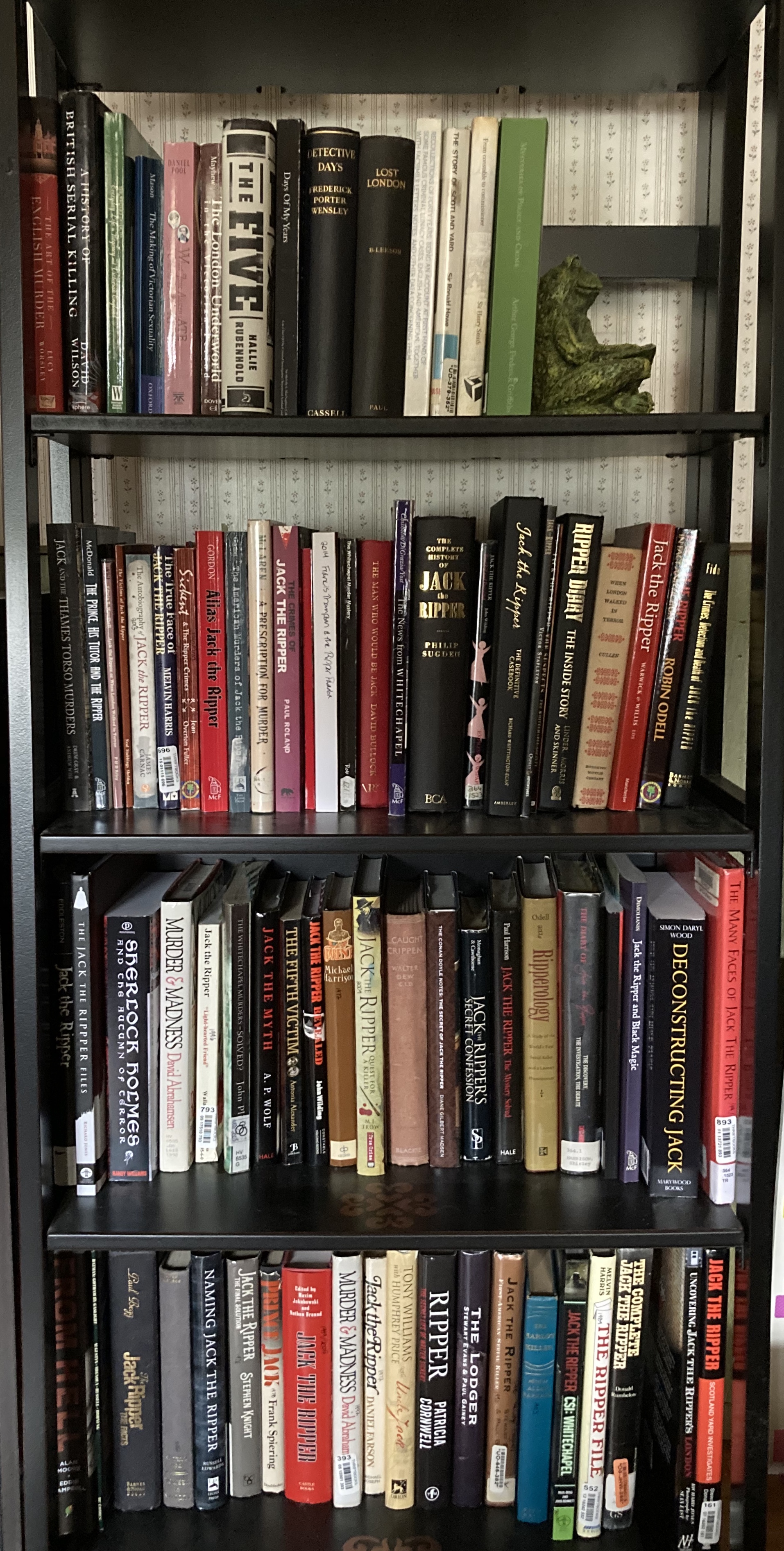 So they’re the Canonical Five not because we know for sure that they’re the only ones murdered by the Ripper, or even that he murdered all of them, but because it was concluded early on that these five deaths were related. Here’s just one of my bookshelves with Ripper books – I’ve got too many to all fit on here – and you can bet that each of them mentions Polly, Annie, Liz, Kate, and Mary Jane. Even the earliest English language Ripper book, published in 1929, agrees that all five names need to be mentioned.

 This is a replica of a postcard that was sent to the Central News Agency on October 1, 1888. It’s come to be known as the “Saucy Jacky Postcard,” and there are a couple interesting things about it. First, it wasn’t sent until very late that fall – after (at least) four murders had been committed and people were already talking and reading about the crimes. The second is what it says:
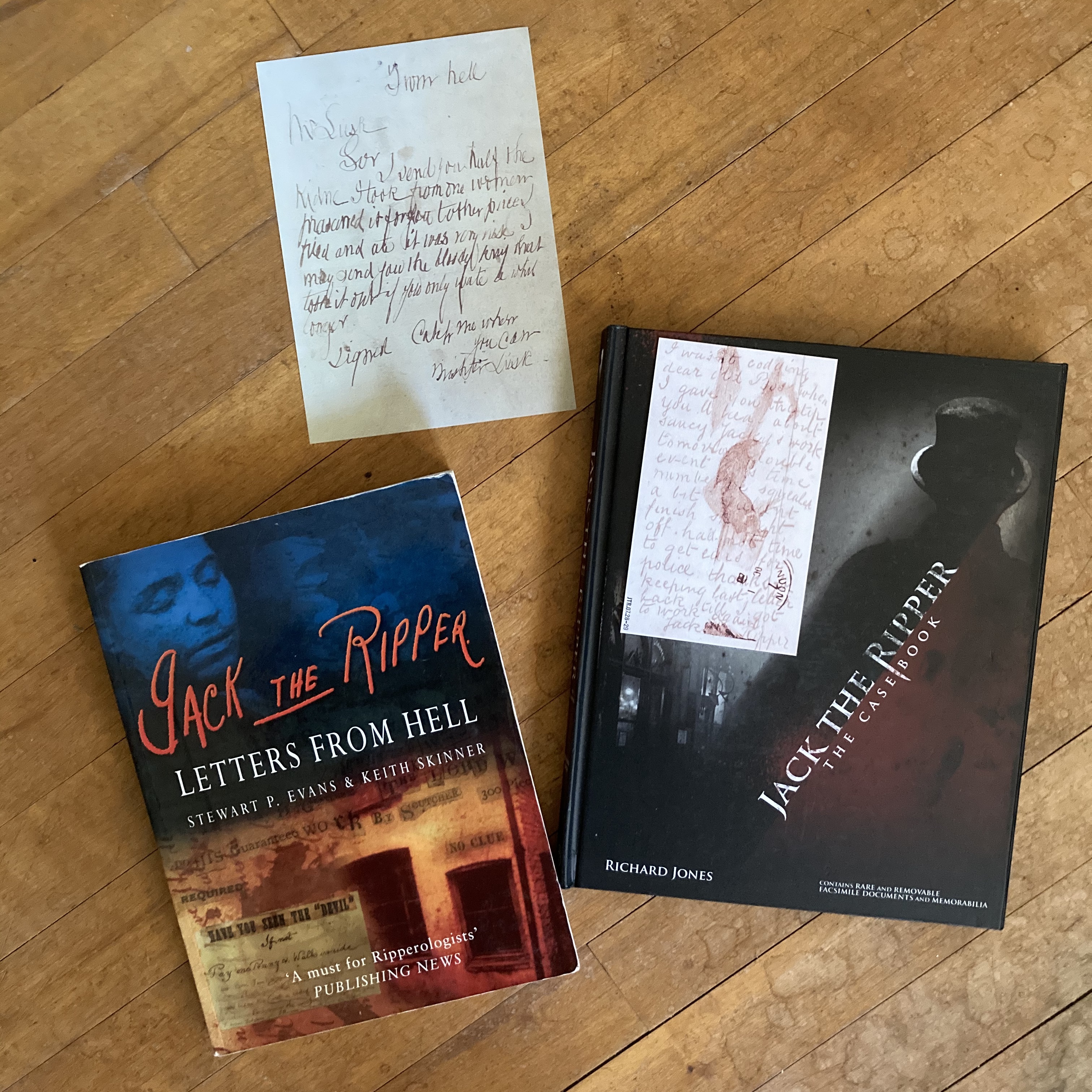 More than 300 letters were sent – to the police, to newspapers, and to the Central News Agency – claiming to be from the killer. There are entire books devoted to these letters, like Jack the Ripper: Letters from Hell by Stewart P. Evans and Keith Skinner, and stories of young women being arrested for being caught sending them. The letters are interesting, having both kept the murders in the news and given the killer his name … but are any of them real?

 In my free time, when I’m not writing or reading about the history of true crime, I like to knit. There aren’t many serial killer-based knitting patterns (for some reason …) but I’ve got an awesome pair of mitts that look like the carpet in some famous horror movie. (I used to have a hat, too, but I’ve lost it somewhere …)
 Rebecca Frost