
A Millennial’s Guide to Breast Cancer: The Beginning

I turned 40 earlier this year and decided to go ahead and get a mammogram. The American Cancer Society says women can start annual screening at 40, but should definitely start at 45. Considering my family history, I opted to start just to be sure. Unfortunately, we were quickly sure that I had breast cancer.

On the plus side, I was surrounded by all kinds of support. My parents are both retired ob-gyns, so they could answer a lot of my questions about my results and various reports. I also know a number of people who were diagnosed with breast cancer themselves, at different times in their lives. But then another friend of mine was diagnosed with cancer, and as we were talking about it she said that she doesn’t actually know anyone else who went through it.

Every patient’s cancer journey is different, in large part because of how customized treatment has become. Even when others shared their side effects from, say, radiation, it didn’t line up with my experience. (Okay, even the techs said they don’t usually see side effects as quickly as mine cropped up.) But there are still a number of things that I think would be useful for recently-diagnosed people—or their support crews—to have access to.

“I hope I never have to know as much about this as you do”

Any cancer journey comes with an overload of information. Earlier this summer I was talking to one of my colleagues and explaining the process so far when she pointed out exactly how much information I had handy that most people (thankfully) don’t. Pamphlets binders, reports, prescriptions … it’s a lot of information and can be difficult to take in. At least one person came with me to every appointment (only one appointment specifically limited it to one) and listened along with me. At times we disagreed over some of the details, but we were able to write down or remember enough to feel like we knew what was next, and why, and so I could keep everyone else updated. Yeah, there’ll be a whole post of its own about “keeping everyone else updated,” but for starters:

You want to get the mammogram before you have any idea that you might have cancer. Not every lump you can feel is cancer, and you won’t be able to feel every cancerous lump. It depends not just on how big the tumor is, but the depth in your breast. Mine ended up being 1.3 cm along the longest measurement, but it was in the bottom third of my breast tissue, and even my surgeon couldn’t feel it. At the time the mammogram flagged a mass, there was no way for me to know it existed.

There are signs that mean you should get things checked out, though. You should be performing monthly self-examinations (and if you haven’t been, now’s a good time to start). Breast tissue isn’t uniform, so you’re acquainting yourself with your own personal normal. Tissue can be dense and perfectly normal. You’re really looking for any changes month to month. If you notice a change, that’s when you want to get checked out.

Other signs of breast cancer might not be so immediately obvious as a lump. Changes in the skin, including dimpling, or drainage from the nipples should be checked out. Part of the monthly self-exam that doesn’t always initially make sense is checking for swelling or tenderness in the armpits. This could be a sign that the lymph nodes are working hard to filter out harmful substances or cells. Later on we’ll discuss why lymph nodes are tested as part of cancer treatment.

During my first appointment with my surgeon, he not only checked to see if he could feel the mass, but also spent time looking for swelling or tenderness at the lymph nodes in my armpit on that side. The lack of either was a good sign that we’d caught the cancer early, but of course we still wanted to go through all the proper medical steps to be sure.

Begin at the beginning

It’s not abnormal to get called back for a second scan after a first mammogram. There are no prior images for the radiologist to compare them to, so your own personal normal hasn’t been established yet. Different parts of the breast can be a different density, and sometimes the image is just unclear. A mammogram uses x-rays to examine the tissue, and the way you’re positioned during the procedure can affect how clearly the images can be read. No, it’s not comfortable, but it doesn’t take very long. I know a lot of people who’d been putting off getting their first one … and who have since texted me their own all-clear results because my diagnosis made them finally schedule it.

A mammogram isn’t the only way for doctors to see inside our bodies, though, so my next step was an ultrasound of the questionable spot. An ultrasound uses high-frequency sound waves for a different look at the soft tissues involved. Different scans can give doctors different looks, and sometimes these looks clear things up and allow them to agree that the spot is a harmless cyst. Friends of mine have also had MRI scans for yet another level of noninvasive imaging. Doctors really, really don’t want to move to invasive procedures unless absolutely necessary.

My ultrasound indicated that the next step for me was an ultrasound-guided biopsy. This meant going back to the same room, with the same tech, but this time with a radiologist, too. (You meet a lot of specialists on this journey. Some of them show up for a single appointment and are never seen again.) Yes, you’re awake for the needle biopsy, which involves numbing the tissue at different depths before inserting a needle and taking samples of the tissue. There’s no pain, but I wasn’t expecting the weird amount of pressure. This is totally a time when they told me I handled the procedure well and I think they were just being nice—I definitely felt faint until they adjusted the head of the table. The radiologist took two samples and had them sent off for a diagnosis.

Each of those samples means a small piece of tissue was taken from the tumor. The ultrasound meant he could guide the needle right to it and make sure the samples were, in fact, the questionable part. After those are taken—it makes a loud click, so you know exactly when it happens—they insert something called a clip. This is a non-magnetic marker that stays in the breast (and won’t be a problem if you need an MRI in the future). If the results come back as benign, the clip indicates to all future techs and radiologists that this questionable mass has already been checked.

The tissue samples taken are small, but you’ll still probably have discomfort. I was told to ice the area pretty drastically for the first few hours, and although I did it, the ice just seemed to make it hurt worse. It’s better for the long-term, though, so I obeyed my orders to the letter even though I was grumpy about it.

This was the part where things could have diverged. I was told a range of dates for when to expect the results, so of course I updated my online patient portal on a regular basis, just in case the report had posted and the system failed to email me an alert. My biopsy was on a Monday, and my results were in that Friday.

“ORDER_RESULTS_PATHOLOGY”

My results were in my patient portal hours before my primary care provider was alerted to them. I could read them enough to see the word “carcinoma” and honestly, at that point, that was enough. That was the answer: it was cancer. Anything else on the report was just going to have to wait.

In my next post I’ll walk through all the information that is—and what isn’t—on that initial report. In the meantime, do something for your health today … and something for fun. Memento vivere.

Next post

All posts in A Millennial’s Guide to Breast Cancer

ARC review: The Gatsby Gambit by Claire Anderson Wheeler

This ARC landed in my inbox at either the absolute best or absolute worst time: just as I was wrapping up my annual reading of F. Scott Fitzgerald‘s The Great Gatsby with my juniors for the third year in a row. The thing is, high school English teachers pick things they don’t mind reading multiple times a year, and don’t mind dissecting over and over again. I love Gatsby, and–possibly because of the 2013 movie–it was even last year’s prom theme. (Yes, I chaperoned in my best 1920s costume.)

So a murder mystery set in in the world of one of my favorite novels? Let’s take a look at The Gatsby Gambit by Claire Anderson Wheeler.


America’s most beloved literary characters. 
A page-turning mystery. 
The gilded opulence of the Roaring Twenties.
And a clever young woman of unusual persistence.

Be ready to re-think the world of Gatsby.
 
Freshly twenty-one and sporting a daring new bob, Greta Gatsby–younger sister to the infamous Jay—is finally free of her dull finishing school, and looking forward to an idyllic summer at the Gatsby Mansion, the jewel of West Egg. From its breathtaking views to its eccentric denizens, Greta is eager to inhale it all–even to the predictable disapproval of Mrs Dantry, Jay’s exacting housekeeper. Indeed, nothing could disrupt the blissful time Greta has planned… except finding out that Jay’s cadre of dubious friends—Daisy and Tom Buchanan, along with Nick Carraway and Jordan Baker—will be summering there, too.
 
It’s hard to be noticed when the luminous Daisy Buchanan is in the room, and Jordan keeps rather too close tabs on handsome Nick Carraway for Greta’s liking. But by far the worst is Daisy’s boorish husband, Tom, whose explosive temper seems always balanced on a knife-edge. But soon, bad blood is the least of their problems, as a shocking event sets the Gatsby household reeling. 
 
Death has come to West Egg, and with it, a web of scandal, betrayal, and secrets. Turning sleuth isn’t how Greta meant to spend her summer—but what choice does she have, when everyone else seems intent on living in a world of make-believe?
 
Deftly subverting romantic notions about money, power, and freedom that still stand today, THE GATSBY GAMBIT is a sparkling homage to, and reinvention of, a world American readers have lionized for generations.


So my brief review:

This is a book best suited to people who are not intimately familiar with Fitzgerald’s version. I received my advance copy at the same time I was once again finishing The Great Gatsby with my students, so the details of the original were too fresh for me to sink fully into this new world and Wheeler’s versions of the characters.

The story starts slowly, inserting the new character of Greta Gatsby as she finally comes home from all her years of being sent off to school. She begins to interact with alternate versions of Fitzgerald’s characters as Wheeler navigates what’s the same (not much) and what’s different in her version. There are some Easter egg references to the original, but also a lot of changes, and not all of those changes seem entirely necessary to the plot. My students, however, heartily applaud her choice of victim, although they always wish someone else had done the deed. Wheeler offers up various suspects as Greta takes off on her own to prove herself worthy (and independent) in a male-dominated world, annoying the detectives and her brother alike when she’s convinced that the apparent suicide isn’t all it appears to be.

It’s a slow burn until it breathlessly barrels down the last quarter of the book, and it’s at the end, freed from any premise of the inspiration text, that Wheeler really shines. I struggled with the characterization of Tom, Daisy, Nick, Jordan, and Jay because I wasn’t sure how much I was supposed to remember from Fitzgerald and how much they were supposed to be different (changed, perhaps, because it seems most of the events of Fitzgerald’s book happened the summer before this one starts). If you have faint memories of lavish parties and a green light from your own high school days, you’ll probably enjoy it.

Four stars out of five


The thing is, unless you routinely go through Prestwick House chapter questions about the book, you’re not going to notice a lot of Wheeler’s changes. Who remembers what religion the Buchanans are, anyway? (Everyone who has to answer the question about the elaborate lie that surprises Nick in Chapter II, at least if they have to correct it once a year.) I’m not sure why it ends up as one of the book’s great quotes, but in the original, they’re not Catholic. Wheeler, however, makes a point of stressing the fact that they are.

On the one hand, it seems like such a silly thing, but on the other … why use the Gatsby name at all? There have to be changes to keep Jay alive, of course (spoilers, sorry) and the fact that Wheeler gives him a younger sister to be at the center of the story makes for further changes, but the best parts of the book are the ones where Wheeler’s original characters take center stage and shove the well-known (and possibly hated) Fitzgerald characters to the side. I think that’s even a large part of what makes for a slow start: she has to spend so much time explaining who her Gatsby and Daisy and Tom and Nick and Jordan are, and separating them from the characters we might be expected to know.

Every so often there’s what seems to be an Easter egg–Daisy’s wedding necklace, for example, plays a part–but they’re at odds with the new backstories and new relationships Wheeler’s trying to forge. Why make these callbacks to specific parts of the original (like a gas station owner and his wife moving away for some mysterious reason) when so many other aspects of the characters’ histories and personalities have changed? Jay Gatsby is still a rich man with poor beginnings who throws parties, but those poor beginnings are vastly altered and Wheeler never quite explains how, if he isn’t a bootlegger, he went from poor to a soldier to his vast wealth.


Are these questions going to plague most readers? I doubt it. But I also think Wheeler’s story would have been stronger if she’d either more fully committed to Fitzgerald’s characters or been allowed to leave the Gatsby name behind entirely. As it stands, the title alone sets us up for a much deeper connection between the source text and her murder mystery than we find in the book.

I’m especially interested to see how readers who don’t have such a close connection to The Great Gatsby respond because, like I said, I was either going to be the best or the worst audience for this book.

The Gatsby Gambit is out April 1.

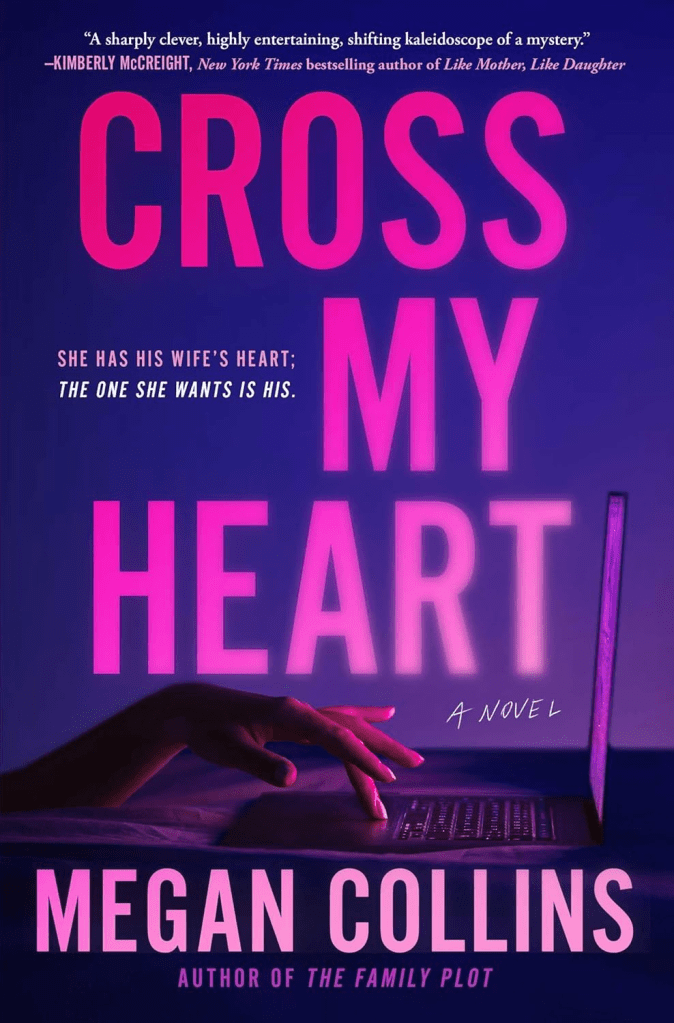
ARC review: Cross My Heart by Megan Collins

Oh hello! There’s still time to preorder your next great read before 2024 ends! How about Cross My Heart by Megan Collins, author of such books as The Family Plot and Thicker Than Water?

Let’s start with the official blurb:

She has his dead wife’s heart; the one she wants is his. The author of The Family Plot brings her signature prose to a twisty novel about a heart transplant patient who becomes romantically obsessed with her donor’s husband.

Rosie Lachlan wants nothing more than to find The One.

A year after she was dumped in her wedding dress, she’s working at her parents’ bridal salon, anxious for a happy ending that can’t come soon enough. After receiving a life-saving heart transplant, Rosie knows her health is precious and precarious. She suspects her heart donor is Daphne Thorne, the wife of local celebrity author Morgan Thorne, who she begins messaging via an anonymous service called DonorConnect, ostensibly to learn more about Daphne. But Rosie has a secret: She’s convinced that now that she has his wife’s heart, she and Morgan are meant to be together.

As she and Morgan correspond, the pretense of avoiding personal details soon disappears, even if Rosie’s keeping some cards close to her chest. But as she digs deeper into Morgan’s previous marriage, she discovers disturbing rumors about the man she’s falling for. Could Morgan have had something to do with his late wife’s death? And can Rosie’s heart sustain another break—or is she next?

And here’s my official, post-it-everywhere review:

Rosie just got a new heart, but she wants more than anything to give it away. If only she could be certain that the man in her sights isn’t a murderer …

This is a deliciously twisty book that will surprise even the most avid thriller fan. Maybe you want to be suspicious of Rosie and her soft new heart, and maybe you should be … but it turns out it’s not for the reasons you think. She’s trying to walk this line and ignore the fact that she’s playing a dangerous game of cat-and-mouse (and maybe confusing which one of them happens to be the cat) while ignoring the danger signs every step of the way. No man can be worth as much effort as Rosie puts into trying to uncover the reality of Morgan Thorne.

This book surprised me with its similarities to one of my absolute favorites, but I can’t reveal which one or else that gives a lot away. Let’s just say Rosie’s contemplations of mortality and identity play into far more than wondering if her new heart can’t help but love her husband’s donor. The absolutely twists and turns (yes, plural) this book takes kept me riveted right up until the end. Megan Collins crafts complex characters who have their own reasons not to reveal everything all at once, and the way she tells their story just adds to the suspense. Cross My Heart is a must-read.


Cross My Heart is out January 14!

another week, another Ripper

The other day an old friend of mine texted to say that one of her students was convinced that Mahatma Gandhi was Jack the Ripper. He’d seen a TikTok video on it, she explained, and it was convincing.

The problem with TikTok videos–and of course, their appeal–is that they’re so short.

Let’s take a look at the premise:

See? Short and to the point. Gandhi was in London in 1888, when the Ripper murders happened. He left in 1891, and there weren’t any murders after that.

Fun fact: the rebuttal also fits in a TikTok.

The long and short of it is, we don’t even have to get into Gandhi’s personality to dismiss this rumor: Gandhi may have been in London in 1888, but not all of the right weeks in 1888. He arrived after the murders of Polly Nichols and Annie Chapman (and Martha Tabram, if we want to go beyond the Canonical Five) and only a matter of hours before the Double Event.

But that’s not the only recent TikTok suspect.

For the record, I fully love that people will message me to ask my thoughts on the newest rumor. That’s how I learned that now apparently Edgar Degas is a Ripper suspect, too.

He’s not the only artist accused of being the Ripper. Patricia Cornwell, author of the Kay Scarpetta series, has now written two books focusing on Walter Sickert. Her first, 2003’s Portrait Of A Killer: Jack The Ripper Case Closed, laid out her initial thinking. If you know about the Degas argument, a lot of it sounds similar: hated women. Painted women. Violent art. Cornwell further backed up her argument in Ripper: The Secret Life of Walter Sickert in 2017, in part having to defend herself against “ruining” Sickert’s work in her quest to prove her theory.

Cornwell, at least, can show that Sickert did indeed live in London and spent quite a bit of time there. Degas, on the other hand? Apparently he lived “close” to London.

He lived in Paris. Redditor mbelf says it well:

I would agree with point 1: Jack the Ripper lived within a 472 km radius of the murders 😆

One of the issues with picking simply anyone who we know was alive in 1888 is how it’s not just that the Ripper murders happened in Whitechapel, but that the killer knew the area well. He avoided beat cops when he only had a 14-minute window before they passed by again, and he blended in so well that no “eye-witness” account can be trusted. Nobody noticed the Ripper at work, and none of the men mobbed on the street and accused of being the Ripper actually were.

Degas was certainly alive in 1888, so that ticks the main box, but the idea that he could’ve been Jack the Ripper belongs in the junk pile.

So why do we keep seeing these new accusations?

According to Kiki Schirr, she didn’t mean to actually post the video.

“I was running a fever of 101 and on my way to the doctor’s office, which is why I kept mis-speaking….. I was sitting in the parking lot and bored and I swear I hit ‘save to draft’ and it went live because my iPhone is terrible.”

But of course now it’s out there, and it’s clearly captured public interest. Quite simply, we want to know who the Ripper was. We want to top the Victorian Metropolitan Police and come up with the answer.

And it’s easy for us to pick a name and throw it into the ring because, quite simply, it’s not personal. We don’t live there or back then. The Ripper has long since turned into a logic puzzle instead of a real-life case of murder with actual victims and consequences, and who knows where the truth will come from? Perhaps the case will be solved by a TikTok video of someone simply throwing out another name and leaving the internet to argue over the suspect’s merits.

Wait, so should we stop accusing people of being the Ripper?

Now there’s an idea.

Think about it: if you suspect someone living of having committed a murder, there are steps to go through to make sure that you’re not just flinging around the name of your ex or trying to get someone in trouble because they violated the HOA’s ruling on how long their lawn should be. Filing false police reports is a crime, as are libel and slander, but the chances of someone coming after you with any of those charges vastly decreases when the case happened over 100 years ago and all the direct players are dead.

On the one hand, it’s promising that so many people are searching for evidence to either prove or disprove these short accusations. On the other hand, they’re clickbait, looking for that kind of interaction to boost engagement. People who seriously want to name a suspect aren’t going to do it solely in a TikTok without all their own research to back it up.


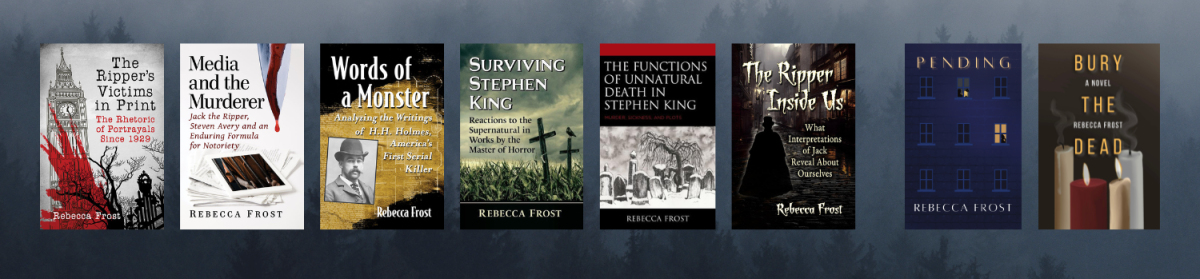
Speaking of Jack the Ripper, I’ve got a new book out: The Ripper Inside Us: What Interpretations of Jack Reveal About Ourselves. Nope, I’m not looking to name any suspects, but I’m fascinated by our fascination with the case. From newspapers to rock operas to waxwork, I trace the ways we keep trying, and trying again, to tell – and make sense of – the Ripper story. Seriously, we come back to this case time and time again, in every new media that emerges. Isn’t it time we asked why?

ARC review: You’d Look Better as a Ghost by Joanna Wallace

I was lucky to be granted a NetGally advanced copy of You’d Look Better as a Ghost by Joanna Wallace. I didn’t know anything about the book, but the back cover certainly made it seem right up my alley:

The night after her father’s funeral, Claire meets Lucas in a bar. Lucas doesn’t know it, but it’s not a chance meeting. One thoughtless mistyped email has put him in the crosshairs of an extremely put-out serial killer. But before they make eye contact, before Claire lets him buy her a drink—even before she takes him home and carves him up into little pieces—something about that night is very wrong. Because someone is watching Claire. Someone who is about to discover her murderous little hobby.

The thing is, it’s not sensible to tangle with a part-time serial killer, even one who is distracted by attending a weekly bereavement support group and trying to get her art career off the ground. Will Claire finish off her blackmailer before her pursuer reveals all? Let the games begin . . .

You’d Look Better as a Ghost is a bit You, a bit Dexter, a bit Hannibal, and a bit Fight Club – but not the Fight Club part of Fight Club. Claire is a serial killer with a dark sense of humor and her own personal code, and when we first meet her she’s reeling from the death of her father and trying to cope in the way it seems only she can. Her bereavement support group doesn’t seem to be helping … and might actually end up hurting as it throws her together with people she’d otherwise never have met.

Claire’s an engaging narrator obsessed with observing “ordinary people” and doing her best to fit in just enough so that her hobby – no, not her art; her other hobby – isn’t recognized. For the most part she keeps to herself, which makes the bereavement group such a challenge, since she has to figure out how, exactly, “ordinary people” act in that situation. She makes some insightful comments about the other characters while at times missing the obvious about both them and herself, making you turn the page to see when – or if – she’ll realize it, or if she’s just set herself up for a fall.

If you like the voices of Joe Goldberg, Dexter Morgan, or the narrator in Fight Club, then you need to pre-order You’d Look Better as a Ghost. Part comedy, part thriller, and guaranteed to keep you up until the last page is turned, this book kept me laughing – and guessing – to the end.

Five stars. You’d Look Better as a Ghost comes out March 26 from Penguin Books.

The Ripper Inside Us – coming this spring!

Why hello there. You might be curious about what I’ve been working on lately. Let’s take a little peek.

The Ripper Inside Us: What Interpretations of Jack Reveal About Ourselves is coming this spring from McFarland, and in many ways it’s the counterpoint to my first book, The Ripper’s Victims in Print: The Rhetoric of Portrayals Since 1929. That one looks at how authors have spent the past century or so writing about the Canonical Five women murdered during the Autumn of Terror, and The Ripper Inside Us examines the ways we’ve presented, and represented, the murderer.

Let’s take a look at the cover copy:

The story of Jack the Ripper has had continual interest since he stalked the streets of Whitechapel during the Autumn of Terror in 1888. During this time, the murders of the Canonical Five made headlines all over the world while in the modern day, the Ripper story continues to permeate all forms of media on the page, screen, in podcasts, and in fiction. We continue to search for something we will likely never, and perhaps do not even wish to discover: Jack’s true name.

This book looks at the lasting intrigue of Jack the Ripper and how his story, and the stories of the Canonical Five victims, are brought back to life through modern lenses. As psychological approaches and scientific techniques advance, the Ripper’s narrative evolves, opening a more diverse means of storytelling and storytellers. How these storytellers attempt to construct a full tale around the facts, including the burning questions of motive and identity, says more about us than the Ripper.

While I limited myself to, uh, print for The Ripper’s Victims in Print, my sources for The Ripper Inside Us run the gamut from print to stage to screen to waxworks. Basically we won’t let this story die – we keep adapting it to all kinds of media and situations, including romance novels, of all things. Katrina Jan‘s doing her doctoral work on the Ripper and romance novels, and she’s one of the awesome contacts I’ve made while working on representations of the Ripper.

The thing is, there are so few hard facts about the Ripper crimes. They were committed in 1888, and much of what was collected or written about them at the time has been lost or otherwise muddied in the retelling. Can we trust newspaper reports of the crimes or their versions of witness accounts? How much can we really glean from the surviving official documents? What assumptions can we make based on Victorian forensics?

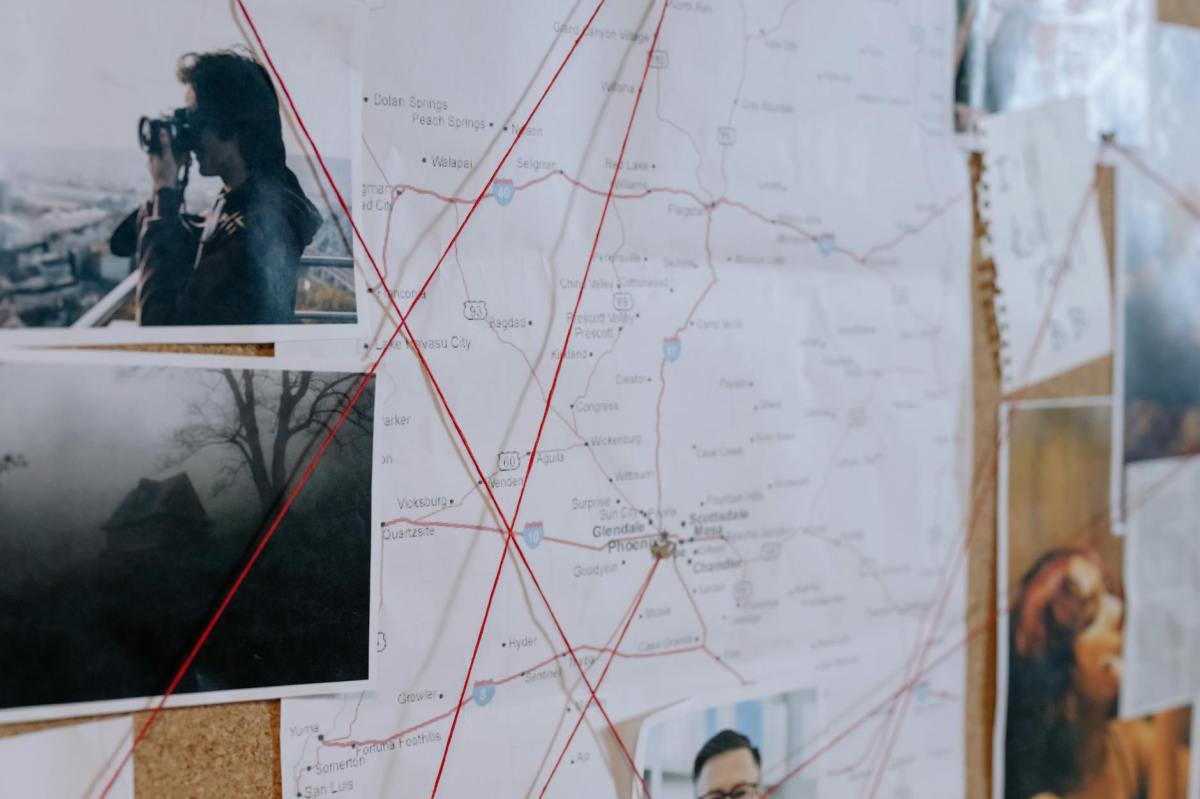
On the one hand it becomes a game of connect the dots, asking us to take the small pieces we can trust and turn them into an integrated whole that makes sense. On the other it becomes a sort of Thematic Apperception Test: there are snapshots of a sort, but they’re ambiguous, and the story the viewer tells about the image reveals more about the teller than the scene being described.

When we take a look at these crimes and the evidence surrounding them and make a case for a suspect, we’re telling a story that makes sense for us, based on our own personal experience and what we have been taught by our home culture. One element of the tale is very nearly standard: the vast majority of us agree that the Ripper was indeed a Jack, because we can easily believe that a man would violently kill a large number of strange women. Police in 1888 didn’t have modern psychology or the benefit of the FBI’s Behavioral Analysis Unit, but they – and the newspapers – agreed that a man could do this. His reasons might not have been clearly defined as they are today (for example, the fact that we currently recognize four types of serial killers, which handily gives us four broad motives) but the collective mind agreed that these murders were the work of a man.

When various authors, directors, or creators work to assign motive and identity to the Ripper, they explain what makes sense to them, in their time, and given current thought about violence. Some of these narratives are short-lived or otherwise quickly adapted into fiction – for example, the idea that Jack the Ripper was in fact Prince Albert Victor, Duke of Clarence and Avondale – while others linger and withstand changing ideas about violent crime.

The Ripper Inside Us has also received this advanced praise:

The Ripper Inside Us: What Interpretations of Jack Reveal About Ourselves offers a holistic and rigorous examination of a controversial subject which had imbedded itself into our cultural psyche. The spectre of the Ripper has been with us for over 130 years, assuming a multiplicity of shapes through the decades. Frost adeptly stalks these manifestations of an unsolved mystery that refuses to die, exploring everything from nonfiction and novels to walking tours, documentaries, podcasts, wax works and movies while asking the uncomfortable question, what does our need to keep telling these stories say about us? Both balanced and insightful, Frost has expertly crafted what will be an essential text for anyone researching or teaching this subject.”

Hallie Rubenhold, Baillie Gifford Prize-winning author of The Five: The Untold Lives of the Women Killed by Jack the Ripper

What does our need to keep telling these stories say about us? Mostly, I think, that we really need to take a step back and ask ourselves that … and then take a look at the stories we’ve told, and why we find them so believable. If we can empathize with a serial killer enough to metaphorically step into his shoes and explain his actions … well. How far do we actually stand from him, after all?

Nessa’s Shrug – a free knitting pattern

Please note: The book referenced in this post is no longer in print. I’m leaving this post up so that the pattern can remain and be knitted. If you’re so inclined, you may purchase any of my in-print titles to offset the work behind offering this pattern. Thank you!

If you’re just here for the shrug, scroll down to the bottom to find the download link. If you’re here for the inspiration behind the shrug, keep reading.

First off, Nessa lives in the UP.

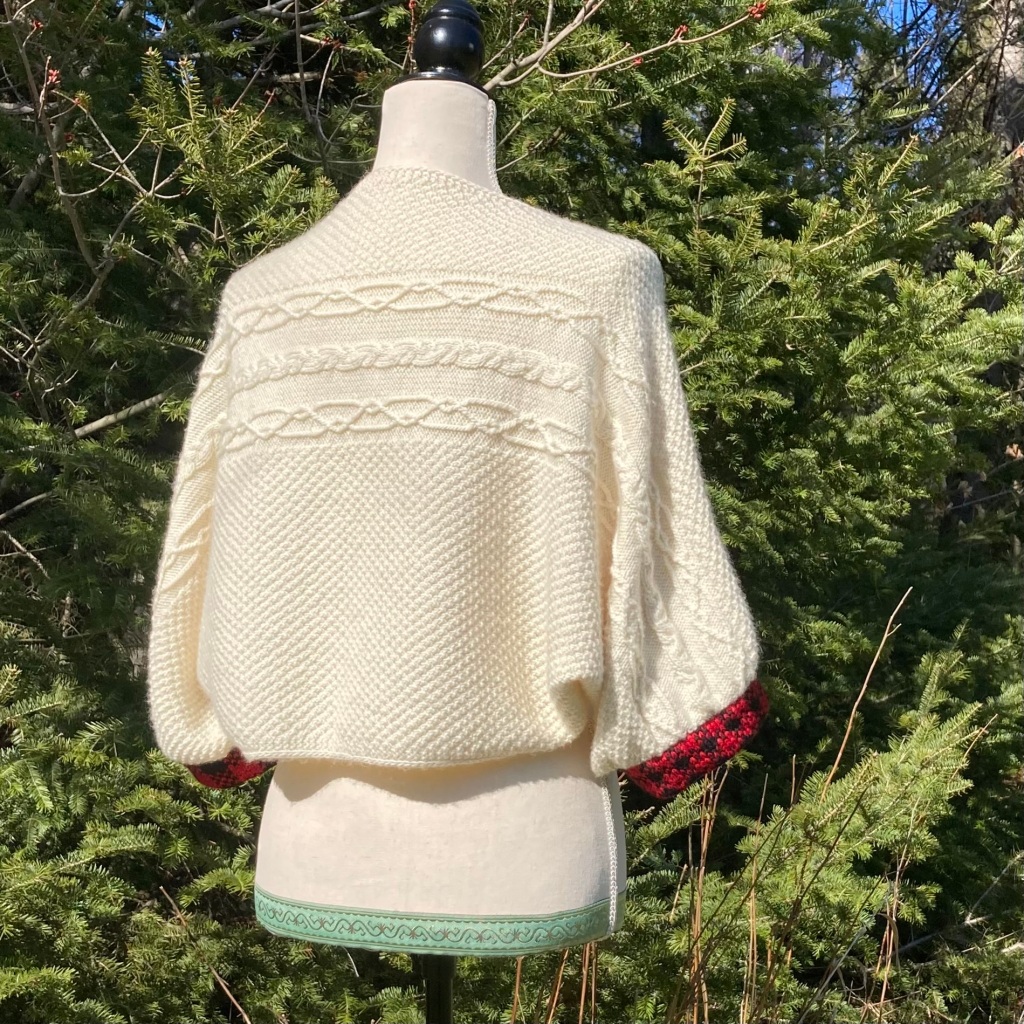
Write what you know, hey? And a good Yooper has a closet full of plaid. I didn’t use just any plaid here – I went for Buffalo plaid in classic black and red. It’s a very bold plaid, with big solid chunks of color, which makes it easier to knit.

However, if you take a closer look and really scrutinize those cuffs with a critical eye …

… they don’t match.

I used the same two colors of yarn (Ravelry Red and Black in Malabrigo Rios, for the record) and both cuffs are Buffalo plaid, but they aren’t the same Buffalo plaid. One uses squares that are three stiches wide, and the other uses squares that are five stitches wide. The cuffs are very nearly the same, but … not quite.

Because the book – and the shrug – isn’t just about Nessa.

Sorry, Nessa.

She’s the main character and one of the two POV characters, but there’s a pretty big important cast going on. For example, Nessa’s got an older brother, Brent, and he happens to be in prison for serial murder. Oops. One of Brent’s murder victims was Sunni Bowen, and in the opening scene of the book her twin sister, Skye Bowen, comes to the UP to talk to Nessa.

You might say the cuffs of a shrug are like identical twins, right? The same thing, done again?

These cuffs aren’t identical, but they’re close. And maybe Sunni and Skye aren’t as identical as people thought … or are they? Cue dramatic music.

There’s also a lot of play on threes.

Let’s take a look at the solid part of the shrug. It’s also in Malabrigo yarn, but this one’s in Washted. (No, that’s not a typo.)

We’ve got three sections to the back, two in moss stitch and one in cables, and that cable section isn’t centered. Plus the middle section has three cable sections, and each cable has three parts. That middle one even feels a bit wonkier than the others, because it could be a standard braid, except … it isn’t. It’s uneven.

There are a lot of uneven threes when it comes to the characters in the book. You’ve got Nessa, Sunni, and Skye … Nessa, Brent, and Skye … Nessa, her husband Josh, and Brent … and a few more I can’t quite say yet. (26 days until publication!) Who’s got the power in each group? Who cares about whom … and doesn’t care for someone else? Once again, cue the dramatic music.

Why a shrug for Nessa?

Marcy got a shawl with some frilly bits because she needed something she could wear over various patterned sundresses to keep warm. Nessa demanded something a little more practical that would stay on while she’s working on her next book (she’s a thriller author, too – write what you know again). A shrug will stay on her shoulders while she madly types her way toward the climax and maybe forgets to eat (or turn on the space heater).

So here we are:

And, of course, since I’ve got you here … preorder a copy of Blood Sisters so I can keep on writing books and knitting patterns. Cheers.

Chekhov has more than a gun

This is something that’s come up a few times now when I’ve been alpha– or beta-reading for other people, so I thought I’d muse on it for a bit.

First, let’s cover that Chekhov reference. He was a Russian playwright – hence the cover photo for this post – and Chekov’s gun is a famous piece of advice. There are a few versions, but the most famous goes:

If in the first act you have hung a pistol on the wall, then in the following one it should be fired.

Anton Chekov (at least, ish)

And to a certain extent, I think all writers get that. It’s foreshadowing, right? Your main character can’t just whip out a gun in the climax if we’ve never seen a gun in the story before. That’s a bit too Deus ex machina. In Misery, Stephen King talks about the old parachute-under-the-seat trick employed by so many serials of his youth: our hero seems to be stuck in a crashing plane as one segment ends dramatically, but at the start of the next he pulls out this never-before-seen parachute and jumps to … well, not safety, but he survives long enough to make it to the next cliffhanger.

So that’s the first point of Chekov’s gun: setting up your climax.

No, you don’t want to give your whole plot away, but you want to do what all the best thrillers do: allow readers to go back through the book a second time and find all the clues they missed before. They don’t have to be obvious. You don’t need a character gesturing grandly and saying “I say, Chekov, what a big pistol you have hanging on this wall!” It can be a derringer spotted in a lady’s purse as in [redacted because hey, that gives the whole plot away].

And of course Chekov’s gun doesn’t have to be a gun. It doesn’t even have to be a weapon at all. If it’s something that’s going to be important for your character surviving the story’s climax, then we need hints at it before your character suddenly displays a new trait or skill. For example – I have to spoil American Gods for this, so skip to the next paragraph if you’d rather read it yourself – Neil Gaiman pits the old gods versus the new gods and leads them up to a final battle that our main character Shadow ends by … talking. He’s this big dude, fresh out of prison at the start of the book, and we’ve seen him fight … but only when he was goaded into it. Gaiman sets Shadow up as this pacifist who looks for other ways around the fight and only wades in when he doesn’t find other options, but that’s the most important part: he sets Shadow up that way so the final battle doesn’t come out of nowhere. We know what kind of guy Shadow is and, even if he’s a bit thrown off by all the other plot Gaiman chucks at him, there’s that core element of character that carries the day.

Spoiler over.

But the other part of Chekov’s gun comes in handling reader expectations.

I was reading the first few chapters of a friend’s book while they were still drafting it – totally alpha-reading – and I commented on a part where they’d spent a long time describing the main character’s dogs. It was something like “Oooh, I can’t wait to see how they’ll play into the book in the future!”

Their response? “I hadn’t even thought of that.”

First, it’s a first draft, so that’s totally okay. You don’t need to make Chekov’s gun work perfectly in the first draft. In fact, if you’re a discovery writer, then Chekov’s gun is totally a second draft issue. It’s absolutely, totally fine if your first draft doesn’t do everything you want your final draft to do. It just needs to do what you need a first draft to do.

Second, apparently this isn’t the usual way of thinking about it, which is why I’ve surprised a few people with those kinds of comments. So:

when you spend a lot of time describing something, you’re signaling to your readers that it’s important.

I think we all know this on a basic level but it’s not always at the front of our minds when we’re writing. Sometimes we’re just having fun describing the setting. Sometimes we’re trying to concentrate on (finally) describing the setting because we know that’s our weak point.

Sometimes it’s a slow words day and we’re just trying to get any words at all to come out.

And again: first drafts are all about getting the words on the page. We don’t judge first drafts. They’re hard-working friends who know they aren’t perfect and do their jobs well.

But, when you get to the second draft and beyond …

Chekov’s gun is a balancing act.

And, as a balancing act, it exists in more than one part of your story. Chekov indicates acts, but it works for all narratives. We need to be introduced to The Thing before we see a character use The Thing, and if we see a character taking their sweet time describing A Thing early on (Ready Player Two, I’m looking at you) then we’re primed for That Thing to show up when the character most needs it.

Once you’ve figured out how your climax and falling action are going to play out, you can look back and make the necessary changes. Did you introduce your Thing early enough? Did you spend too much time describing something that isn’t that Thing (and wasn’t meant to be a red herring)? It’s hard to strike that balance where your beta readers say something like “Wow, I should’ve seen that coming but I didn’t!” but there is middle ground between complete surprise and giving it all away.


Do you think about Chekov’s gun when you write or revise? What’s your favorite example of it being used properly? Or maybe a time when you think it could’ve been finessed just a wee bit more …

sometimes I even follow my own advice

Most times it feels like there’s a disconnect between Rebecca the Writer (outside of the high school classroom) and Rebecca the English Teacher (inside the classroom). There’s a shift between teaching writing and engaging in writing, but every so often I’ll mention to my students that, over the weekend, I did something I’ve made them do during their drafting … and they’re still shocked. Wait, these graded steps are things I actually do … when there’s not a grade?

The one I took most recently isn’t really something that could be graded, but I’ve been doing it since grad school, and it still works.

Sometimes I have to bribe myself.

Not every day is a “Golly gee wilikers, I can’t wait to write!” kind of day. I mean, do you wake up every morning absolutely thrilled to go do your job? Even if it’s true more often than it isn’t, there are still … those days. And sometimes terrible, horrible, no good, very bad days, but deadlines are real. You still need to get a draft or the edits into someone else’s hands.

I had chapter revisions due by April 30, and the thing is, they weren’t even all that bad. Comments came from a pair of editors, but neither of them was Reviewer 2. I had to clarify a couple things, but mostly … I had to change my citation style. (Oops.)

And I didn’t want to do it, of course. Citation is awful. I always leave it to the end. I’ll put the proper info after each quote, but I’ll put off formatting it as long as possible. Part of me argues that, this way, I’m totally focused on order and capitalization and punctuation, so it’ll all match, but really … I just don’t like doing it.

So, a week ago Saturday, I bribed myself into doing those edits.

I went up to Keweenaw Coffee Works to get brunch and a fancy coffee and told myself that, since I got all that and came all this way, I wasn’t allowed to leave until my edits were done.

Like I said, I’ve been doing this since grad school. I can go to 5th and Elm for lunch and a coffee, but only if I get through this reading. I can grab a cinnamon roll (sadly no longer available) from Cyberia, but only if I finish writing this paper for grad school. (Where’s that “food motivated” meme when I need it?)

Now, clearly, I know I’m bribing myself. And I know that there aren’t really any immediate consequences to going out, sitting there with my coffee and snack, and not doing the work. I’ll be in trouble if I don’t submit the thing I’ve promised, but it’s not like I’m going to send myself to bed without supper. So it doesn’t work for everyone, but it works for me. And I’ve told so many people it works for me.

And they’re still surprised to see me out at a coffee shop, working on something.

I get that some people can’t work in coffee shops, but it’s like with my students: when I break down the writing process into steps, it’s because that’s how I, personally, do those steps. My seniors had to write scripts for their presentations, and I started them off with dictating their scripts while running through their draft slides … and then did the same thing for my own PCA presentation.

The thing is, it’s not like a presentation (or a chapter, or a book, or a blog post) just springs fully formed from my head. There are so many steps that go into them, and I don’t always want to do all of those steps. Knowing those steps is a good thing, because at least I can plan out what I need to do in order to produce the thing, but doing those steps is the next hurdle.

And that’s why I bribe myself with a Brekkie Gallette and a fancy latte from KCW so I can edit my citations.


Have you ever bribed yourself to finish your writing? What’s your favorite bribe?

thinking about reading about writing

Stephen King says “If you want to be a writer, you must do two things above all others: read a lot and write a lot,” and I’m in agreement with him on that one, but I think I want to add a little wrinkle: if you want to be a writer, you must read a lot about writing.

I’ve already talked a bit how there are so many books about writing because we all write differently. Our brains aren’t the same. Our backgrounds aren’t the same. We haven’t read the same books or stayed up too late for the same tropes or drooled over the same authors. So of course we’re not all the same writers, and writing advice isn’t one size fits all. Different strokes (advice) for different folks (authors).

Except I’ve got another wrinkle for you.

I’m not the same author I was a year ago, and definitely not the same author I was when I started writing. Remember how you only learn to write the book you’ve just written and you have to keep learning if you want to keep writing? Writing is all about growth and learning what works for you, but … you change. You grow.

If a man looks at the world when he is 50 the same way he looked at it when he was 20 and it hasn’t changed, then he has wasted 30 years of his life.

Muhammad Ali

So the fun (?) part is that it doesn’t take a whole 30 years to see that you’ve changed as a writer. The question mark comes because this frequently means reading something you wrote a bit ago – something you thought was amazing at the time – and grimacing and wanting to throw the whole thing into an incinerator.

Cringing at your past self is a sign of growth.

I remember the first time I went back to a novel I’d written and didn’t cringe every other page or so. Granted, I find a lot in that manuscript to cringe about now, but we’re talking at a distance of about a year. Prior to that, I’d pick up something I’d written and see already how much I’d grown, both as a person and as a writer. (The perks of writing when you’re a teenager, I guess.) This was one I’d written during my freshman year of college and, when I looked back on it as a slightly older college student, I remember thinking “Hey, I’ve actually got something here.”

I don’t have an accurate count of how many complete or abandoned projects I’d written before getting to that one – the story of how being Robin Hood’s son wouldn’t really be any better than being his daughter, if you must know, and yes I’d seen the Keira Knightley movie shortly before coming up with the idea – but I’d written a lot by then. There’d been a lot to improve since my first attempts, and I’d made enough strides that my learning curve stopped being quite so exponential by then.

But I’m still growing and changing.

And it’s not just about how the stories I want to tell now are different from the stories I wanted to tell a couple decades ago. (Look it really helped that I was in a mediaeval history class with a professor totally willing and able to answer my obscure questions while I was writing the Robin Hood thing. Shoutout to Dr. Wickstrom from Kalamazoo College.) It’s also how I don’t go about writing the same way now as I did then.

Some of the writing “rules” I read about and dismissed because they didn’t apply to me … now apply to me.

Okay, some of that might’ve been the “I’m a special snowflake” thinking – you can’t tell me how to write because you don’t understand me – but not all of it was. I collected various pieces of writing advice and sorted through them, but even the ones that made me roll my eyes haven’t entirely been forgotten.

You have to read widely about writing not just to see how other people think, but because you won’t always think the way you do right now. The trick that never fails to work for you today might not be such a failsafe a decade from now. And, if you decide to engage in writing on a professional basis, there will be days when you really need to force yourself to get words down because deadlines are deadlines, and you don’t have the luxury of time to take a break and do your usual approaches.

For example, let’s take Hemmingway:

I learned never to empty the well of my writing, but always to stop when there was still something there in the deep part of the well, and let it refill at night from the springs that fed it.

Ernest Hemmingway

Past Rebecca definitely thought “Hah okay, Papa, maybe that works for you, but that’s not how I roll.” And Past Rebecca didn’t roll that way. She liked her ridiculous NaNoWriMo word count graphs. (And this Past Rebecca wasn’t actually too long ago, either …)

But today – literally today; I started a new draft for April Camp NaNoWriMo – I hit a word count … and stop, even if I think there’s still some water left in the well. Lately that’s what’s been working for me: hitting a goal that’s a challenge but not too high, and then … doing something else. Letting the ideas percolate in the background instead of trying to force more words and hit the next word count goal.

I’m sure there are many other changes to my process, and many other pieces of writing advice that I used to scorn but now (maybe begrudgingly) agree have their merits, but that’s the obvious one to me today. The biggest sign that I, personally, can see as to how I’ve grown and changed.

Read widely about writing advice, because you never know when you’re going to need it.


What’s your least favorite piece of writing advice? Has it changed over the years? Is there any “popular” advice you used to reject that you’ve now come to embrace?