12 challenge, book 4 – Night Film

Late last December, I decided to go ahead and do the “12 Challenge” that was going around Twitter: 12 months to read 12 books recommended by 12 friends. I specifically requested true crime and thrillers, looking for good books I haven’t read yet. Book one was Dark River: The Bloody Reign Of The Ohio River Pirates; book two was State of Terror by Hillary Rodham Clinton and Louise Penny; book three was Who is Maud Dixon? by Alexandra Andrews.

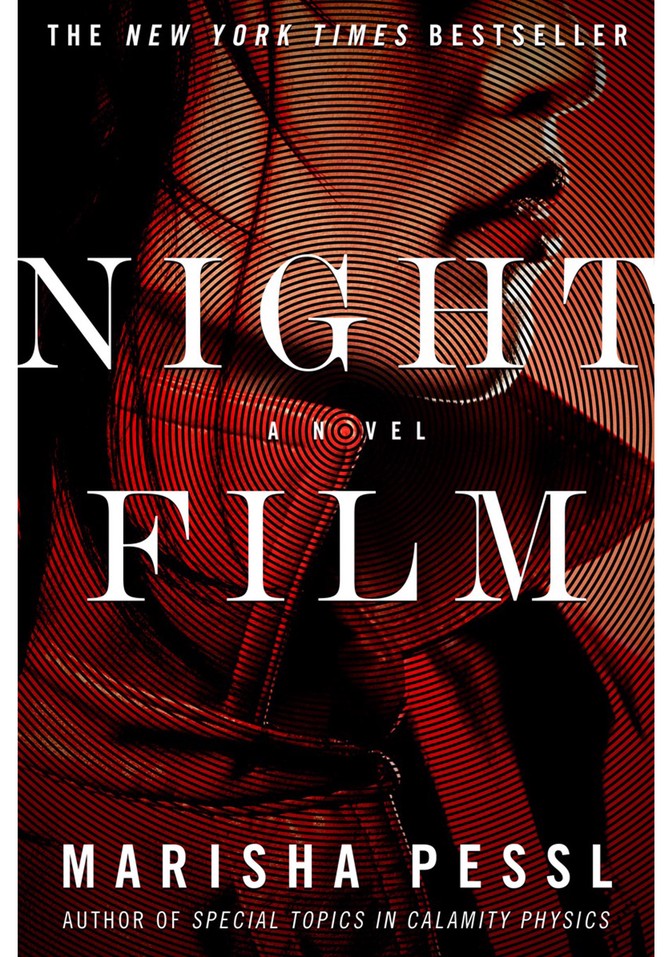
Book four is Night Film by Marisha Pessl.

I bought the kindle book so I had no idea that it was over 800 pages until I checked how far I was. I checked because I wanted to see how much room Pessl had to (attempt to) explain everything that had happened so far. That’s the kind of book this is: (how) will the author ever explain all of this?

The main character is now-disgraced investigative journalist Scott McGrath, whose downfall and obsession center on mysterious cult filmmaker Stanislas Cordova. No one’s seen Cordova in years – if perhaps ever. He hasn’t made movies since the 1990s and the ones he did make tend to be shown in out-of-the-way places, advertised by secret messages passed around by his devoted fans, banned from the mainstream because of their violence. Many people who’ve worked with Cordova have either withdrawn from the public or mysteriously disappeared, but they all agree that he changed their lives in a deep, incredible way.

Scott’s pretty sure that none of these changes are positive, and he set out to prove it a few years ago. That’s when he did an interview and spilled unverified information from a source he only spoke to over the telephone, resulting in a quarter million dollar payout to Cordova. (Scott is the kind of person who can apparently easily make a quarter million dollar payout, for the record, because he did. It’s been years, he’s not a trustworthy journalist anymore, and he’s still getting along in NYC. So.)

The thing that gets him back on his Cordova obsession is the death, and apparent suicide, of young Ashley Cordova. Scott, of course, refuses to believe it’s a suicide – to him it’s just another piece of the dark and demented Cordova puzzle. And he decides it’s time to reveal the truth about Cordova, once and for all. (Cue dramatic music.)

If you’re reading it on a kindle, you’re going to be annoyed by all of the “sources” that keep popping up: screenshots from the internet (complete with the address in the web browser at the top), pages from magazines, police files, that kind of thing. They’re a weird size, so you have to zoom in, but they’re also completely necessary to the story, so you can’t skip them (even when they feel scattered and disjointed at the start). I’m sure they look cool in the printed book, and there’s even exclusive bonus content on the website that makes it seem even more like Cordova’s a real person. Like yeah, sure, you’ve totally heard of one of his movies. Maybe when you were in college?

Basically Cordova is so secretive, so rich, and so much a cult figure that you know from the beginning that going after him is a very bad idea. Especially when the person going after him is Scott, and Scott’s introduced with his big downfall. You kind of have to wonder exactly how good of an investigative reporter this guy really is, to be honest, and whether he can really keep himself together long enough to see this through.

This is one of those books where the less you know going in, the better, so I’m not going to give any more details about the plot. I will say:

  • it pulled me along. 800+ pages or not, I read it in two days. I wanted to see if/how things would be explained.

  • this one walks the line between gritty reality and … would you call it magical realism? It uses that line as a tightrope and doesn’t really choose a side, unless you, personally, think it chooses a side (but even Scott himself isn’t entirely sure if his own life chooses a side). But that’s Cordova for you. (Seriously, it’s kind of weird how much the book centers around this fictional character that you really feel you must’ve heard of before, and how much it aligns with his fictional oeuvre. You know the type right away.)

  • I like the ending. I was worried for a while, but there were still more pages, and I like the ending.

It’s haunting and weird and suspenseful and disturbing and sometimes a bit over the top, with everything in shades of gray. It pulls you along, but also deeper in the muck and murk, so it’s not some quick, lighthearted beach read. It’s troubling, but it doesn’t want to make sure you feel better by the end.

That’s not how Cordova rolls.


What have you read recently that you couldn’t put down?

the overthinking of the author

The other day I was listening to someone talk about a book and they did something interesting. This was a public talk, timed and with an audience and everything, and it’s entirely possible that this was one of those mistakes you make on the fly and have to push through because hey, it’s a public talk, so I’m not being vague to be coy – it’s because I don’t know for sure that this was a conscious choice or an interesting verbal slip.

The speaker mentioned how an author said that the events in a specific book had been based in part on his own personal experience, as related in a past interview. In the book, though, it’s a woman that gets put in that position instead of a man, and with far worse consequences. The speaker said that the author put his wife in his place, and then continued to refer to the character as “author’s wife” instead of “character’s name.”

It’s possible the speaker blanked on the character’s name. I think we’ve all been there – we’re sure we know our stuff, but once the clock starts ticking and we’re confronted with all those faces (or black zoom windows), it all disappears. But, intentional or not, it got me thinking about the assumptions that particular naming practice implies. (And of course got me musing some more on the death of the author and who gets to argue which interpretation is true.)

First possible assumption: if a character isn’t the same gender as the author, then it’s totally not the author.

The speaker framed that part clearly: he experienced this thing in real life but then transferred that experience to the wife character instead of the husband character. The husband shared some characteristics with the author – all well and good – but the underlying assumption here was that the wife wasn’t the author, at all. She was The Wife, very much separate and other from him, and he put The Wife in his own real-life situation rather than putting himself in her shoes.

On the one hand, author surrogates are a recognized thing. But on the other, authors have stated that they put pieces of themselves in all of their characters. So do we have to limit the author-self within a piece of fiction to one single character that is him, and all of these other characters who aren’t? (Spoiler: I don’t think so.)

I’m not going to get into a full discussion here of whether authors can realistically write other genders, but I think part of humanizing our characters does mean giving pieces of ourselves to each of them. One of them might be the most me, but all of them are a little bit me.

Second possible assumption: characters who have real-life counterparts in the author’s life are automatically reflections of those counterparts.

In this case, it’s wife: the author had a wife, and one of the main characters was a wife. Therefore, the wife is the wife is the wife.

Back when my dad was reading the first draft of Not Your Mary Sue, there were certain points where I felt compelled to remind him that the dad in the story is not, in fact, him. (Not all of those scenes made it to the final draft, in case you’re curious – I’ll write more about that after the book comes out.) So clearly I’m aware that this is an assumption that can be made, and that a young woman writing a first-person point of view of a young woman can confuse the issue, but …

It becomes more problematic (to me) because the Book Wife had done some seriously morally questionable things. The book clearly positioned these as issues and then, like fiction can, punishes her for them. So are we supposed to assume that Author Wife did the same things Book Wife did? If we’re already calling one by the other’s name, where do we draw the comparison line? Are they the same as long as the reader doesn’t personally have proof that they’re not?

Third possible assumption: authors really suck at hiding the biographical.

We’re back to “the wife is a wife.” There’s nothing tricky there. It’s a very direct point. Say the author wanted to criticize – and then punish – his wife for her real-life actions, so he wrote a wife character who did those same things and then added his own plot with the bad ending for the wife character. Therapy he gets to sell, maybe, and then everyone reading it is privy to the deepest inner workings of his marriage.

Personally I think the majority of authors are capable of being a lot more subtle about the whole self-insertion thing. There’s a reason we mock Mary Sues: they’re wish fulfilment and therefore perfection. Author surrogates (presumably written “well enough” to be literary instead of Mary Sues) remain complicated and messy, like real people.

In my example, the author himself gave an interview explaining how an incident from his own past inspired the situation he wrote about, and the trouble he dropped his wife character into. That’s straight from the horse’s mouth, really: this happened to me, so I dropped it into my book. The complication apparently springs from the fact that he didn’t make the bad thing happen to the me-figure, but the wife-figure.

At this point I can’t tell if the author stayed too close to real life, and that’s the trouble, or if switching the figure in peril is what’s causing the issue. But I will say that it’s something I do all the time: drop in real-life events or snippets or tidbits into the plot, regardless of how much “me” the character is, as long as they fit. If my novels are grounded in real life, then why not use my own real life as inspiration?


Okay so if nothing else, at this point you’ve learned that I can overthink anything. A simple verbal slip has me pondering all the author/character/reader interpretations all this time later. Do fiction authors interpret fiction different from readers who don’t also write fiction? Was it just a nervous speaker making a mistake? Or does this person know something we don’t about this particular book and its representations?

Here’s my question to you, whether you’re an author or a reader: how much do you think we can read into those kinds of characters? What’s fair, and what’s completely over-the-top?

Musings on unsolved crimes, inspired by the Writing Community Chat Show

I was on The Writing Community Chat Show last week – here’s a link to the episode – as part of a panel of authors. Panel talks are cool but also challenging: you want to talk, but you don’t want to go on and on and make it all about you, or cut in if someone else has something to say, or veer back if the topic’s already moved on. So, for instance, when a really cool question comes up … you don’t always get to answer it.

But this blog is all about me, so I’m answering it here.

When considering True Crime, how important is it to the guests that the crime is solved? Are there any unsolved crimes that intrigue and have inspired the panel?

Darren Pengelly

First, thank you, Darren, because I love this question. I could go on for hours about it. So it’s probably good other people jumped in and we moved on.

The thing about true crime is that, as a genre, it loves crimes that have been solved. When Ann Rule signed the contract to write about “the Ted Murders,” she knew she wouldn’t be getting it published until after there’d been a trial and sentencing. The Stranger Beside Me was first published in 1980, after Bundy had been found guilty of two murders, three counts of attempted first-degree murder, and two counts of burglary. It came out quickly enough that an update needed to be added when he received his third death sentence for the murder of Kimberly Leach, but it still wasn’t sent to print until Bundy had been found guilty.

True crime likes stories that get wrapped up neatly and tied with a bow. It’s all about the solved cases and the plucky law enforcement agents who went toe-to-toe with the cunning criminals and came out on top. True crime doesn’t like unsolved cases or systemic problems that can’t be pinned on a single person in a catchy mug shot.

Okay, there are some exceptions.

Says the woman who’s written two books on Jack the Ripper. But, in that case, the Ripper isn’t still out there, ready to murder anyone reading a book about him. (Imagine the Golden State Killer reading I’ll Be Gone in the Dark before he was finally caught. That’s the premise for Catherine Ryan Howard’s The Nothing Man. The Golden State Killer didn’t actually go on to murder because of the book, but in that case, it was a possibility. He hadn’t been caught. Not enough time had passed to be sure he was dead.) But the Ripper was in 1888, he only killed poor East End sex workers, and he’s dead by now – all layers of safety between the Ripper and the average true crime reader.

If someone writes about an ongoing crime that’s unfolding right now – say, a serial killer – then there’s not that barrier. Maybe, like the Green River killer, there’s a clear victim type and readers can assure themselves that they don’t fit it. If we don’t get into cars with strangers, and never go out after dark, and always take a buddy, and learn self-defense, and message our friends to tell them where we are, and check in with each other, then we won’t be the next victim.

That’s what true crime wants us to believe, and it’s so much harder when there’s an unsolved case out there. Jack the Ripper, the Zodiac Killer, and the Monster of Florence are the exceptions that prove the rule. Two of them aren’t even American, and we all know America likes to think it’s the world leader in serial killers, both having them and catching them.

Considering Ripper’s Victims and Media and the Murderer (and the whole Jack the Ripper tag on my blog) I probably don’t have to go on too much about any unsolved cases that particularly influence me, but I’d like to mull on a related topic for a moment:

What about unsolved crimes in fiction?

This is where it gets tricky. We like fiction because it doesn’t have to follow real-life examples. We can add a full narrative structure, including a proper beginning and an end, the way we do when telling stories about our own lives, but we don’t actually live in a narrative structure. (Narrative theory was one of my three comprehensive exam areas. Can you tell?) We try to make real life into stories, but we’re often restricted by details like evidence and proof. If we’re making the story up, though …

I do think there’s a difference between a character solving the case and the audience knowing the answer. It could be that the main characters have to give up, for whatever reason, before finding the solution. Or, like was mentioned during the chat, there could be a Hitchcockian suspense scenario where the audience knows the killer early on but can only watch as the main character tries to figure it out. That dual cat-and-mouse layer features in true crime: the police hunt the killer hunts the victims. It’s like one of those math problems where two trains are moving at different speeds toward a destination and you have to calculate how long it’ll be before one overtakes the other.

I’m thinking of things like the Lincoln Rhyme series where you can have a character like The Watchmaker who gets identified as the criminal … but not truly identified. He’s the Moriarty or the Big Bad, Rhyme’s intellectual equal and therefore more than capable of keeping out of the clutches of the police. Even the “real” name they come up with for him might not be right, and he’s been behind some of the single-book bad guys who don’t get to come back for a curtain call. The case isn’t solved in a legal sense, since he’s never put on trial and sentenced, but Rhyme knows. And the readers know.

It’s not like The Colorado Kid, which might be the only completely unsolved fictional mystery that I’ve read. Stephen King wrote a book about how frustrating it is for a crime to be a true unsolved mystery, with an unsolved mystery at its center. The main characters even say multiple times that it’s not a story, not exactly, because there’s not a single mysterious element and a single “must-have-been.” A man from Colorado ended up dead on an island off the coast of Maine with a Russian coin in his pocket and a bite of steak caught in his throat. And … that’s about it.

You don’t even know for sure that it was a crime, or just a very weird accidental death. There’s enough to make you think that yes, you’re missing a lot of the pieces, but even the characters who have spent decades knowing the story haven’t been able to find them. It’s an incredibly frustrating story that isn’t really helped by the fact that the characters let you know from the start that it won’t be neatly tied up with a bow. You’re right there with Stephanie as she hears the story for the first time, asks questions, and keeps running up against the fact that there aren’t any answers.

And honestly, it’s probably something only a household name could get published on a grand scale, because that’s not what we want from our fiction, is it? It doesn’t matter if Stephanie and the two older reporters don’t know the full backstory for the Colorado Kid, but King doesn’t even relent and let Constant Reader in on it. We just get to the end and think “Wait did I just waste my time reading that or …?”


Have you read any fiction that deals with an unsolved crime that remains unsolved at the end of the book? Did it feel like a waste of time? Do you think all crime fiction needs to be solved in order to fit the genre? Share your thoughts!

The Marcy Shawl – a knitting pattern

Please note: The book referenced in this post is no longer in print. I’m leaving this post up so that the pattern can remain and be knitted. If you’re so inclined, you may purchase any of my in-print titles to offset the work behind offering this pattern. Thank you!

If you’ve been following my Instagram posts, then you know I’ve been working on writing something a bit different for me: a knitting pattern, known as The Marcy Shawl. And I’ve said I’m posting it on my blog for free.

The Marcy Shawl – DK weight version

Here’s the thing: yes, this pattern is totally part of my marketing for the book. Absolutely. I’d love to do something like “Show me you preordered the book and I’ll send you the free pattern!” but I’m kind of hoping I’d be swamped and not be able to keep up with sending out the pattern at top speed, so … honor system, everyone. I’m trusting you. Pattern immediately. Novel June 7. Low, low price of $9.99.

If you buy my book, then maybe I can keep writing books and make this “main character shawl” thing a series instead of a one-off. If the book doesn’t sell well enough for me to get an offer for a second, then … one and done. I really want to keep writing, and I’ve been putting out content on my blog for over a year now basically hoping that, if you like what I do, you’ll buy the book that goes along with the posts you like. So this is just me saying it outright.


If that’s enough and you want to go straight to the pattern, scroll down to the torn paper image. The download link is below it. If you want to know a bit more about Marcy – why a shawl? Why knitting? – read on.


The Marcy Shawl – sock weight version

Marcy is the heroine of Not Your Mary Sue. It’s her story. And we see here in the opening pages that she’s got a set of interchangeable knitting needles with her, since she’s a knitter and she’s going to be on this island for the whole summer. A woman needs her hobbies. But take a look at that link if you can’t picture what I mean when I say she uses the cord key to pick a lock – it’s one of those four little twists of wire. That’s what she pulls out of her suitcase to get herself out of the most immediate problem. (It’s probably not going to be all that helpful with everything else, but you never know. Knitters, like all makers, are resourceful.)

Like me, Marcy knits when she’s stressed. (Write what you know, hey?) And, um … yeah, I’m pretty mean to her. So she’s frequently stressed.

I learned how to knit when I was 8 years old. Nana – my dad’s mom – was the one equipping the family with knit dishcloths, and I asked if she could teach me. At the time I produced half of one (pretty awful) headband, but I’ve improved a bit since then. I’ve been knitting longer than I’ve been writing, and I made leaps and bounds during grad school simply because the stress meant I was knitting more. Every night. (Which is the way to improve on something, by the way – keep doing it. Breaks are fine, but if you quit, you’re not going to get better. And you have to make the pretty awful headband before you make anything good.)

Knitting’s a background thing for Marcy in the book, but it got me thinking about the sort of thing Marcy would knit for herself. Something that she, in her old life, would both be comfortable wearing and be allowed to wear.

Her father’s a televangelist, so she’s often on display with him and has to dress to his standards. In this case that means she’s frequently in a dress with a cardigan for modesty’s sake, a very specific idea of femininity. I wanted to design her a shawl that could go over her dresses, and I had a few steps here:

The shape – I love the shape of the traditional sontag shawl, which I can’t help but think of as a heartwarmer shawl because of the OG American Girl Addy doll and her nightwear. Apparently that was retired in 2010, but I liked the idea of a shawl that could stay on Marcy’s shoulders, cross over the front, and tie in the back to warm her. (You might know this kind of shawl from Outlander, proving it’s a useful shape no matter what era you end up in.)

The Marcy Shawl – basic schematic

The stitch pattern – I didn’t want something that was plain stockinette. Marcy’s quiet (her dad very much subscribes to the Little House on the Prairie idea of children being seen and not heard, which he extends to adult daughters, as well) and very much a background figure in her father’s life, but that doesn’t mean she’s plain. On the other hand, she’s not overly fussy or troublesome – she goes out of her way to be helpful – so I picked the ray of honey pattern from my copy of 750 Knitting Stitches. It’s an all-over cable pattern, but each cable is only 1×1, so it’s an easy one to do without a cable needle.

The ruffle – this isn’t just about the extra touch of a traditional feminine element, but about the weight the ruffle adds to the shawl. I really like the feel of wearing my Cambridge Shawl by Carol Sunday and how the ruffle at both the neck edge and along the bottom makes it feel more secure. It’s not a shawl that’s going to blow away.

The construction – Marcy’s the sort of person who would save all her scraps and use up as much yarn as possible. (Was it Pa or Ma Ingalls who emphasized “Waste not, want not”?) By starting at one tip of the shawl and working increases for half of your yarn before working the decreases, you can maximize what you have. The ruffles are made with short rows, which means no saving any yarn back and trying to calculate how much to leave for it and then how much to bind off along it. You cast on 22 stitches and bind off 22 stitches, and I had less than 4g left for each of my shawls.

I chose neutral colors for my two samples, since Marcy’s dresses are usually of the flower-print variety.

The DK Marcy Shawl

My first one, the larger DK shawl, was knit in two skeins of Blue Moon Fiber Arts silky Victoria – one of my favorite bases, and each skein is a whopping 695 yards (!!!). It definitely makes my winder work for it. I used the color “spores” and did the slightly risky thing of not actually alternating skeins. I just started with the heavier skein and switched at the middle of the back.

For the sock weight version, I used two skeins of Handmaiden Fine Yarns Casbah sock in the color “bone.” Casbah skeins come in at 355 yards, so they’re a bit under what sock skeins usually run and, as you can see, two skeins still makes a nice size of a shawl. That middle photo has the sock version on top of the DK version, for comparison’s sake. The difference isn’t as much in the depth of the back as it is in the length of the wings (and measurements of my sample shawls are provided in the pattern).

My photos are all taken in winter (or maybe at the very start of spring if we’re being generous), but since Marcy’s spending her summer on an island in Lake Superior, she’ll appreciate all the extra warmth she can get.


Thank you for helping me keep writing and keep blending my love of words and my love of knitting.

The Functions of Unnatural Death in Stephen King – available now!

It’s here! Out now from Lexington, my latest book, The Functions of Unnatural Death in Stephen King: Murder, Sickness, and Plots. Here’s the back of the book blurb:

The Functions of Unnatural Death in Stephen King: Murder, Sickness, and Plots examines over thirty of King’s works and looks at the character deaths within them, placing them first within the chronology of the plot and then assigning them a function. Death is horrific and perhaps the only universal horror because it comes to us all. Stephen King, known as the Master of Horror, rarely writes without including death in his works. However, he keeps death from being repetitious or fully expected because of the ways in which he plays with the subject, maintaining what he himself has called a childlike approach to death. Although character deaths are a constant, the narrative function of those deaths changes depending on their placement within the plot.

By separating out the purposes of early deaths from those that come during the rising action or during the climax, this book examines the myriad ways character deaths in King can affect surviving characters and therefore the plot. Even though character deaths are frequent and hardly ever occur only once in a book, King’s varying approaches to, and uses of, these deaths show how he continues to play with both the subject and its facets of horror throughout his work.

Phew. So. What does that mean?

A couple years ago now, I sat down with my little red notebook full of Stephen King titles and started making two lists: one of characters who were already dead when the story began, and one of the characters who died throughout the course of the book. For example, ‘Salem’s Lot has vampires – Kurt Barlow was dead before the story started. Duma Key also has some undead, but they’re not vampires. And we all know the Overlook Hotel is haunted.

But it’s not just the undead or the long dead or the who-really-knows-what. Stephen King’s books are full of murder. There are human serial killers (The Dead Zone, “A Good Marriage”); animal serial killers (Cujo); and mass death both disease (The Stand) and homicide (Under the Dome). In fact, I think I counted one King novel that didn’t have any death in it at all. Death is, after all, a large part of horror.

But the two lists – deaths before the story opens and death during the story – weren’t specific enough. I needed to divide them up some more and sort them somehow. The “how” came when thinking back to my comps days and Carolyn Miller’s “Genre as Social Action.” Miller says we sort and define genres by what they do, so I started sorting King character deaths by the role they play in the narrative.

Let’s take a look at a plot diagram.

I took my list of deaths and sorted them according to the diagram. I already had “Who dies before the story starts?” but the in-story deaths got categorized along the rest of it. Usually they don’t happen in the exposition, where we learn about the characters’ “normal” life, but they can certainly be inciting events that lead to the rising action; or happen during the rising action; or at the climax of the book. The falling action and resolution usually don’t have death in them, but in each section I was able to sort the deaths into smaller categories of usage.

I ended up with nine reasons:

  1. to create the thread
  2. to perpetuate the monster
  3. to build suspense
  4. to narrow the focus
  5. to urge the characters on to action
  6. as revenge
  7. as the antagonist’s helper
  8. as heroic sacrifice, and
  9. to restore order

… which is still a lot of death, but I always find things more manageable after sorting things. (Eminent King scholar Tony Magistrale calls it “A cadaverous catalog,” which is just about my dad’s favorite phrase ever.) But, once things got sorted, I could start comparing and contrasting before making even smaller categories.

Which, to be honest, was a lot of fun.

I like re-reading King, making scribbled notes connecting this work with another one and creating my own complicated web. I like listening to the audiobooks and hearing things presented in a slightly different way. Conceptualizing and organizing was fun. Writing and revising based on reviewer comments? Well … not as much fun. But necessary.

So why King?

Isn’t he just the literary equivalent of a Big Mac and fries? Too popular (and maybe too pulp) to be academic?

That sounds familiar. Remember, I also study true crime.

The thing is, the popular stuff – the things it seems everybody reads – is just as worth studying as anything literary or “inaccessible.” The things we read, and especially the things we tend to read without critique, matter because they not only reflect our world and worldview – they shape them. I’ve heard plenty of derisive comments about people devouring true crime or King, especially in paperback form on the beach, but think about how many books get read that way. How many people pick up the paperbacks because of the genre or the author’s name. Just how wide of a reach these things have.

One of the critiques of horror as a genre is indeed its frequent use of death. As Patrick McAleer says in his review of my book, I explore “the numerous and nuanced steps that comprise the ‘danse macabre’ that charge the Constant Reader to look at death as more than happenstance or cheap fright.” After my sorting was done and the analysis started, I ended up writing a generally positive look at King and death. (Yes, that’s a weird sentence to type.)

As often as King might be accused of phoning it in, there are more examples of character deaths taking on a crucial function in the plot of his books. Even when he repeats or makes use of Gothic doubling, there are in fact nuances. As Philip Simpson points out, “Through Dr. Frost’s insightful and refreshingly readable analysis, we discover that the characters who die unnatural deaths in King’s fiction indeed play a significant role in the author’s overall agenda to both support and subvert the generic conventions of horror.”

(Can I just say how grateful I am to have reviews from established scholars in the field that make it clear I hit the notes I meant to?)

King might be prolific, and he might recycle character names (we’ll talk about Alice Maxwell sometime), and not every book hits it out of the park, but there’s a lot to look at and a lot worth analyzing in King.


As a footnote: I know the price of the hardcover and the kindle version. It’s an academic book from an academic publisher.

But! Did you know … you can ask your library to get a copy? And support your favorite authors without having to buy the book yourself? It’s true! If you want to read it but it’s not in your budget, ask a librarian. They’re cool people and experts at getting the right book in your hands.

12 Challenge, book three – Who is Maud Dixon?

Late last December, I decided to go ahead and do the “12 Challenge” that was going around Twitter: 12 months to read 12 books recommended by 12 friends. I specifically requested true crime and thrillers, looking for good books I haven’t read yet. Book one was Dark River: The Bloody Reign Of The Ohio River Pirates, and book two was State of Terror by Hillary Rodham Clinton and Louise Penny.

Book three is Who is Maud Dixon? by Alexandra Andrews.

This one came as a recommendation from Alicia Thompson when she was doing her roundup of books she’d read in 2021. I honestly don’t remember what all she said about it because I read “This is The Talented Mr. Ripley meets …” and I was ready to buy it. I absolutely love The Talented Mr. Ripley, so if you happen to know of any more books that remind you of it, tell me about them!

Who is Maud Dixon? started out rather slowly for me. We’re following Florence Darrow, who’s in New York trying to get her career in publishing off the ground, but she’s struggling in a lot of ways. Florence doesn’t always make the best choices, for example, and it takes her a while to actually meet “Maud Dixon” and get the main part of the story underway.

The deal is that Maud Dixon is the penname of an author who wrote an amazing, bestselling debut … but is now struggling with Second Book Syndrome. She hires Florence as her assistant, which means Florence gets to actually meet her and learn her true identity. (Earlier in the book some of Florence’s coworkers insist that Maud Dixon is actually a man.) This also means Florence can’t tell anyone where she’s actually living (with Maud Dixon) or what she’s doing (working for Maud Dixon) but it’s also an experience Florence can’t pass up, especially since she needs the work.

You might say the job is too good to be true.

Once we meet Maud Dixon and her eccentricates start clashing with Florence’s the true fun begins. Fans of Tom Ripley will be totally primed for some – but not all – of what happens next. (Is it a spoiler if I talk about what happens in The Talented Mr. Ripley? The book came out in 1955 and the movie’s from 1999. Do we all know that Tom does by now? Yes? No?)

My husband can tell you I’ve wondered if you could pull off a Talented Mr. Ripley in the 21st century, and that’s what Florence attempts here. There was one point, maybe halfway through the book (I read it all in one day) where I put it down and told my husband how I really, really hoped things were going to play out before picking it back up and seeing if I was right. (I was! And this was an instance where it wasn’t super obvious, but a pleasure to see how Andrews laid it all out and let it all unfold.) So even if you know and love The Talented Mr. Ripley, it’s not a simple rehash of the story, updated for better passports and all the forensic advances of the past 60-odd years.

Once things get rolling, they go downhill – both as in “Florence finds herself in a lot of trouble” and “things keep going faster and faster.” Sometimes you want to shake Florence (and maybe ask her if she’s never read a thriller in her life), and other times you’re rooting for her. Does it have a happy ending? I think that depends on how you feel about Florence and the others by the end of the book. Which might actually just be my way of saying “You know, I’m not really sure.”

If Tom Ripley is your jam, then this book is for you.

And if Tom Ripley is your jam, I could use some more recommendations! Comment with more books fans of the talented Mr. Ripley should be picking up.

[Galinda voice] Popular!

I’ve been musing about this lately and today seemed like a good time to bring it out. What do I post? What should I continue to post? If the purpose of posting is to get engagement and eyes on my work, how do I judge what’s worth posting? Maybe my posts seem eclectic and weird and you wonder why.

Maybe when you look at my blog you see my posts about writing and wonder why I keep scattering in the true crime stuff. Sure, someone who writes about true crime would be able to do both, but why keep it up?

I get the most interaction – likes and comments – on my writing posts.

I get the most views on the true crime stuff.

For example, I’m pretty sure there was a school in Britain asking students to search for a specific Ripper suspect last week, because man, the views were up. Interaction, no, but views? My most-viewed pages are all Ripper- and Holmes-related.

Let’s take a step back and ask why I started a website and blog in the first place.

Drumroll, please: to build a platform. (Yes, that’s probably the most common answer.) To give people a place to come if they wanted to talk to me or learn a little more about me (before buying my books, of course). So I want that engagement, and I want those views, and it would be so nice if I found the magic formula that let me get both on the same post, but … we’re all out here doing our best.

And figuring out how to stay true to ourselves, of course. I’ve got books out about the Ripper and Holmes, so this is what I know. I’ve got the background knowledge and still, somehow, after all these years, the interest. So when it comes time to whip up another blog post or two, true crime and writing are easy topics. I care about them, and I think it shows in writing whether or not someone’s actually interested in their own subject.

But you can’t determine your own popularity.

One of my posts got a surge of hits (and still continues to see some action) because it was mentioned in a Smithsonian Magazine article about Holmes. I couldn’t plan for that. And that weird peak on one of the Ripper’s victims from last week? No idea where it came from, either. (For the record, it was Charles Allen Lechmere.) You don’t get to pick your own best work.

Right now I’ve got a thread over on Twitter that’s totally blowing up my notifications.

I posted it on a whim yesterday because I was frogging – ripping out – an old project that just wasn’t wearable. Beautiful, yes, but a shrug that won’t stay on your shoulders and just keeps falling off and hanging from the cuffs around your wrists isn’t useful in keeping your arms and shoulders warm. I knit it three years ago, wore it once, and left it in a pile of things.

So when I started undoing it, I documented the process with photos in a twitter thread. I don’t usually do twitter threads. Maybe I was in a weird mood yesterday. I figured my followers would see it, if the algorithm let them, and that would be that. But instead it’s blowing up my phone with notifications.

Why this? Why not my novel or my true crime or something I’d really love 15,000 people to see within 18 hours?

Because we don’t get to pick the things that blow up. The things that get likes and comments over the things that get over a hundred views in a single day … and no likes or comments.

Look, I’m glad it’s helpful. I’m glad people are seeing a part of knitting they’ve never considered before, or getting the push to frog their own projects, reclaim the yarn, and knit something they’ll love and wear. (I’m less glad at the people who, hours later, are insisting I should’ve kept the original because it’s beautiful. Yes, thank you, it was, but first off it was literally useless, and second, it’s my time we’re talking about. If I want to tear out my own work, that’s my decision. Hmph.)

But the thing is, once you post something, it’s out of your hands. Once you write something and put it out into the world, it’s not just yours anymore. Yes, you have an intention, but the readers can turn it into something else.

Writing is rhetoric. (Did you know I’ve got a PhD in rhetoric?) Rhetoric doesn’t end with the author, and it doesn’t matter if the author cries or laughs or any of that while writing or giving a speech. If you recall your rhetorical triangle, the audience makes up one whole side. Without them, it collapses. If the audience laughs or cries while engaging with the text (and if it’s the reaction the rhetor wanted to elicit), then it’s a successful piece of communication.

So things can fail. You can tell a joke that falls flat, or write what you think is a heart-wrenching scene and get told your beta readers only yawned. The audience can take the text and turn it into something you never anticipated.

So what can you do?

Write what you love. Or, as Chuck Wendig puts it a bit more colorfully:

I wanna read the book that pops out of your goddamn chest like a goddamn baby Xenomorph. No matter how many Tums you have taken. No matter how many guests you have at your dinner table. You cannot contain it. It’s just — oops, splurch, sorry, that book just kicked open my breastbone like a set of saloon doors and oh, shit, here it is, flinging itself into the room.

Yes, you’re probably writing to a schedule at the same time, with due dates and deadlines and all the rest, but … honestly, that authenticity of writing the Xenomorph is what tends to rise to the surface. My twitter thread of just me messing around? Authentic me. I was doing the thing. Something I’ve done multiple times before, but never documented, and I thought maybe it would be interesting to a handful of people.

And it’s nice to get the validation, don’t get me wrong. I totally wonder why all those people reading those posts don’t even click on the like button, but I know I’ve hit on something good when I get almost as many likes as views, even when those numbers are lower. But I like the kinds of things I post, and at least it’s reason enough to keep posting the different things, reaching different people.

And maybe finding even more who also like my Xenomoprh.

If you’ve got a blog, how long did it take you to feel like you got “into the groove” and found your niche? Does anyone ever really feel that way? Is this an imposter syndrome thing again?

current state of the (nonfiction) manuscript

I don’t often talk about my in-progress writing, except, whenever I do, it’s with other people who are also writing (or trying to write) and it’s a useful conversation for both of us. It’s also something I see less of when it comes to nonfiction/academic writing. I don’t think that’s just because I hang out with a bunch of creative writers, since it didn’t even really happen in grad school. We had to take that class and buy Writing Your Journal Article in Twelve Weeks, but … that was kind of it.

I’m also going to be all superstitious and secret about the actual content of this project, for the record. Partly because hyping it all up and then still having to write it feels like knitting the second sock (I don’t knit socks because I have to do the exact same thing twice) and partly because … well of course my ideas are so good you’ll want to steal them. Right? [Insert sweat smile emoji here]

So this week I picked up a draft I’d started back in November. When it grows up, it’s going to be a book, maybe 80,000-90,000 words. I haven’t really touched this one since the end of last year. It was about 33,000 words when I opened it up again to see what, exactly, I’d been trying to say.

Since it’s nonfiction, I’ve got the whole outline established. (This is in direct opposition to my fiction drafting.) All of the chapters are there, and even major headings within the chapters. Perfect.

I’ve been out of my normal routine for a while, so I wanted to re-establish that and make some realistic goals. Now in the past I have drafted academic writing at 5,000 words a day, every day, with no breaks, until it was done. That’s how I wrote Surviving Stephen King, for example, but a side note there: that was in April 2020, when I could pour all my emotions into my writing and let it distract me, and I’d just quit my job to write full time anyway, and I didn’t have any freelance work just yet. I’d also been researching King academically since 2014 and reading him longer than that. So. 5k/day was not a realistic goal for this past week.

I settled on a couple guidelines:

  • 1,000-2,000 words a day for all 5 weekdays
  • sit down to write by 10am

It looks so innocuous and simple, doesn’t it? But let me also explain why these were my goals.

First, like I said, I know I can produce 5k words a day. It’s physically, mentally, and emotionally possible. I’ve done it before. But that was then, and this is now. It’s a different book, a different topic, and I’m in a different place in my life.

Plus I’m coming back from a pretty long break. So. I wanted it to be realistic and achievable, but with a push. A push with breaks – weekends are still weekends. No need to go into burnout and frustrate myself trying to expand this draft.

As far as the “sit down by 10am,” I’ve got a couple things going on there. If I say “write from 10am until noon,” I might not get my word count goal. If I get up early, then I don’t really want to force myself to sit around until 10am to start. My sleep is something I try to put into my schedule, but it doesn’t always happen when I want it to, so some flexibility is good. Start by 10, check. Can do.

I’ve also clearly got that time free to schedule as I want – some of my freelance work is at specific times – and I know what time of day I’m most likely to be productive. So the point is to set myself up for success as much as possible, but also to show up and get my butt in the desk chair even when I don’t feel like writing.

I’m still at the point in the draft where I can easily skip around and fill in different parts depending on what catches my attention the most. I like this part. Monday I worked on Chapter 7, Tuesday Chapter 6, Wednesday Chapter 3 … I’ll have to go back through and make sure things flow properly, sure, but I know where the blank spots are.

Here’s a tip:

One of the first things I did was skim through what I’d already written and add [more] at the places that still need something: a transition, a whole section, whatever. The highlight helps me scroll through the document and see where I still need to do some work, and I chose the brackets because I don’t use brackets within the text. This makes it easy to search and see exactly how many places I still have left to work on.

Some of them are small (a transition) and others are pretty big (the conclusion chapter), but that part doesn’t matter for me right now. The important thing is that I can easily tell where more work needs to be done, and I can fill in all of the 0ther [more]s before tackling the conclusion. That’ll save me from printing it out for what I think is a final proofread and realizing I’ve left out an entire section.

Now when I sit down at or before 10am to write at least a thousand words, I can search for the missing piece that grabs me the most and start there.

I also like the Pomodoro technique.

Some days it takes longer than others to write a thousand words, so that can seriously be an extended time when I’m trying to force myself to focus … and nothing else. So most days, and especially days when I feel sluggish and like there’s no way in heck I’m getting 10 words, much less a thousand, I’ll start the timer. 25 minutes on, 5 minutes off. Or I’ll use my Pomodoro – Focus Timer app (I paid the one-time fee and it’s totally been worth it for me) and set it to 15 minutes on and 5 minutes off.

For the record, when I use the app, I set my phone on a stand where I can see it count down. It helps me to know how much longer I have to force myself to focus, or how much longer I can be on Twitter, and I like how I can set it to automatically run. Once it starts, it’ll tell me when the focus session is over and I can take a break, or when the break is over and I can get back to work. There’s no messing with individual timers to switch back and forth between 5 and however long I’m focusing. I really only use it in the moment and don’t even look at my stats, but you can try the official 25 minutes on, 5 minutes off for free. It’s setting up your own timing that’s part of the paid app.

Otherwise, it’s really just one word at a time.

If I hit my minimum goal, that’s 5,000 new words this week. If I max out, that’s 10,000 new words. They’re not necessarily all keepers, no, but once again, you can’t edit a blank page. Right now I’m still in full rough draft mode: nobody ever has to see this. I’m just shoveling sand in the sandbox and telling myself the story. Once I get all of those [more]s filled in, I’ll have to switch gears and get into revision mode, but that’ll be a while yet.

Current state of the manuscript: rough draft, over half of the way there

Ripper suspect: Richard Mansfield

We must once again remember that it doesn’t take much to be accused of having been Jack the Ripper. If a man can be shown to have been near the East End in the fall of 1888, then his name has likely shown up on the list.

Richard Mansfield, an English actor, was accused of being Jack the Ripper in an anonymous letter dated 1888. It’s hard to determine exactly how seriously the suggestion was taken, especially considering how phrenology and atavism were still in vogue. People were (and still are, to an extent) convinced that the darkness in someone’s soul would have to show on their faces and in their bodies. The more “rough” a person looked, than the rougher his character, and brutal murders of strangers was about as rough as it came.

But what, people started wondering, if there happened to be a man who could change his appearance so that he only looked like his essential self – a brutal, ugly murderer – part of the time? Sort of like how people think Ted Bundy is attractive despite the whole murder thing. In part that explains how he was able to isolate and then murder so many young women, but it also makes things scarier when we can’t look at someone and immediately identify them as dangerous.

Promotional material emphasizing Mansfield’s shift from Jekyll to Hyde.

Enter Richard Mansfield, who happened to be playing the dual roles of Dr. Jekyll and Mr. Hyde in a West End theater during the Autumn of Terror. Audiences at the Lyceum watched as Mansfield transformed in front of their eyes, contorting his body and his face into the violent and base Hyde. The rumor was even spread that he managed all of this without any help from makeup or prosthetics, although the lighting choices certainly helped his transformation. It turned out that Mansfield did have some assistance, but at least one theater-goer bought into the belief that he could, in fact, change his physical self at will.

The novella was published in 1886, two years before the Ripper murders, and explored the idea of the alter ego or the gothic double. It seems that the restraint of the Victorian era was too much for Dr. Jekyll, outwardly the perfect gentleman, and he only needs the slightest push to revert to his baser instincts. This “push” comes in the form of a serum Jekyll drinks, so at least it’s not going to spread like some sort of social disease, but it’s also incredibly addictive. Even though Jekyll promises he won’t drink anymore and won’t become Hyde again, he can’t help it. First he drinks out of compulsion, and then he transforms into Hyde without even needing the serum.

On the one hand, it might make sense to accuse an actor of being the Ripper, since he would apparently have had the skills needed to blend in with others in the East End at least long enough to commit the murder and make his escape. On the other, Mansfield was only accused because of this dual role and his apparently perfect inhabitation of both of the characters. It was a role that made Mansfield’s reputation as an actor, so he must have done well.

The accusation did have an impact on Mansfield’s career, so it wasn’t completely ignored. In response to the publicity surrounding the suspicion, he put on a performance of the comedy Prince Karl as a benefit for reformed sex workers. Whether or not the police took the letter seriously, he certainly convinced his audiences that there was something to it.

Mansfield continued acting, including taking many roles on Broadway, and also went on to have a successful career as a theatrical manager. After his death at age 50, the New York Times declared that “As an interpreter of Shakespeare, he had no living equal.” Despite being accused of being a serial killer in his own lifetime, at the time of the murders, Mansfield managed to shake off suspicion and prosper.

the one about failure

All right, as promised (because I knew I could make myself write about this, but only if I’d actually put it out there): the failure stories. Okay. Honestly. Here we go.

*deep breath*

I actually feel pulled two ways about this. Some of my abandoned WIPs have gems buried in them: awesome phrases, sparkling dialogue, or a nugget of an idea that’s still worth pursuing. Others totally faltered for good reasons (mostly the reason being “I have no idea where I’m going with this”). But I think I’ve managed to hang on to at least 90% of them, so I can give you some actual numbers. (Even though I’m not sure I really want to look at the numbers myself.)

I wrote my first original “novel” in 2000, so in the past couple of decades …

I have 87 abandoned projects on record

Okay. I’m not sure if it hurts more or less to have the actual number written down like that. It works out to just under 4 abandoned projects a year, but in the cases where I’ve got the original dates, they totally group up. Some months I try and try and try and try and … nope.

Some of them are only a paragraph or two. Others are already tens of thousands of words (and I really want to know how they end, but … I still don’t). Many are variations on a theme, where I kept trying to find the proper path into the dark forest. For some of them, I eventually made it … after a dozen attempts. Others are just abandoned.

I’m not entirely sure why I saved them all, even if I’m grateful I did. Some were saved on a CD. Others were printed off and put into a three-ring binder. The more recent reside in the “nuggets” and “established beginnings” folders on my computer (with a sort of arbitrary line for when something’s long enough to become the second instead of the first).

And, if we compare my numbers with the titles in my “completed” folder, we’ve got 10:1 odds here.

For every plot arc I’ve completed, I’ve made 10 attempts

That’s just overall. Sometimes – the magic times – I complete a plot arc on the first attempt. Others take four or six or twelve false starts.

I think if I wanted to do more math I’d find that the ratio started out much higher and has come down over the years. I also don’t think it’ll ever be 1:1, but 3:1? Maybe. And I also think that’s only happening because I do keep trying.

I mean, aside from the obvious “You’ll never finish anything if you quit starting,” I like to think that bringing the ratio down is all part of the process. Maybe I’m finding myself more easily, or maybe I’m more wiling to circle the dark forest longer before trying to make my way in. And for me, finishing is the ultimate goal: getting a draft with a complete plot arc so I don’t flip the page years later and groan because it’s blank and I have no idea what happens next.

But I’m also really proud of Teenage Me for the fact that, despite the 20:1 or so ratio, I kept writing. Like I seriously want to go back and give myself a hug for it. I made repeated attempts and even kept the record of those attempts, even though it’s basically a record of failure. And that momentum has made it easier, or maybe even necessary, to keep saving everything like that. To keep on dropping breadcrumbs on my way.

So I’ve kept them, and every so often I’ll pull them out and go through them. I’ve even made lists of the lines that still strike me as good and the ideas that still intrigue me, just in case.

If I’m feeling very brave, I might even share some of those someday. (Right at this moment I’m not feeling very brave …)

When’s the last time you looked at your WIPs? How does your stack compare to mine?