
Jack the Ripper was never caught. He murdered five women in the fall of 1888 – or more, or fewer, depending on which story we want to tell – and then, to be melodramatic, he slunk back into the fog without ever showing his face. Anyone who was arrested under suspicion of being the murderer had to be released, and the police file was closed in 1892 without any public declaration of his identity. This, of course, has left the door open for any number of suspects.
One of the earliest Ripper suspects was a young lawyer named Montague John Druitt. We’ve seen him before as part of my favorite, and very convoluted, Ripper theory, but why was he considered a viable suspect in the first place?
 Druitt was a young lawyer who committed suicide in late 1888 after the murder of Mary Jane Kelly. He had been working at a boarding school in order to supplement his income, and was dismissed from that post in late November. There is no evidence supporting a reason for this dismissal, but Druitt killed himself not long after. His body was found floating in the Thames on December 31, 1888, and had been in the water for some time.
What evidence is there that Druitt was the Ripper? Honestly, none. Some authors – again, see my favorite theory – try to place him near Whitechapel and give him a motive for the murders by tying him to the Crown and other conspiracy theories. Druitt even caught the attention of Melville Macnaghten, who rose to the position of Assistant Commissioner and, years after the crimes, penned the “Macnaghten Memoranda”: a list of three people Macnaghten thought likely to have been Jack the Ripper.
(It should be noted that, if you really want to get into Ripperology, you need to be familiar with terms like “the Macnaghten Memoranda” and “the Swanson Marginalia.” This means knowing who Macnaghten and Swanson were, their connection to the case, and when and where they penned their various notes. It’s rather confusing and frustrating, especially since said notes were not made in 1888, but years later, and are jottings and therefore fragments.)
Macnaghten’s Memoranda even confuses the issue by naming a Mr. M. J. Druitt and calling him “a doctor of about 41 years of age.” This Druitt, though, was a barrister and school teacher, and 31 years old. Macnaghten was likely working from memory instead of notes, and simply recalled that someone had drowned himself in the Thames after Mary Jane Kelly’s murder. The timing meant that Macnaghten could argue Druitt’s mental health was deteriorating and that, not long after this final brutal murder, he could no longer live with himself and took his own life.
Montague John Druitt was not, however, experiencing mental health issues. He was still working at the school and as a barrister through the end of November. Although Macnaghten argues that Druitt’s family believed he was the Ripper, there’s no evidence of this outside of Macnaghten’s statement. Even the way Macnaghten words it makes it seem as though he heard it thirdhand at least, and not directly from the family members themselves.
But, because Druitt’s name appears in the Macnaghten Memoranda, written by one of them involved in the case in 1888 and who had risen further to a respected post, his name has been tied to the murders. It doesn’t matter that he had no known connection to Whitechapel or that Inspector Fredrick Abberline went on record saying that there was nothing to incriminate Druitt – from the timing of his suicide, likely a reaction to losing his teaching position, Druitt’s name must always be brought up when discussing Ripper suspects.

 Wilding published Jack the Ripper: Revealed in 1993 and an updated version (Jack the Ripper: Revealed and Revisited) in 2006. He starts with Mary Jane Kelly, the final victim of the Canonical Five, putting her in a difficult position. Wilding’s Mary is pregnant, and the father is the Crown Prince himself. For some reason, once she discovers her pregnancy, Mary goes to lawyer Montague John Druitt to inform him of her situation.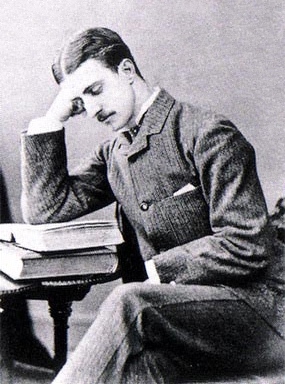
 When they try to follow her one night, keeping track of Mary by her unique bonnet, Mary Kelly passed that bonnet to Mary Nichols in order to throw off her tail. She did not recognize Druitt and Stephen, and they did not realize that they killed the wrong woman. Thus Mary Nichols’ death was a case of mistaken identity. Mary Kelly worried that it was her bonnet that got her friend killed and told another friend, Annie Chapman. She also made the mistake of expressing the same concerns to Druitt and telling him Annie’s name, turning Annie into the second Canonical victim.
 Rebecca Frost