
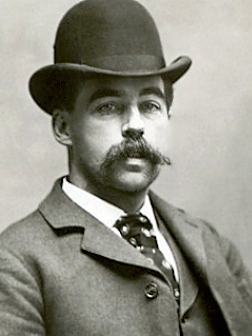
We’ve already spent a lot of time covering the real-life events of one H. H. Holmes, “America’s first serial killer.” If you missed them, check out Holmes story Part I, Part II, Part III, and the murder castle discussion. But maybe all of those are too depressing, considering the man didn’t actually murder 250 people in his custom-designed building. Maybe I’ve taken all the fun out of it.
So. Let’s talk about Holmes’ curse.
We already know that Holmes had his body placed in an extra-large coffin and encased in cement so that no one would be able to dig him up and use him for medical experimentation. He was eventually disinterred for an episode of American Ripper, to dispel the rumor that Holmes himself had snuck away and a lookalike was executed his place, but that just prevented people from reaching in. It did not, apparently, prevent Holmes from reaching out.
The death of anyone who had any connection whatsoever to the Holmes case was considered suspicious … and another victim to add to Holmes’ list. Holmes was said to have “the evil eye” – have you counted how many times Erik Larson mentions his eyes in Devil in the White City? – and, in the two decades or so following his execution, around 30 deaths were attributed to it.
The Superintendent of the Indianapolis Police Force, responsible for the invesigation into Howard Pitezel’s death, was thrown from his horse during a parade. He was, perhaps, lucky – he didn’t die, but he dealt with the effects of his injuries for the rest of his life.
One of the coroner’s physicians who had testified against Holmes at his trial suddenly dropped dead from blood poisining.
The trial judge and lead coroner both died suddenly from previously undiagnosed illness.
The prison superintendent at Moyamensing Prison, where Holmes was held and executed, committed suicide.
The father of one of Holmes’ victims was horrifically burned in a gas explosion.
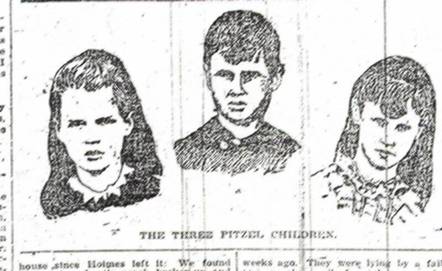
Frank Geyer, the detective who had finally tracked down Alice, Nellie, and Howard Pitezel, was struck with a sudden illness. He did recover.
The office of the claims manager for the insurance company Holmes had cheated caught fire and burned. Apparently the only untouched items inside were a framed copy of Holmes’ arrest warrant and two portraits of Holmes.
The fiancee of one of Holmes’ defense lawyers died suddenly.
An occupant of Holmes’ Murder Castle committed suicide.
The jury foreman was electrocuted.
Marion Hedgepeth, who had informed on Holmes’ insurance scam, was shot and killed during a holdup.
The Murder Castle itself was mysteriously gutted by fire.
Holmes’ caretaker committed suicide and left a note that said “I couldn’t sleep.” His relatives said he had been suffering hallucinations and may even have been “haunted.”
The list goes on.
It reads rather like Holmes’ own confession to 27 murders, with a variety of people from different walks of life, with various connections to him, and different causes of death. They would never have been linked together at all if not for the name of H. H. Holmes … or for the rumor of the curse that Holmes himself began before his death.
What do you think? Is each and every death on this list completely explicable? Or was Holmes working to increase his body count from beyond the grave?


 If you knew about Holmes before – and especially if you’ve been eagerly anticipating the murder castle discussion – I’m guessing you learned about him from Erik Larson. The Devil in the White City: Murder, Magic, and Madness at the Fair that Changed America. Larson interweaves Holmes’ story with that of the Columbian Exposition, paralleling the construction of the Fair with the construction of Holmes’ murder castle. The story bounces back and forth until the Fair is over and Holmes can have the pages to himself on his final, strange, itinerant spree, but, during his time in Chicago, Larson depicts Holmes very much as the happy serial murderer, using his mysterious Castle as a human version of a roach motel.
 The counter to Larson is one I tell people not to read if they were so starry-eyed over Larson’s Holmes that they can’t picture him any other way. Adam Selzer’s H. H. Holmes: The True History of the White City Devil pulls back the curtain and explains that, well, the murder castle really wasn’t all you thought it was. He describes clerks from the shops on the first floor napping in those “secret” rooms and passageways, and argues that it really wasn’t used as a hotel, after all. When a fire broke out in the middle of the night during the World’s Fair, there weren’t nearly enough people on the street to argue that the third floor was actually being used that way. (Selzer also gives talks and tours, and you can catch him online, although I’d recommend acquainting yourself with the case first, either through his book or some of your own research – he can jump around a lot for people who come in with only the faintest idea of who Holmes is and what myths need to be debunked.)

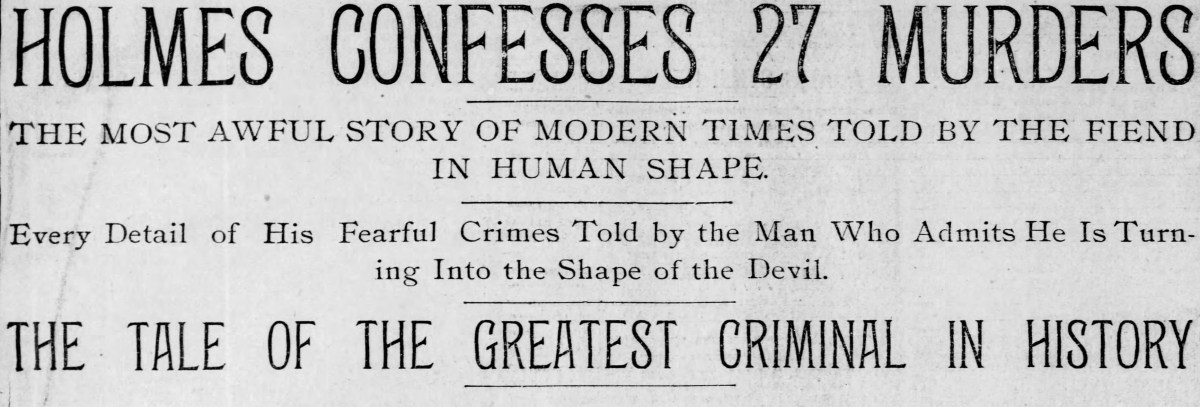
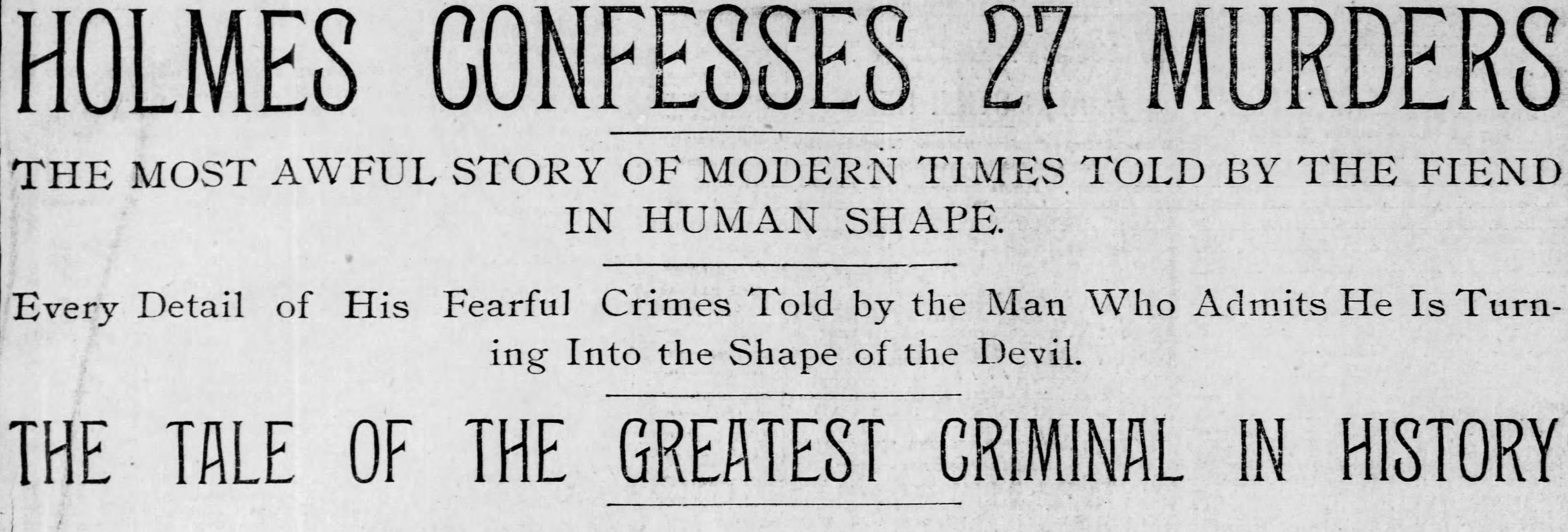 He’s bumped up the number, certainly. At the trial Holmes was accused of a single murder – even the deaths of Alice, Nellie, and Howard Pitezel were not mentioned, since they did not happen in Pennsylvania. Now he’s progressed to “the greatest criminal in history” with 27 murders.
 First, he lied. Some of the people Holmes named actually came forward before his execution two weeks later to inform the world that Holmes had not, in fact, murdered them.
 What I’ll do is write the idea down immediately. I’ve got plenty of notebooks –
  This is my other notebook. It’s a
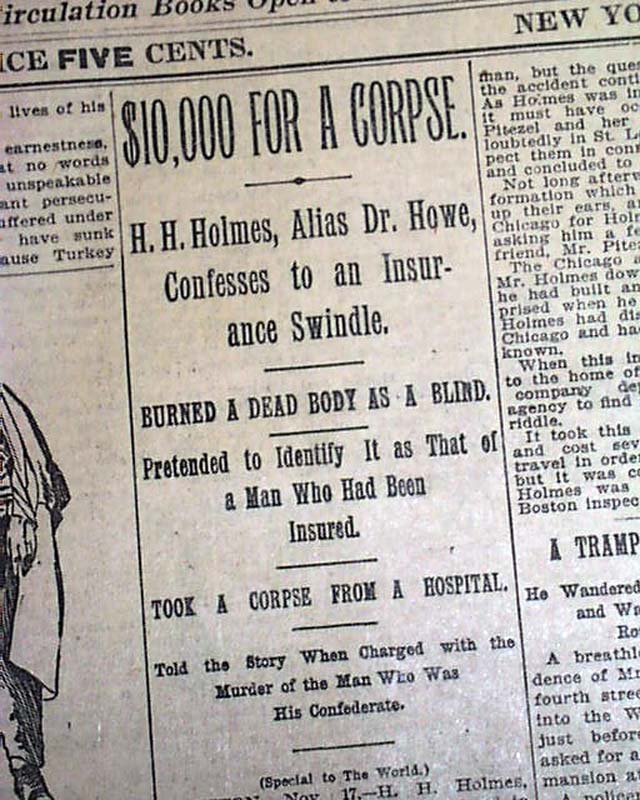 First confession in Boston, right after being taken into custody: at this point nobody was all that concerned about the children, so Holmes said that they were with their father, Benjamin. Who was totally alive. In South America somewhere, but totally alive. He had first stolen and then mutilated a corpse to be buried in Pitezel’s place.
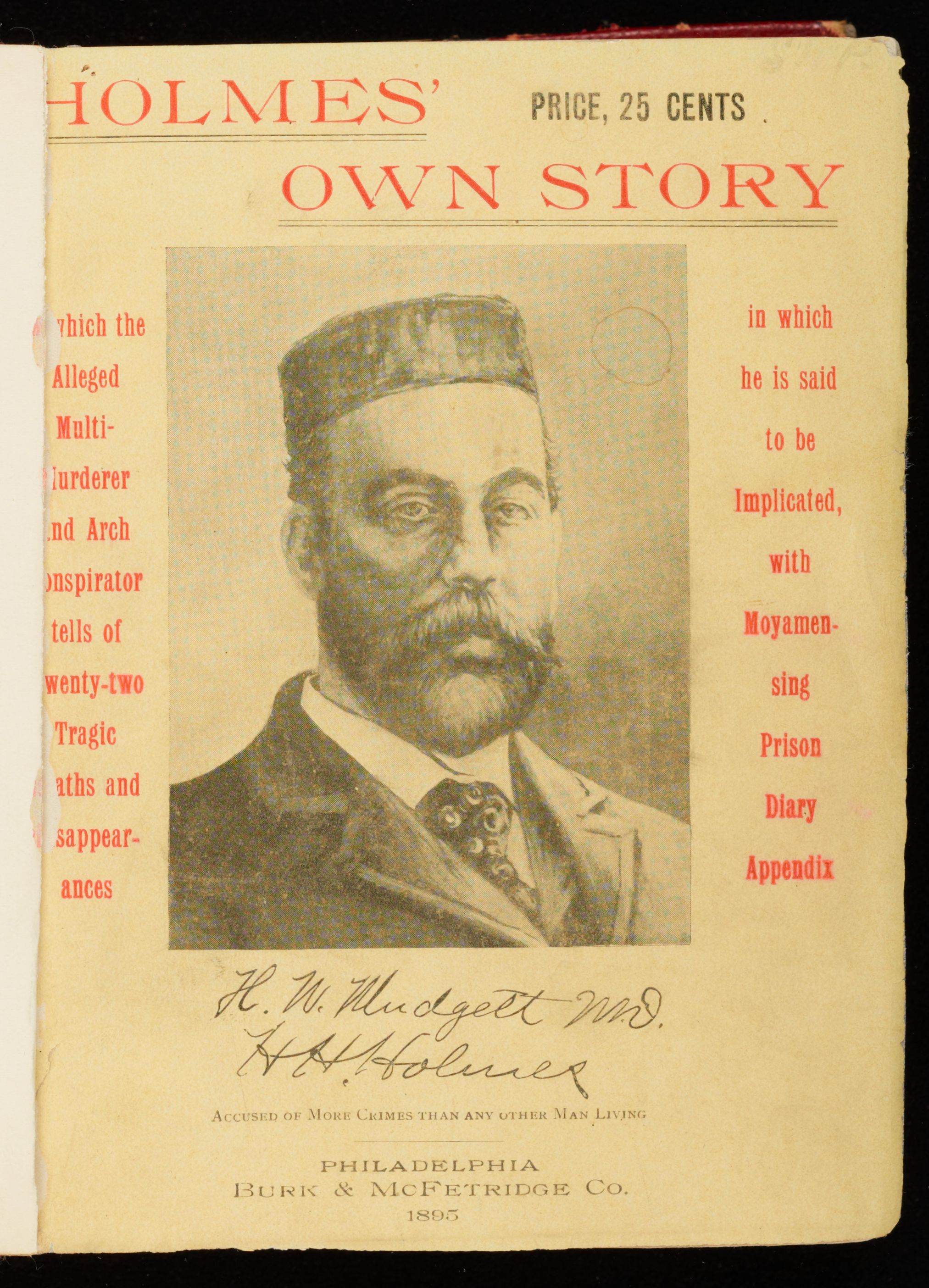 This is also where Holmes switched from spoken explanation to written. Holmes’ Own Story, published before his autumn trial for Benjamin Pitezel’s murder, is a multi-part book that starts with Holmes’s autobiography. It continues into the second part which is meant to be his prison diary. Then, once the diary structure falls apart, he finally gets around to his explanation of how Alice, Nellie, and Howard could be dead … but it wasn’t his fault.
 So
So 
 Please meet H. H. Holmes. If you did actually meet him, though, sometime between his birth in 1861 and his execution in 1896, he might not have given you that name. He was born Herman Webster Mudgett and didn’t adopt the Holmes name until he’d completed medical school at the University of Michigan and then moved away from home (and his first wife).
 Detective Geyer made use of the newspapers in his search of the various cities so that he didn’t have to keep explaining himself to various realtors. In Toronto, he gave an interview to numerous reporters so that the story of Holmes and the three children became front-page news. After this, he only had to walk in for the realtor to tell him no, he had never rented to anyone matching Holmes’ description – or that yes, he did indeed remember a man using Holmes’ favorite cover story. Geyer was able to speed through his list of realtors and find the house where Alice and Nellie had been killed.

 Take my most intense process so far. A call went out for people who wanted to write about heroic criminals in American popular culture. A friend of mine sent it to me and I debated, but … well, rejection on a proposal hurts far less than rejection on a full paper, so I submitted. Even before something was really written, the two editors had their eyes on it.
 Rebecca Frost