Ripper suspect: Lewis Carroll

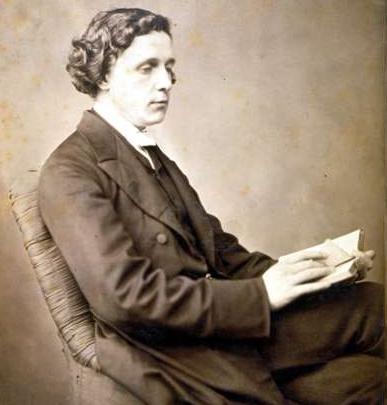
Remember how the you can basically accuse anyone who was alive in 1888 of having been Jack the Ripper? In 1996, author Richard Wallace decided to make the case for Charles Dodgson – pen name, Lewis Carroll. The man who wrote Alice’s Adventures in Wonderland in 1856 was meant to have murdered multiple women in 1888 … and to have confessed to all of it, if anyone happens to be clever enough to see.

The main point (slash problem) is that these confessions and clues are all in anagram form. Even then, at times Wallace needs to misspell something or otherwise get creative with his interpretations.

Most of these messages, Wallace argues, are from two of Carroll’s books: The Nursery “Alice” and Sylvie and Bruno. Both were first published in 1889, which at least works from a timing standpoint. If Carroll had been Jack the Ripper, he would have had time to commit his murders and then confess to him by the time the books went to press. So, clearly, the various lines of verse can be reworked into confessions and descriptions of the murder scenes.

Well. “Clearly.”

The problem with anagrams is that texts can be reworked to say just about anything, given a “codebreaker” with enough determination. Yes, fine, Carroll’s verse can be translated into murder confessions, but that’s only one possible interpretation … and assumes that Carroll started with his confession and worked everything backward into children’s literature. This is a level of dedication and focus at times seen in fiction, but not exactly documented in real life.

If the anagrams convince you, though, you should probably know a few other details. For example, Carroll was vacationing in East Sussex from August 31 through the end of September 1888. That covers the dates of the murders of Polly Nichols, Annie Chapman, Elizabeth Stride, and Kate Eddowes. On November 9, when Mary Kelly was murdered, Carroll was in Oxford.

You might point out that Wallace claims Carroll didn’t work alone – apparently this Ripper was in fact a duo and included his friend Thomas Vere Bayne – but Bayne was in Oxford with Carroll in November. Perhaps Carroll might have made multiple trips into London in order to complete these murders (a similar argument is made for suspects such as Walter Sickert and Prince Albert Victor, Duke of Clarence and Avondale, whose schedules likewise seem to leave little room for murder) but that would be an incredible stretch.

Wallace doesn’t rely solely on his anagrams. He also argues that Carroll’s life and childhood set him up as the sort of man who would indeed kill women for his own pleasure. He even argues, as many authors of the 1990s seem to, that Carroll was a victim before he ever made the murdered women his victims. In spite of these claims, though, there’s nothing in Carroll’s life that points to such acts of violence.

This theory argues that the Ripper was the sort of person who would publicize his crimes for all the world to read while laughing behind his hand because people didn’t realize the actual content of the text. True, there were all those Ripper letters that made it seem like the killer wanted to write about his crimes, and yes, Carroll was an author who wrote about many strange things, but … that seems to be the limit.

If you’re a fan of anagrams, you can turn any piece of writing into a confession of murder. Lewis Carroll is an interesting historical figure who has been examined for many reasons in both his public and personal life, but he wasn’t Jack the Ripper … even if he could be anagrammed into saying so.
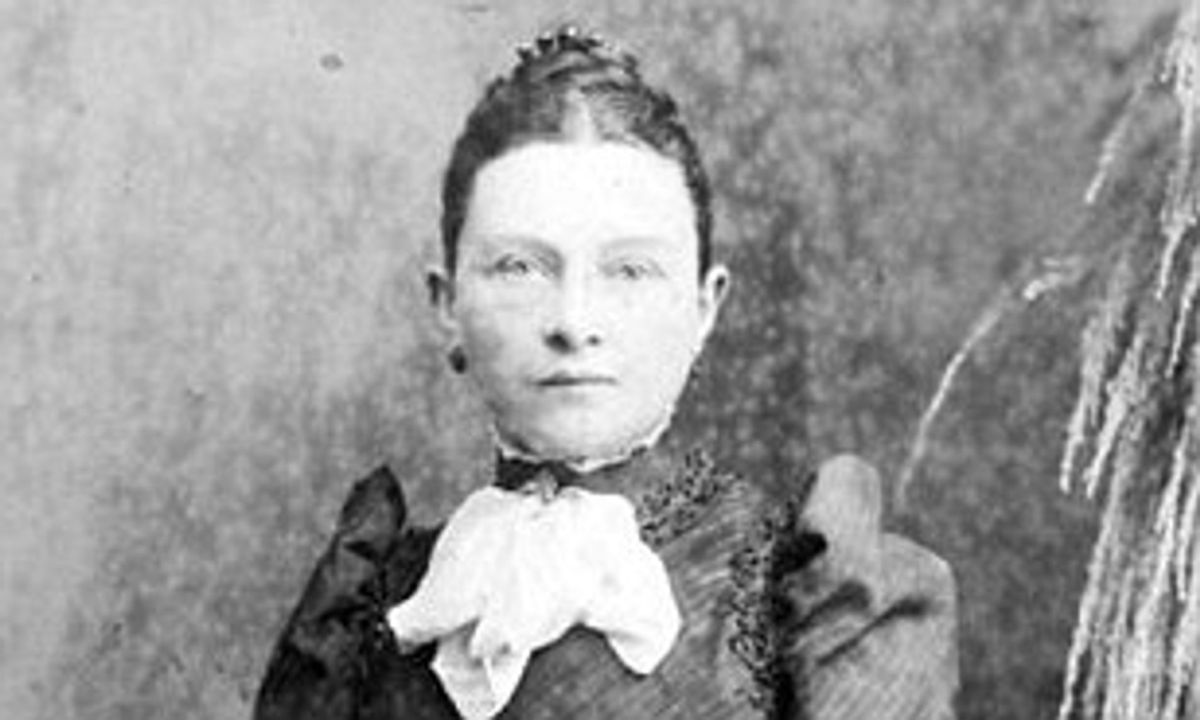
Ripper Suspect: H. H. Holmes

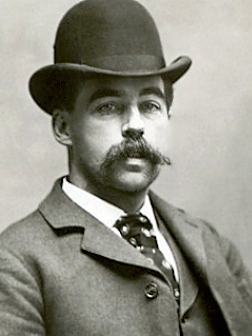
There’s been this trend lately of explaining unsolved murders by blaming someone who was caught for a different series of murders. While on the one hand it makes sense – at least in these cases the chosen suspect has indeed proven to be a murderer – it can also feel like grasping at straws. In the case of Jack the Ripper, some have proposed that American killer H. H. Holmes was actually responsible for the deaths in Whitechapel in 1888.

If you need to review who Holmes was, here are Part I, Part II, and Part III of his rather lengthy, and often convoluted, story. So: what does Holmes have going for him?

He was alive at the time: check. He was a confessed murderer – at least sometimes: check. And, um … well …

The problem with Holmes is that all of his confirmed murders were very closely tied up in money or other personal gain. Holmes doesn’t seem to have murdered because murder was fun and all he needed to enjoy himself, the way many serial killers are depicted. Holmes was a con artist who talked his way out of situations if he could but killed people to clear the way if he had to. This M.O. does not describe what happened in Whitechapel in the autumn of 1888.

Further, although Holmes was alive at the time, there are no records of his having traveled to England at all. (Adam Selzer looks at this in his book, H. H. Holmes: The True History of the White City Devil, if you want to read about the reasoning behind dismissing this, and other, Holmes rumors.) True, Holmes liked using false names, but Selzer has also tracked down various stateside interactions during those specific months. In none of his various confession or life stories does Holmes mention traveling to England, although he does suggest that Minnie Williams took the Pitezel children there.

It would seem that, if Holmes concocted his 27 supposed victims for his newspaper confession in order to make money and help them sell more headlines, that he really should have mentioned the Ripper murders if he had been responsible. Instead, this confession outlines the murders of people who then turned up to announce they were still alive, and also created fictional people to add to his death toll. It is true that Holmes was accused of many crimes after his arrest, but the Ripper murders were not one of them.

Granted, as a confessed murderer whose confessions must be in doubt, Holmes makes a better Ripper suspect than many. But why accuse him in the first place?

Holmes is marketed as “America’s first serial killer,” while the Ripper often gets the byline of “world’s first.” Even the origin of the term “serial killer” is debated between an American and a Brit. If the Ripper turns out to be American, then Holmes becomes “world’s first” and America can claim the dubious honor and add more titles to the true crime bookshelf.

Was Holmes a murderer? Yes. How many people did he actually murder? That’s still a mystery, but the number is far below his top claim of 27. Did he murder Mary Ann Nichols, Annie Chapman, Elizabeth Stride, Catherine Eddowes, and Mary Jane Kelly? No.

Who did? Good question.

Ripper suspect: Lizzie Williams

Most serial killers are expected to be men. Female serial killers, the FBI lectures us, tend to use bloodless methods of murder, such as poison or strangulation. Jack the Ripper, therefore, is highly unlikely to have been a women. although the idea was indeed around at the time of the murders. More recently, John Morris has accused not just a woman, but the wife of a man who has himself been named as a Ripper suspect.

Born Mary Elizabeth Ann Hughes, Lizzie married Dr. (later Sir) John Williams in 1872. John became a private doctor to the royal family in 1886 and was named as a Ripper suspect in 2005 by one of his own descendants. Tony Williams and Humphrey Price claimed that John’s missing diaries from the time surrounding the murders meant that he, personally, had been the Ripper and did not want to leave a record of his activities.

In 2012, however, John Morris decided to take things a step further: the diaries are missing, he argues, because they contain John’s worries about his wife, Lizzie, who later confessed to him that she had in fact been the murderer.

The argument here is that, after a childhood of being spoiled and given everything she ever wanted, Lizzie found herself in a childless marriage. Sir John is meant to have decided that the problem lay with his wife, so he sought out another woman to provide him with an heir. He happened upon Mary Jane Kelly, a poor East End sex worker who had at least proven herself fertile because she already had a son, and John embarked on an affair.

Lizzie, having discovered this, flew into such a fit of rage and jealousy that she embarked on an entire murder spree. She’s supposed to have killed the first three of the Canonical Five victims in order to simply prove to herself that she could indeed murder a woman – although why she’d want to practice on women who had done nothing to her isn’t entirely clear. Really, to make this work, there needs to be some sort of explanation as to why she didn’t just go murder her husband’s mistress, since other women died prior to Mary Jane Kelly.

Morris argues that Lizzie, having made certain that she could wield a weapon – perhaps her husband’s own scalpels – somehow tracked down Catherine Eddowes, heard her give the name “Kate Kelly,” and mistook her for Mary Jane Kelly. This is Morris’ explanation for why Catherine Eddowes was so horribly mutilated following her murder: Lizzie used a knife in a fit of feminine pique and wanted to ensure that her husband would never find his mistress attractive ever again.

It also explains the long pause between the murder of Catherine Eddowes and Mary Jane Kelly: Lizzie, upon discovering that she had murdered and mutilated yet another innocent woman, was taken aback and needed some time to regroup. Was she steeling herself for yet another murder? Upset that somehow she was now a multiple murderer and hadn’t yet even worked her way up to her true target? Whatever the reason, Lizzie was still able to take herself in hand in order to murder and mutilate the woman who might have, in time, given her husband the child he wished for.

After which Lizzie did in fact have a mental breakdown, confess the murders to her husband, and throw herself on his mercy (while perhaps blaming him for a bit that she was forced to become a murderer in the first place). John destroyed his diaries, saw that his wife got a rest cure, and the Williamses were safe from suspicion until the early 2000s.

We all know about hell’s fury and women scorned, and Rudyard Kipling would like to inform us that the female of the species is indeed more deadly than the male, but what do you think? Are the Ripper murders really the result of a woman seeking revenge against her husband’s mistress?

Ripper Suspect: Charles Allen Lechmere

Last week we talked about one of the oldest named Ripper suspects, Montague John Druitt, who died via an apparent suicide in late 1888. Named by one of the men involved in the Ripper case, and refuted by another, Druitt is frequently mentioned but not often actually accused of having been the famous murderer. Charles Allen Lechmere’s name is a more recent contribution to the hundreds of Ripper suspects, and although he might be a better choice than Druitt, his guilt is impossible to prove.

Lechmere enters Ripper lore under the name Charles Cross, a meat cart driver who discovered Mary Ann “Polly” Nichols after her murder. According to recorded testimony, Lechmere was passing Buck’s Row on his way yo work around 3:40 am on August 31, 1888, when he saw a woman lying on the ground. Another man, Robert Paul, also on his way to work, saw Lechmere, who immediately called Paul over. The two men didn’t see any blood or mutilations and left Polly Nichols where she lay, reporting an apparently drunk or unconscious woman to a constable they found on the way.

At the inquest, Lechmere gave his name as Charles Cross, using the surname of one of his stepfathers, and that seemed to be the end of it. The testimony of “Charles Cross” helped establish the likely time of death, and “Cross” and Paul both testified that they saw no one else in the street. The inquest verdict was willful murder by person or persons unknown, and that was the end of it.

Until 2014, that is, when the documentary Jack the Ripper: The Missing Evidence named Lechmere as a suspect.

Journalist Christer Holmgren and criminologist Gareth Norris build the case against Lechmere, starting with the fact that he did indeed give a false name. They were able to connect “Charles Cross” to Charles Allen Lechmere and find more information about this apparent witness. Tracing “Charles Cross” had proven futile, but information about Charles Allen Lechmere seemed to point toward likely guilt.

Holmgren and Norris make use of geographic profiling in their argument for Lechmere’s guilt. This is a newer method that relies on psychological information about serial killers, combined with the locations of their crimes, to help make predictions about future murder locations and the killer’s “home base.” It involves questions of how far a killer would willingly travel in order to commit a crime, while still feeling relatively safe because he knows the area, as well as marking an area closer to the killer’s home as being unlikely for future murders. To oversimplify, a killer’s “hunting range” looks vaguely like a donut shape, with his home in the middle surrounded by an area of inactivity.

This range, though, is affected when a killer becomes comfortable in new areas. A man who has moved around a lot as a child knows multiple neighborhoods. One who has to walk a distance to get to work learns still more. A killer’s comfort zone expands as his life develops and he moves through more of the world, leaning which areas would be “safe” for him to kill in.

lechmere2Holmgren and Norris not only point out that neither Lechmere – seen here in a photograph from 1912 – nor Paul mentioned seeing any other person in Buck’s Row, even though the murderer must have still been nearby, but map out Lechmere’s life against the murders of the Canonical Five and a previous victim, Martha Tabram. Each of these sites corresponds with Lechmere’s walk from home to work in the autumn of 1888, or to previous homes his family occupied, or earlier jobs he had.

They theorize that Lechmere was not merely bending over an unresponsive woman’s body when Paul spotted him, but was actually interrupted in the middle of the Ripper’s trademark mutilations. Lechmere, according to Holmgren and Norris, attempted to cover his tracks by first pretending to discover Polly Nichols’ body, and then by giving a false name.

Beyond this, though, there is nothing to either link Lechmere to the Ripper or to prove that he conclusively could not have been. The documentary argues that Lechmere would have known the area, yes, and can place him at the scene shortly after one of the murders, but the Ripper’s identity is still unknown – and, 130 years after the murders, we’re still pulling out new names and trying to assign guilt.

Ripper suspect: Montague John Druitt

Jack the Ripper was never caught. He murdered five women in the fall of 1888 – or more, or fewer, depending on which story we want to tell – and then, to be melodramatic, he slunk back into the fog without ever showing his face. Anyone who was arrested under suspicion of being the murderer had to be released, and the police file was closed in 1892 without any public declaration of his identity. This, of course, has left the door open for any number of suspects.

One of the earliest Ripper suspects was a young lawyer named Montague John Druitt. We’ve seen him before as part of my favorite, and very convoluted, Ripper theory, but why was he considered a viable suspect in the first place?

druittIIDruitt was a young lawyer who committed suicide in late 1888 after the murder of Mary Jane Kelly. He had been working at a boarding school in order to supplement his income, and was dismissed from that post in late November. There is no evidence supporting a reason for this dismissal, but Druitt killed himself not long after. His body was found floating in the Thames on December 31, 1888, and had been in the water for some time.

What evidence is there that Druitt was the Ripper? Honestly, none.  Some authors – again, see my favorite theory – try to place him near Whitechapel and give him a motive for the murders by tying him to the Crown and other conspiracy theories. Druitt even caught the attention of Melville Macnaghten, who rose to the position of Assistant Commissioner and, years after the crimes, penned the “Macnaghten Memoranda”: a list of three people Macnaghten thought likely to have been Jack the Ripper.

(It should be noted that, if you really want to get into Ripperology, you need to be familiar with terms like “the Macnaghten Memoranda” and “the Swanson Marginalia.” This means knowing who Macnaghten and Swanson were, their connection to the case, and when and where they penned their various notes. It’s rather confusing and frustrating, especially since said notes were not made in 1888, but years later, and are jottings and therefore fragments.)

Macnaghten’s Memoranda even confuses the issue by naming a Mr. M. J. Druitt and calling him “a doctor of about 41 years of age.” This Druitt, though, was a barrister and school teacher, and 31 years old. Macnaghten was likely working from memory instead of notes, and simply recalled that someone had drowned himself in the Thames after Mary Jane Kelly’s murder. The timing meant that Macnaghten could argue Druitt’s mental health was deteriorating and that, not long after this final brutal murder, he could no longer live with himself and took his own life.

Montague John Druitt was not, however, experiencing mental health issues. He was still working at the school and as a barrister through the end of November. Although Macnaghten  argues that Druitt’s family believed he was the Ripper, there’s no evidence of this outside of Macnaghten’s statement. Even the way Macnaghten words it makes it seem as though he heard it thirdhand at least, and not directly from the family members themselves.

But, because Druitt’s name appears in the Macnaghten Memoranda, written by one of them involved in the case in 1888 and who had risen further to a respected post, his name has been tied to the murders. It doesn’t matter that he had no known connection to Whitechapel or that Inspector Fredrick Abberline went on record saying that there was nothing to incriminate Druitt – from the timing of his suicide, likely a reaction to losing his teaching position, Druitt’s name must always be brought up when discussing Ripper suspects.

What’s your favorite Ripper theory?

With hundreds of potential Ripper suspects, there are hundreds of stories about the Ripper. Who was he? Why did he kill the Canonical Five? The choices are nearly endless. But my favorite …

It’s complicated. That’s why it’s my favorite: it’s unique and also ridiculous, weaving in some of the more believable or standard elements with new conspiracies. So, here we go: John Wilding’s theory of what actually happened.

coverWilding published Jack the Ripper: Revealed in 1993 and an updated version (Jack the Ripper: Revealed and Revisited) in 2006. He starts with Mary Jane Kelly, the final victim of the Canonical Five, putting her in a difficult position. Wilding’s Mary is pregnant, and the father is the Crown Prince himself. For some reason, once she discovers her pregnancy, Mary goes to lawyer Montague John Druitt to inform him of her situation.
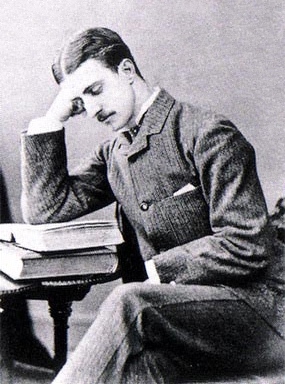
druitt

Druitt has long been associated with the Ripper case simply because he committed suicide shortly after Mary Jane Kelly’s murder, providing theorists with a convenient explanation for why the murders stopped. He is not considered to be a serious suspect by any means, but Wilding’s Druitt has some interesting twists in and of himself. Druitt is only half of the Ripper in this story, since he turns to his friend, J.K. Stephen, to ask him for help and advice.

Stephen is tutoring Prince Eddy – shorthand for Prince Albert Victor, Duke of Clarence and Avondale, the Crown Prince’s elder son – and both Stephen and Druitt anticipate being in positions of power once their friend Eddy ascends to the throne. They can’t risk Eddy’s inheritance on the unborn child of an East End sex worker, so, keeping the secret between themselves, Druitt and Stephen decide to kill Mary Kelly.

stephenWhen they try to follow her one night, keeping track of Mary by her unique bonnet, Mary Kelly passed that bonnet to Mary Nichols in order to throw off her tail. She did not recognize Druitt and Stephen, and they did not realize that they killed the wrong woman. Thus Mary Nichols’ death was a case of mistaken identity. Mary Kelly worried that it was her bonnet that got her friend killed and told another friend, Annie Chapman. She also made the mistake of expressing the same concerns to Druitt and telling him Annie’s name, turning Annie into the second Canonical victim.
Liz Stride’s death is more difficult to explain, since Wilding argues that she recognized one of the killers and had to be eliminated before she publicly identified them. However, while Mary Nichols and Annie Chapman were killed because of their association with an unknowing Mary Kelly, Catharine Eddowes was purposefully chosen.

By this point, Queen Victoria has discovered that her son is expecting another child. Rather than being aghast, she wishes to preserve any possible descendant of her beloved deceased husband. Druitt, Stephen, and Mary Kelly herself are roped into a new scheme: to continue the series of murders so that Mary Kelly can be made to disappear and no one will question it.

Mary Kelly chooses Catharine Eddowes are the next victim, trying to get her drunk so she presumably won’t feel a thing. Eddowes ends up arrested for public drunkenness, but Druitt and Stephen manage to catch her once she’s released and take care of business. Finally, Mary Kelly chooses another of her friends, this woman nameless, to be murdered and mutilated in her rented room and therefore mistaken for her. In this version, the woman discovered at 13 Miller’s Court is not Mary Kelly, but this anonymous friend.

Mary Kelly, perhaps feeling a bit of guilt about getting two of her friends brutally murdered, is thus able to slip away and give birth to the Crown Prince’s child in peace and luxury. Druitt and Stephen sadly both die young, as does Prince Eddy. Their chances at holding high positions at court were dashed all around, and it seems they murdered five innocent women for nothing.

This conspiracy hasn’t caught as much attention as From Hell and the Freemasons, but it certainly makes for a good story. It’s not true in the least, but it’s fascinating all the same.

What’s your favorite Ripper theory?

But haven’t they used DNA to identify Jack the Ripper?

When the Ripper murders happened in the fall of 1888, police had very little to use in the form of forensics. This was before fingerprints – and long before DNA – at a time when murder victims were rarely even photographed at the scene of the crime. It was also at a time when people thought that taking good, close-up photographs of people’s eyes would reveal the last thing they had ever seen. Forensics in 1888 definitely did not look like an episode of CSI.

But we’re in the 21st century now, and we do have access to a lot of forensic technological advances. DNA was first used in a criminal investigation in 1986, and since then advances mean that we could certainly test the Ripper’s DNA – right?

Well, so far two people have tried.

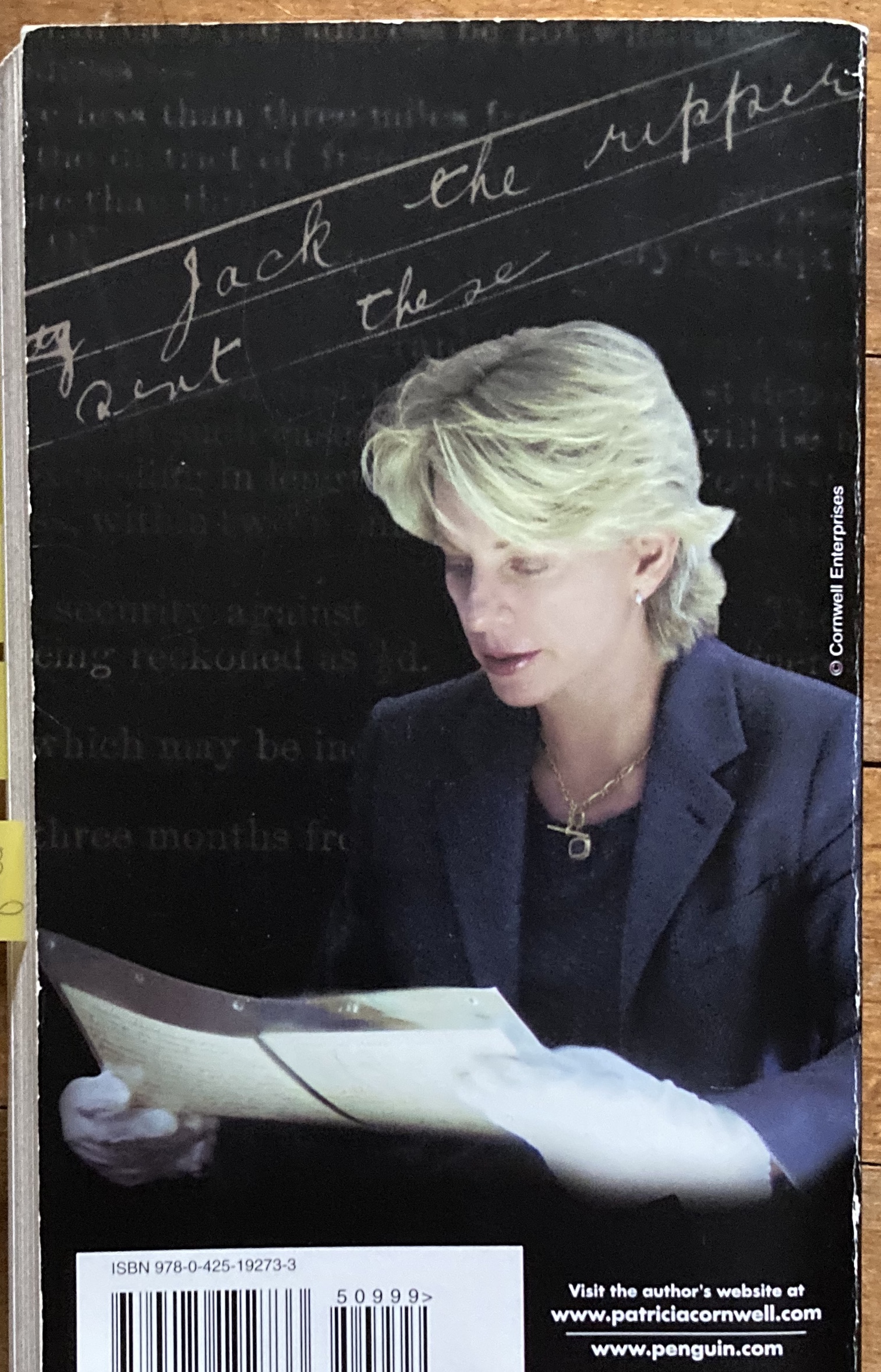
If you’ve only read one book about Jack the Ripper, chances are it’s Patricia Cornwell’s 2002 Portrait of a Killer: Jack the Ripper – Case Closed. Here she is on the back, examining a document carefully while wearing clean white gloves to apparently indicate she’s in an archive. Known for her fiction, especially her series about medical examiner Kay Scarpetta, Cornwell decided to use her personal wealth to investigate the Ripper crimes. Her research, which was updated first in a Kindle single and in a 2017 follow-up book, directed her toward accusing artist Walter Sickert as having been Jack the Ripper.

Although Cornwell did buy a number of Sickert’s paintings – and have to defend herself against accusations of wantonly destroying them in her search for evidence – her source of the Ripper’s DNA came from some of the Ripper letters. (We’ve talked about those before …) By swabbing the flap of the envelope and the stamp, Cornwell hoped to collect the Ripper’s DNA to compare it directly to Sickert’s.

There are a couple issues here, in spite of how cool she might look on the back cover of the second book in her Matrix-style coat. First, her methods assume that the Ripper himself licked the stamps and the envelopes. This means both that the letter wasn’t handed over to an employee who sold the stamp and did the honors, and that the Ripper actually wrote the letters. And second, because of the age of the letters, only mitochondrial DNA could be tested. At best, mDNA showed that Sickert could not be excluded from the tens (or possibly hundreds) of thousands of possible people who could have licked the envelope. Cornwell’s experts told her she had narrowed the Ripper down to about 1% of the Victorian British population, and in her book she translates this as indicating that yes, it was Sickert.
So mDNA from the likely hoax Ripper letters not excluding Sickert from the possible thousands to have licked it does not prove that Walter Sickert was Jack the Ripper. (Cornwell also has the difficulty of explaining how her chosen Ripper was meant to be in France at the time of the murders, on top of her theory that Sickert wrote most, if not all, of the Ripper letters himself. As an artist he was apparently amused by disguising his handwriting.)

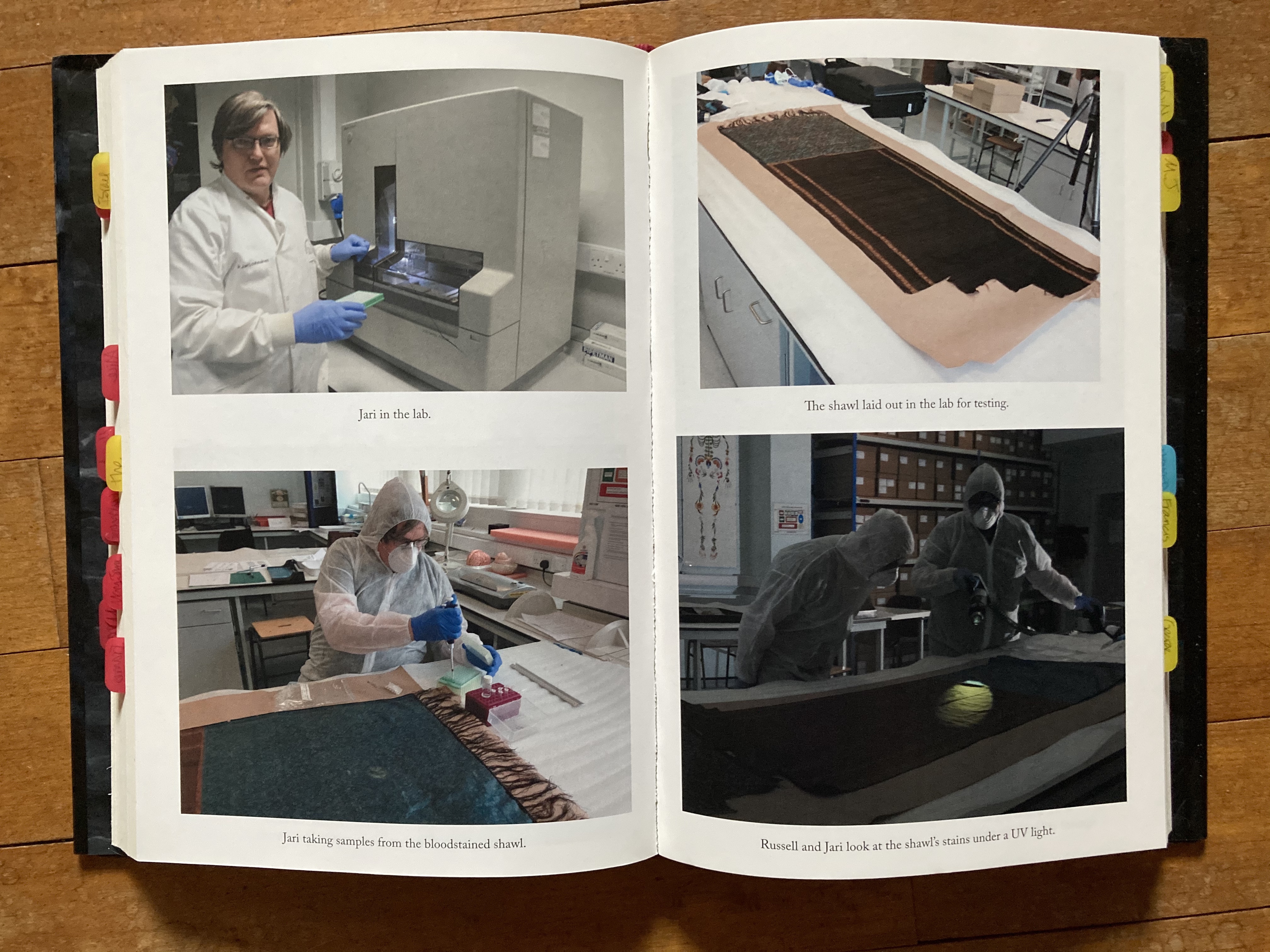
The second example, most recently hitting headlines as the results were published in the Journal of Forensic Sciences, involves a shawl. This shawl was supposedly removed from Catherine Eddowes’ possessions after her murder and never officially recorded as having belonged to her. A police officer is meant to have taken it as a gift for his wife (since somehow it avoided being covered in blood) but then, mysteriously, the shawl passed from hand to hand and traveled through the decades … without ever having been washed.

In 2007, Russel Edwards bought the shawl at auction, believing the story of its provenance when other Ripper scholars present scoffed at the idea. Like Cornwell, he had DNA tests run, this time checking for matches to two people. (Again, note the CSI-style photographs.) Edwards concluded that the blood found on the shawl could indeed have come from Catherine Eddowes, and that the semen did not exclude his personal choice for Ripper, Polish barber Aaron Kosminski.

But we’re left with the same sorts of issues. Edwards’ expert, Jari Louhelainen, was also limited to testing for mDNA. His results were like the ones Cornwell was given: they did not exclude the people Edwards was looking for, but it’s hardly a conclusive test when it only narrows the pool down to some thousands (again, in a range that might be from tens to hundreds). The shawl itself, like the letters, is questioned, since there’s no trail that actually connects it to Catherine Eddowes and it has a lot of traits that mean it probably didn’t belong to her. (The dye was not water-fast, for example, making it an unlikely possession of a woman who frequently slept rough. On top of that, Eddowes’ boyfriend had just pawned his boots so they could eat, while she supposedly hung on to this elaborate shawl long enough to die wearing it.)

Edwards’ book came out in 2014 and I spent a week greeting people with “Yes, I know about the shawl.” The journal article came out in 2019 and I gave a talk on Jack the Ripper and the limitations of these DNA tests to hopefully cut down ont he number of people who asked me about it. These books certainly sound good, with all this talk about 21st century science and the greatest criminal mystery of all time, but, in spite of their expense and the photo opportunities, these tests are far from conclusive.

No, DNA evidence has not identified Jack the Ripper.

Why do we call him “Jack the Ripper”?

It’s not a real name. Usually we call serial killers by their real names, like Ted Bundy, John Wayne Gacy, or Jeffrey Dahmer. Sure, there are exceptions – we still call Dennis Rader “BTK” or Gary Ridgway “The Green River Killer” because more people know their nicknames than their real names, but their real names usually make it in there somewhere.

Jack the Ripper doesn’t have a real name.

The writing on the Saucy Jacky postcardThis is a replica of a postcard that was sent to the Central News Agency on October 1, 1888. It’s come to be known as the “Saucy Jacky Postcard,” and there are a couple interesting things about it. First, it wasn’t sent until very late that fall – after (at least) four murders had been committed and people were already talking and reading about the crimes. The second is what it says:
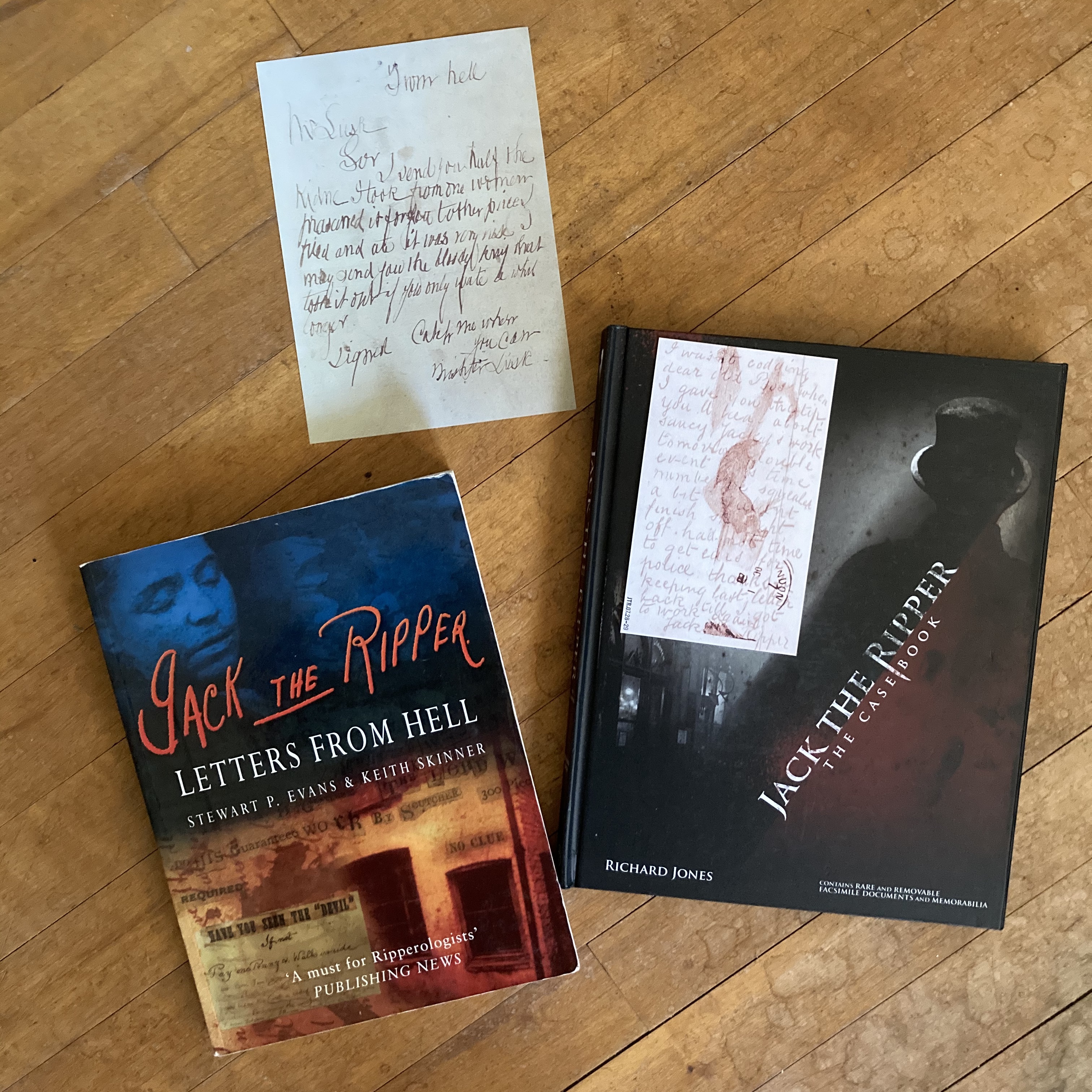
I was not codding dear old Boss when I gave you the tip, you’ll hear about Saucy Jacky’s work tomorrow double event this time number one squealed a bit couldn’t finish straight off. Had not time to get ears off for police thanks for keeping last letter back till I got to work again.
Jack the Ripper

This postcard – well, the real one; not the replica that comes in Jack the Ripper: The Casebook by Richard Jones – gave the killer his name. Before this, he was known as the Knife or the Whitechapel Fiend.

Reverse of the Saucy Jacky postcard with the address showing

Here’s the address on that postcard. It was sent to the Central News Agency in London, not to any police station. Instead, the sender picked a news distribution service known for sensational stories and undercutting competitors. Basically, if someone wanted this postcard to become front-page news … and, perhaps, to revive a flagging story and sell more papers … this is where that person would send it. Letters had already been sent claiming to have been from the killer – the postcard references them – but this one was the first to be signed with “Jack the Ripper.”

At the time, police claimed they knew that a journalist had sent the postcard, but they didn’t give any names. In 1931, Fred Best, who worked for one of the newspapers, claimed that he and a colleague sent the postcard. It regenerated interest in the story, certainly, and gave the killer his name – but it also opened the floodgates for more “Ripper letters.”

More than 300 letters were sent – to the police, to newspapers, and to the Central News Agency – claiming to be from the killer. There are entire books devoted to these letters, like Jack the Ripper: Letters from Hell by Stewart P. Evans and Keith Skinner, and stories of young women being arrested for being caught sending them. The letters are interesting, having both kept the murders in the news and given the killer his name … but are any of them real?

The most likely answer is “no.” They’re written in different handwriting, with different levels of penmanship and grammar. With known cases of people writing and posting their own “just for fun,” its highly unlikely that any of the letters were ever touched by the real killer. The possible exception is the one with the return address “From Hell,” likely a familiar phrase even if you’re not familiar with the letters … but that is a story for another time. 

We call him “Jack the Ripper” because that was the name that stuck in the headlines, and no one was ever caught to give Saucy Jacky his real name. Hundreds of people have been accused, though. Do you have a favorite suspect?