ARC review: The Gatsby Gambit by Claire Anderson Wheeler

This ARC landed in my inbox at either the absolute best or absolute worst time: just as I was wrapping up my annual reading of F. Scott Fitzgerald‘s The Great Gatsby with my juniors for the third year in a row. The thing is, high school English teachers pick things they don’t mind reading multiple times a year, and don’t mind dissecting over and over again. I love Gatsby, and–possibly because of the 2013 movie–it was even last year’s prom theme. (Yes, I chaperoned in my best 1920s costume.)

So a murder mystery set in in the world of one of my favorite novels? Let’s take a look at The Gatsby Gambit by Claire Anderson Wheeler.


America’s most beloved literary characters. 
A page-turning mystery. 
The gilded opulence of the Roaring Twenties.
And a clever young woman of unusual persistence.

Be ready to re-think the world of Gatsby.
 
Freshly twenty-one and sporting a daring new bob, Greta Gatsby–younger sister to the infamous Jay—is finally free of her dull finishing school, and looking forward to an idyllic summer at the Gatsby Mansion, the jewel of West Egg. From its breathtaking views to its eccentric denizens, Greta is eager to inhale it all–even to the predictable disapproval of Mrs Dantry, Jay’s exacting housekeeper. Indeed, nothing could disrupt the blissful time Greta has planned… except finding out that Jay’s cadre of dubious friends—Daisy and Tom Buchanan, along with Nick Carraway and Jordan Baker—will be summering there, too.
 
It’s hard to be noticed when the luminous Daisy Buchanan is in the room, and Jordan keeps rather too close tabs on handsome Nick Carraway for Greta’s liking. But by far the worst is Daisy’s boorish husband, Tom, whose explosive temper seems always balanced on a knife-edge. But soon, bad blood is the least of their problems, as a shocking event sets the Gatsby household reeling. 
 
Death has come to West Egg, and with it, a web of scandal, betrayal, and secrets. Turning sleuth isn’t how Greta meant to spend her summer—but what choice does she have, when everyone else seems intent on living in a world of make-believe?
 
Deftly subverting romantic notions about money, power, and freedom that still stand today, THE GATSBY GAMBIT is a sparkling homage to, and reinvention of, a world American readers have lionized for generations.


So my brief review:

This is a book best suited to people who are not intimately familiar with Fitzgerald’s version. I received my advance copy at the same time I was once again finishing The Great Gatsby with my students, so the details of the original were too fresh for me to sink fully into this new world and Wheeler’s versions of the characters.

The story starts slowly, inserting the new character of Greta Gatsby as she finally comes home from all her years of being sent off to school. She begins to interact with alternate versions of Fitzgerald’s characters as Wheeler navigates what’s the same (not much) and what’s different in her version. There are some Easter egg references to the original, but also a lot of changes, and not all of those changes seem entirely necessary to the plot. My students, however, heartily applaud her choice of victim, although they always wish someone else had done the deed. Wheeler offers up various suspects as Greta takes off on her own to prove herself worthy (and independent) in a male-dominated world, annoying the detectives and her brother alike when she’s convinced that the apparent suicide isn’t all it appears to be.

It’s a slow burn until it breathlessly barrels down the last quarter of the book, and it’s at the end, freed from any premise of the inspiration text, that Wheeler really shines. I struggled with the characterization of Tom, Daisy, Nick, Jordan, and Jay because I wasn’t sure how much I was supposed to remember from Fitzgerald and how much they were supposed to be different (changed, perhaps, because it seems most of the events of Fitzgerald’s book happened the summer before this one starts). If you have faint memories of lavish parties and a green light from your own high school days, you’ll probably enjoy it.

Four stars out of five


The thing is, unless you routinely go through Prestwick House chapter questions about the book, you’re not going to notice a lot of Wheeler’s changes. Who remembers what religion the Buchanans are, anyway? (Everyone who has to answer the question about the elaborate lie that surprises Nick in Chapter II, at least if they have to correct it once a year.) I’m not sure why it ends up as one of the book’s great quotes, but in the original, they’re not Catholic. Wheeler, however, makes a point of stressing the fact that they are.

On the one hand, it seems like such a silly thing, but on the other … why use the Gatsby name at all? There have to be changes to keep Jay alive, of course (spoilers, sorry) and the fact that Wheeler gives him a younger sister to be at the center of the story makes for further changes, but the best parts of the book are the ones where Wheeler’s original characters take center stage and shove the well-known (and possibly hated) Fitzgerald characters to the side. I think that’s even a large part of what makes for a slow start: she has to spend so much time explaining who her Gatsby and Daisy and Tom and Nick and Jordan are, and separating them from the characters we might be expected to know.

Every so often there’s what seems to be an Easter egg–Daisy’s wedding necklace, for example, plays a part–but they’re at odds with the new backstories and new relationships Wheeler’s trying to forge. Why make these callbacks to specific parts of the original (like a gas station owner and his wife moving away for some mysterious reason) when so many other aspects of the characters’ histories and personalities have changed? Jay Gatsby is still a rich man with poor beginnings who throws parties, but those poor beginnings are vastly altered and Wheeler never quite explains how, if he isn’t a bootlegger, he went from poor to a soldier to his vast wealth.


Are these questions going to plague most readers? I doubt it. But I also think Wheeler’s story would have been stronger if she’d either more fully committed to Fitzgerald’s characters or been allowed to leave the Gatsby name behind entirely. As it stands, the title alone sets us up for a much deeper connection between the source text and her murder mystery than we find in the book.

I’m especially interested to see how readers who don’t have such a close connection to The Great Gatsby respond because, like I said, I was either going to be the best or the worst audience for this book.

The Gatsby Gambit is out April 1.
ARC review: Cross My Heart by Megan Collins

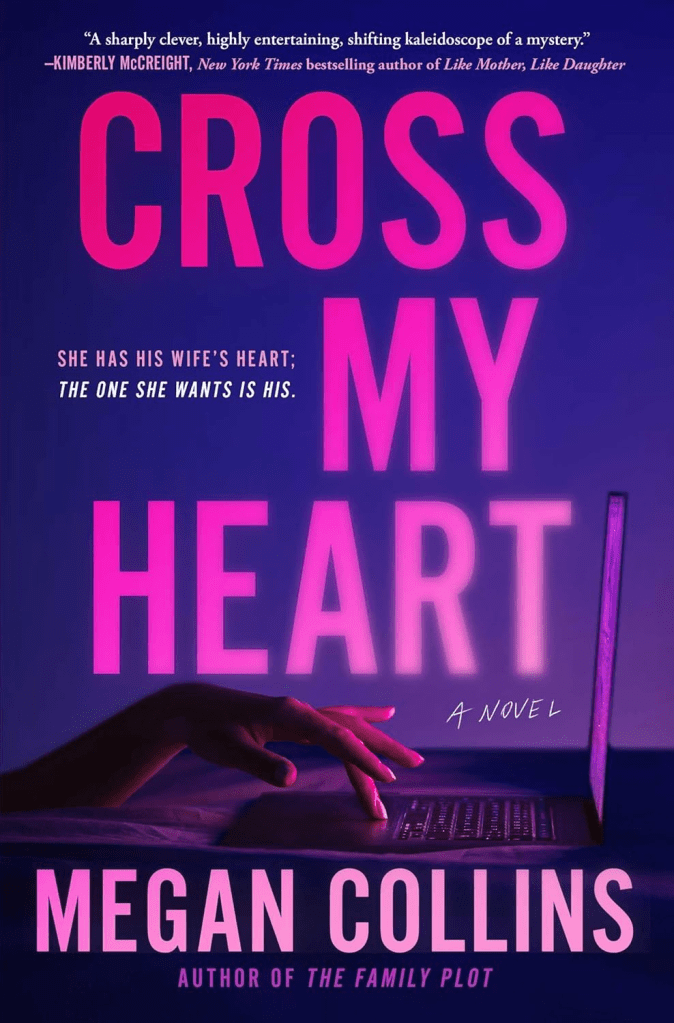
Oh hello! There’s still time to preorder your next great read before 2024 ends! How about Cross My Heart by Megan Collins, author of such books as The Family Plot and Thicker Than Water?

Let’s start with the official blurb:

She has his dead wife’s heart; the one she wants is his. The author of The Family Plot brings her signature prose to a twisty novel about a heart transplant patient who becomes romantically obsessed with her donor’s husband.

Rosie Lachlan wants nothing more than to find The One.

A year after she was dumped in her wedding dress, she’s working at her parents’ bridal salon, anxious for a happy ending that can’t come soon enough. After receiving a life-saving heart transplant, Rosie knows her health is precious and precarious. She suspects her heart donor is Daphne Thorne, the wife of local celebrity author Morgan Thorne, who she begins messaging via an anonymous service called DonorConnect, ostensibly to learn more about Daphne. But Rosie has a secret: She’s convinced that now that she has his wife’s heart, she and Morgan are meant to be together.

As she and Morgan correspond, the pretense of avoiding personal details soon disappears, even if Rosie’s keeping some cards close to her chest. But as she digs deeper into Morgan’s previous marriage, she discovers disturbing rumors about the man she’s falling for. Could Morgan have had something to do with his late wife’s death? And can Rosie’s heart sustain another break—or is she next?

And here’s my official, post-it-everywhere review:

Rosie just got a new heart, but she wants more than anything to give it away. If only she could be certain that the man in her sights isn’t a murderer …

This is a deliciously twisty book that will surprise even the most avid thriller fan. Maybe you want to be suspicious of Rosie and her soft new heart, and maybe you should be … but it turns out it’s not for the reasons you think. She’s trying to walk this line and ignore the fact that she’s playing a dangerous game of cat-and-mouse (and maybe confusing which one of them happens to be the cat) while ignoring the danger signs every step of the way. No man can be worth as much effort as Rosie puts into trying to uncover the reality of Morgan Thorne.

This book surprised me with its similarities to one of my absolute favorites, but I can’t reveal which one or else that gives a lot away. Let’s just say Rosie’s contemplations of mortality and identity play into far more than wondering if her new heart can’t help but love her husband’s donor. The absolutely twists and turns (yes, plural) this book takes kept me riveted right up until the end. Megan Collins crafts complex characters who have their own reasons not to reveal everything all at once, and the way she tells their story just adds to the suspense. Cross My Heart is a must-read.


Cross My Heart is out January 14!

ARC review: You’d Look Better as a Ghost by Joanna Wallace

I was lucky to be granted a NetGally advanced copy of You’d Look Better as a Ghost by Joanna Wallace. I didn’t know anything about the book, but the back cover certainly made it seem right up my alley:

The night after her father’s funeral, Claire meets Lucas in a bar. Lucas doesn’t know it, but it’s not a chance meeting. One thoughtless mistyped email has put him in the crosshairs of an extremely put-out serial killer. But before they make eye contact, before Claire lets him buy her a drink—even before she takes him home and carves him up into little pieces—something about that night is very wrong. Because someone is watching Claire. Someone who is about to discover her murderous little hobby.

The thing is, it’s not sensible to tangle with a part-time serial killer, even one who is distracted by attending a weekly bereavement support group and trying to get her art career off the ground. Will Claire finish off her blackmailer before her pursuer reveals all? Let the games begin . . .

You’d Look Better as a Ghost is a bit You, a bit Dexter, a bit Hannibal, and a bit Fight Club – but not the Fight Club part of Fight Club. Claire is a serial killer with a dark sense of humor and her own personal code, and when we first meet her she’s reeling from the death of her father and trying to cope in the way it seems only she can. Her bereavement support group doesn’t seem to be helping … and might actually end up hurting as it throws her together with people she’d otherwise never have met.

Claire’s an engaging narrator obsessed with observing “ordinary people” and doing her best to fit in just enough so that her hobby – no, not her art; her other hobby – isn’t recognized. For the most part she keeps to herself, which makes the bereavement group such a challenge, since she has to figure out how, exactly, “ordinary people” act in that situation. She makes some insightful comments about the other characters while at times missing the obvious about both them and herself, making you turn the page to see when – or if – she’ll realize it, or if she’s just set herself up for a fall.

If you like the voices of Joe Goldberg, Dexter Morgan, or the narrator in Fight Club, then you need to pre-order You’d Look Better as a Ghost. Part comedy, part thriller, and guaranteed to keep you up until the last page is turned, this book kept me laughing – and guessing – to the end.

Five stars. You’d Look Better as a Ghost comes out March 26 from Penguin Books.

12 challenge, book 6 – Final Girl Support Group

It’s time for book 6 of my 12 challenge: late last December, I decided to go ahead and do the “12 Challenge” that was going around Twitter: 12 months to read 12 books recommended by 12 friends. I specifically requested true crime and thrillers, looking for good books I haven’t read yet. Follow that link for my thoughts on the first five books.

Book 6 is The Final Girl Support Group by Grady Hendrix.

A little bit Night Film

I mentioned in my post about Night Film that it’s full of “sources”: documents from the world of the book that keep popping up and forcing you to do some odd zooming and scrolling if you have the Kindle version. Final Girl Support Group does the same sort of thing, opening each chapter with background information about the women in the support group – the final girls. But this publisher added a lovely “click here for a plain text version” link beneath each document’s image so it was far easier to read as an eBook.

A “final girl” is the lone female survivor of a slasher movie – or, in this case, the real-life women on which 80s slasher franchises were based. To be a real final girl, the main character tells us, they have to have killed the slasher personally. Lynette Tarkington, our narrator, therefore isn’t a real final girl. She “had to be rescued” from her killers.

Lynette also seems to be having the most trouble getting on with life a couple decades later. Her apartment is a fortress. She measures the risk of every single move she makes, and therefore makes very few. There’s this constant fear of “getting a sequel” or “continuing the franchise” – she’s already been attacked twice, but the real-world murders that inspire the films also keep repeating. So it’s going to take a lot to get Lynette to leave her apartment for anything other than the support group meeting, and even more to force her to rely on other people.

A little bit Ready Player One

We didn’t grow up watching many movies in our house, and especially not horror movies. (Seems weird for the kinds of books I like to read, maybe, but even with Stephen King I’m far more into his books than the movie adaptions.) I know who Freddy and Jason are, but through general cultural exposure and Simpsons spoofs.

The women in the Final Girl Support Group all relate back to real-life franchises, presented under different names. If you watch and love horror movies, then I’m sure you’ll make a lot more connections than I did. Still, even without all the references, it’s a good read, the way I was pulled through Ready Player One despite not being into video games and being born a little too late to have fully lived it.

A little bit Wally Lamb?

Okay Wally Lamb doesn’t write horror, but he does write unlikable main characters. I first read She’s Come Undone and Dolores was all right – struggling and far from perfect, but I was rooting for her – but that didn’t hold for the male antagonists of I Know This Much is True or The Hour I First Believed. Anger issues, anyone?

I don’t particularly like Lynette. Part of it is probably how I can’t relate to her, having never been the main character in my own horror movie or had someone come back for the sequel. It’s also hard to determine exactly how long ago these things happened to her. How old is she? How much of her life has she spent living like this? And how, exactly, did she learn to keep herself safe? Because as much as that fear lives at the center of her life, not much of what she does seems to actually work very well.

Part of that is the point of the book, of course: that someone’s now coming after the final girls, which will leave the final girl of the final girls (who, the others sneer, won’t be Lynette, because she isn’t even a real final girl. But hey, maybe she’ll get her first kill?) And part of it is the disconnect Lynette has from real life. Which is understandable enough once you finally get to know a bit about what happened to her, but that’s still many long years between then and now.

Final verdict

After a bit of a rocky start with getting to know Lynette and trying to keep all the support group members straight, I devoured the book because I wanted to know how it ended. Who was after all the final girls? How did they get around Lynette’s protective measures so quickly? (But what the heck was up with some of those side characters? There was one sidetrack that made my disbelief a bit too heavy to suspend, but by that point I was invested, so I plowed gamely on through.) And there’s no way to say it without spoilers, so I’ll settle for “I liked a lot of what happened at the climax and in the wrap-up.”


If you’re a horror fan and you’ve read The Final Girl Support Group, what did you think? Or, if you’re like me and have only the vaguest slasher franchise knowledge, do you think it detracted from the book or it stood up on its own?

12 challenge, book 5 – The Family Plot

It’s time for book 5 of my 12 challenge: late last December, I decided to go ahead and do the “12 Challenge” that was going around Twitter: 12 months to read 12 books recommended by 12 friends. I specifically requested true crime and thrillers, looking for good books I haven’t read yet. Follow that link for my thoughts on the first four books.

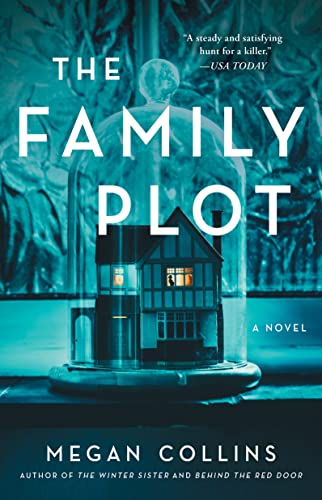
The fifth is The Family Plot by Megan Collins.

First, this one wasn’t entirely recommended. I remembered seeing a friend mention it in her blog. She included the full back-of-the-book blurb, but I only needed to read the first part:

At twenty-six, Dahlia Lighthouse is haunted by her upbringing. Raised in a secluded island mansion deep in the woods and kept isolated by her true crime-obsessed parents, she is unable to move beyond the disappearance of her twin brother, Andy, when they were sixteen.

After several years away and following her father’s death, Dahlia returns to the house, where the family makes a gruesome discovery: buried in their father’s plot is another body—Andy’s, his skull split open with an ax.

… and thought “Oooh, yes, I need to read this one!” Except this friend doesn’t read many thrillers – she’s first and foremost a romance fan – and when I announced it was on the list, she messaged me to say she hadn’t actually finished the book. Which means technically this isn’t a recommendation.

Too late. I read it.

So: if you don’t like thrillers, you probably won’t like this thriller. Because it’s totally a thriller.

Now for the tricky bit. I tend to go by how much information is given away on the back cover when deciding what qualifies as a spoiler and what doesn’t, especially since the whole thing about thrillers is that there’s a bunch of mystery and things you try to figure out before the characters get there. So my first non-spoilery thought is:

What’s up with the kids’ names?

All four of the Lighthouse kids (now grownups) get introduced in the first couple of paragraphs. There’s Charlie, named after Charles Augustus Lindbergh, Jr. (aka The Lindbergh baby); sister Tate, named after Sharon Tate; and the twins Andy, named after Andrew Borden (father and potential victim of his daughter Lizzie) and Dahlia, named after Elizabeth Short (aka “The Black Dahlia“). The lighthouse family is obsessed with murders and Honoring murder victims on the anniversaries of their deaths, so yeah, okay, all four kids are named after victims. But … I’ve still got some questions.

Charlie and Andy are given the first name of “their” victim. The boys have traditionally masculine first names. But the girls …

Tate is Tate, not Sharon. And Elizabeth Short was never called “The Black Dahlia” when she was alive – it only became her nickname after her murder (which Dahlia, also known as “Dolls,” describes in those early pages. What happened to her was gruesome, and graphic, and be warned if you go Googling for photos.)

So basically right away I was a bit suspicious of the apparent devotion to murder victims because of the daughters’ names. Dahlia stresses over and over again that her mother, who homeschooled the children, focused on the victims as real people, and yet she named her own daughters skewed versions of victims’ names.

If I were attending a book club about The Family Plot, we’d totally discuss this.

Holy true crime references, Batman

You caught the “true-crime obsessed parents,” yes? The Lighthouse kids were homeschooled, and guess what the curriculum centered around. Except, again, the focus is on the murdered people and not the murderers, the way most true crime leans.

Dahlia drops in random and not always casual references to murder victims not just inside her head, or because of something from her childhood she encounters because she’s back home, but also to needle other people. To sort of point out that yes, fine, we’re looking at a murder investigation here, but maybe your whole approach is a little off. It’s not “Oh, cool – a murder!” (especially since the island she grew up on also has its own serial killer) or some sort of emotionally-distant thing. It’s not even as removed as the crimes her mother made them all study as kids, because this is her own twin brother.

You might not recognize Charlie, Tate, Andy, and Dahlia as murder victim names if that was all you had, but Dahlia explains them straight off. The Lindbergh baby, the Manson Murders, Lizzie Borden, and the Black Dahlia are some of the more famous true crime cases, but they’re also easy enough to Google – and to find a lot of information about – if you don’t recognize them even after the explanation.

More subtle are the names Dahlia drops in conversation, to the point where you might wonder if they’re made-up for the book or if they have real-life counterparts. And you do kind of wonder if you should really feel as bad as Dahlia wants other people to feel when she uses them, not quite deftly, to deflect attention or the current line of questioning.

So in this hypothetical book club, we’re also going to discuss the Lighthouse family’s orientation to murder victims.

Instagram handle alert!

I would also totally ask everyone else in the book club if they looked up the Instagram account given to sister Tate, because I’m totally the sort of person who’ll go online and look for those things. Jeffrey Deaver used full email addresses in one of his books connected to a website that wasn’t Gmail or Hotmail or Yahoo, so you can bet I put in the address to see if it actually existed.

This sort of thing fascinates me because it’s a real-world reference that people can check, sure, but it could also be invasive. What happens if you don’t snag the website or screenname yourself and then someone comes along later and makes the account? Or what if you didn’t check and it turns out it was already someone’s account? (In this case the only thing on the account is a photo of the cover of the book, in case you’re wondering.)

But it’s also a cool character aspect because you’re working within real-world restrictions as far as choosing the screenname. Authors make up character names all the time, but screennames connected to social media accounts have to fall within specific restrictions. (And how early in the process did she claim the screenname? Was she drafting and like “Oooh yes, let’s go!” before she was even sure it would be published? Or …)

Okay and I’d also have some more questions that I can’t fully discuss here.

For starters: so … how do we classify that ending? Happy? Sad? Somewhere in the middle?

How do we feel about concepts like “justice” and “fairness” when applied to this book and these characters?

Do you think we ever got the “real”/full story?

How do we decide who’s trustworthy here (or really in any psychological thriller)?


If you’ve read The Family Plot, I’d love to hear your thoughts. I think this one’s left me feeling more like a walking question mark than Night Film.

12 challenge, book 4 – Night Film

Late last December, I decided to go ahead and do the “12 Challenge” that was going around Twitter: 12 months to read 12 books recommended by 12 friends. I specifically requested true crime and thrillers, looking for good books I haven’t read yet. Book one was Dark River: The Bloody Reign Of The Ohio River Pirates; book two was State of Terror by Hillary Rodham Clinton and Louise Penny; book three was Who is Maud Dixon? by Alexandra Andrews.

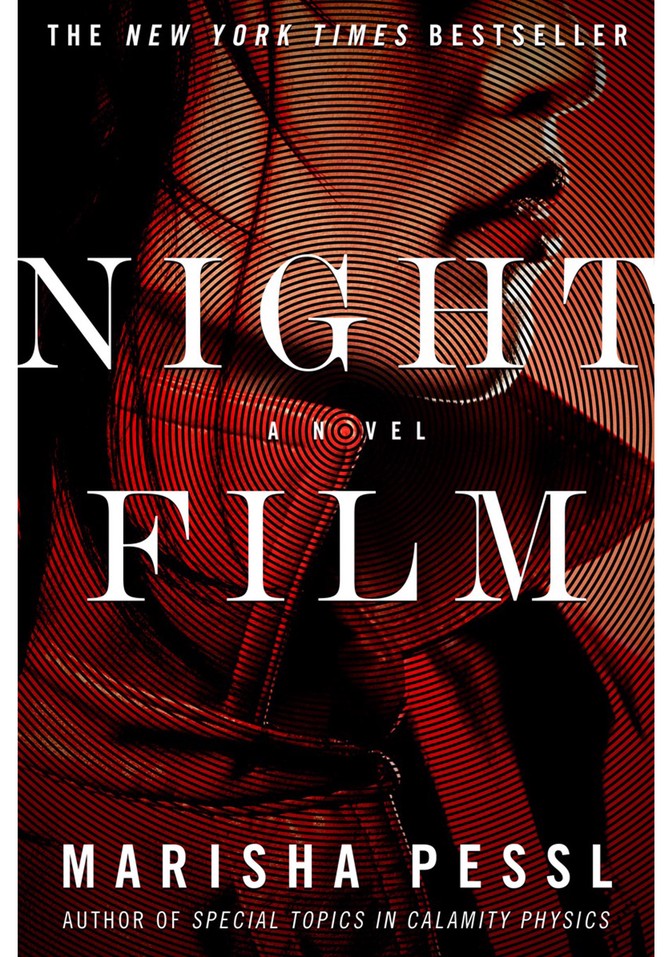
Book four is Night Film by Marisha Pessl.

I bought the kindle book so I had no idea that it was over 800 pages until I checked how far I was. I checked because I wanted to see how much room Pessl had to (attempt to) explain everything that had happened so far. That’s the kind of book this is: (how) will the author ever explain all of this?

The main character is now-disgraced investigative journalist Scott McGrath, whose downfall and obsession center on mysterious cult filmmaker Stanislas Cordova. No one’s seen Cordova in years – if perhaps ever. He hasn’t made movies since the 1990s and the ones he did make tend to be shown in out-of-the-way places, advertised by secret messages passed around by his devoted fans, banned from the mainstream because of their violence. Many people who’ve worked with Cordova have either withdrawn from the public or mysteriously disappeared, but they all agree that he changed their lives in a deep, incredible way.

Scott’s pretty sure that none of these changes are positive, and he set out to prove it a few years ago. That’s when he did an interview and spilled unverified information from a source he only spoke to over the telephone, resulting in a quarter million dollar payout to Cordova. (Scott is the kind of person who can apparently easily make a quarter million dollar payout, for the record, because he did. It’s been years, he’s not a trustworthy journalist anymore, and he’s still getting along in NYC. So.)

The thing that gets him back on his Cordova obsession is the death, and apparent suicide, of young Ashley Cordova. Scott, of course, refuses to believe it’s a suicide – to him it’s just another piece of the dark and demented Cordova puzzle. And he decides it’s time to reveal the truth about Cordova, once and for all. (Cue dramatic music.)

If you’re reading it on a kindle, you’re going to be annoyed by all of the “sources” that keep popping up: screenshots from the internet (complete with the address in the web browser at the top), pages from magazines, police files, that kind of thing. They’re a weird size, so you have to zoom in, but they’re also completely necessary to the story, so you can’t skip them (even when they feel scattered and disjointed at the start). I’m sure they look cool in the printed book, and there’s even exclusive bonus content on the website that makes it seem even more like Cordova’s a real person. Like yeah, sure, you’ve totally heard of one of his movies. Maybe when you were in college?

Basically Cordova is so secretive, so rich, and so much a cult figure that you know from the beginning that going after him is a very bad idea. Especially when the person going after him is Scott, and Scott’s introduced with his big downfall. You kind of have to wonder exactly how good of an investigative reporter this guy really is, to be honest, and whether he can really keep himself together long enough to see this through.

This is one of those books where the less you know going in, the better, so I’m not going to give any more details about the plot. I will say:

  • it pulled me along. 800+ pages or not, I read it in two days. I wanted to see if/how things would be explained.

  • this one walks the line between gritty reality and … would you call it magical realism? It uses that line as a tightrope and doesn’t really choose a side, unless you, personally, think it chooses a side (but even Scott himself isn’t entirely sure if his own life chooses a side). But that’s Cordova for you. (Seriously, it’s kind of weird how much the book centers around this fictional character that you really feel you must’ve heard of before, and how much it aligns with his fictional oeuvre. You know the type right away.)

  • I like the ending. I was worried for a while, but there were still more pages, and I like the ending.

It’s haunting and weird and suspenseful and disturbing and sometimes a bit over the top, with everything in shades of gray. It pulls you along, but also deeper in the muck and murk, so it’s not some quick, lighthearted beach read. It’s troubling, but it doesn’t want to make sure you feel better by the end.

That’s not how Cordova rolls.


What have you read recently that you couldn’t put down?

12 Challenge, book three – Who is Maud Dixon?

Late last December, I decided to go ahead and do the “12 Challenge” that was going around Twitter: 12 months to read 12 books recommended by 12 friends. I specifically requested true crime and thrillers, looking for good books I haven’t read yet. Book one was Dark River: The Bloody Reign Of The Ohio River Pirates, and book two was State of Terror by Hillary Rodham Clinton and Louise Penny.

Book three is Who is Maud Dixon? by Alexandra Andrews.

This one came as a recommendation from Alicia Thompson when she was doing her roundup of books she’d read in 2021. I honestly don’t remember what all she said about it because I read “This is The Talented Mr. Ripley meets …” and I was ready to buy it. I absolutely love The Talented Mr. Ripley, so if you happen to know of any more books that remind you of it, tell me about them!

Who is Maud Dixon? started out rather slowly for me. We’re following Florence Darrow, who’s in New York trying to get her career in publishing off the ground, but she’s struggling in a lot of ways. Florence doesn’t always make the best choices, for example, and it takes her a while to actually meet “Maud Dixon” and get the main part of the story underway.

The deal is that Maud Dixon is the penname of an author who wrote an amazing, bestselling debut … but is now struggling with Second Book Syndrome. She hires Florence as her assistant, which means Florence gets to actually meet her and learn her true identity. (Earlier in the book some of Florence’s coworkers insist that Maud Dixon is actually a man.) This also means Florence can’t tell anyone where she’s actually living (with Maud Dixon) or what she’s doing (working for Maud Dixon) but it’s also an experience Florence can’t pass up, especially since she needs the work.

You might say the job is too good to be true.

Once we meet Maud Dixon and her eccentricates start clashing with Florence’s the true fun begins. Fans of Tom Ripley will be totally primed for some – but not all – of what happens next. (Is it a spoiler if I talk about what happens in The Talented Mr. Ripley? The book came out in 1955 and the movie’s from 1999. Do we all know that Tom does by now? Yes? No?)

My husband can tell you I’ve wondered if you could pull off a Talented Mr. Ripley in the 21st century, and that’s what Florence attempts here. There was one point, maybe halfway through the book (I read it all in one day) where I put it down and told my husband how I really, really hoped things were going to play out before picking it back up and seeing if I was right. (I was! And this was an instance where it wasn’t super obvious, but a pleasure to see how Andrews laid it all out and let it all unfold.) So even if you know and love The Talented Mr. Ripley, it’s not a simple rehash of the story, updated for better passports and all the forensic advances of the past 60-odd years.

Once things get rolling, they go downhill – both as in “Florence finds herself in a lot of trouble” and “things keep going faster and faster.” Sometimes you want to shake Florence (and maybe ask her if she’s never read a thriller in her life), and other times you’re rooting for her. Does it have a happy ending? I think that depends on how you feel about Florence and the others by the end of the book. Which might actually just be my way of saying “You know, I’m not really sure.”

If Tom Ripley is your jam, then this book is for you.

And if Tom Ripley is your jam, I could use some more recommendations! Comment with more books fans of the talented Mr. Ripley should be picking up.

12 Challenge, book two – State of Terror

Late last December, I decided to go ahead and do the “12 Challenge” that was going around Twitter: 12 months to read 12 books recommended by 12 friends. I specifically requested true crime and thrillers, looking for good books I haven’t read yet. Book one was Dark River: The Bloody Reign Of The Ohio River Pirates, and book two is State of Terror by Hillary Rodham Clinton and Louise Penny.

So, first: I don’t usually read political thrillers. Expanding reading horizons is part of the challenge, and the friend who recommended it pointed out that maybe it’s a stretch.

That being said, it reminded me a lot of Dan Brown‘s Robert Langdon books. You know. Angels and Demons? The Da Vinci Code? There’s a lot of globetrotting and seeing the sights, calling out different locations and well-known sights. There’s also the sort of “very few people in the world even know what I’m telling you” aspect to it that always made me wonder how, exactly, Dan Brown learned this secret information (and why it’d be safe to just tell the world in a best-seller if the information is indeed secret) but, in State of Terror, makes you remember who one of the authors is.

I spent a lot of time being very aware who one of the authors is.

The main character is, after all, the Secretary of State. She’s just come on board after a very awful president who gets a bunch of jibes thrown his way. Ellen Adams is also blonde and gets called names that quickly go viral – it’s not “nasty woman,” but … you know it totally is. So clearly any state secrets Ellen Adams reveals to readers can’t actually be real, but … I mean, it makes you wonder.

If I hadn’t known Hillary Rodham Clinton was one of the authors, some of those things probably wouldn’t have jumped out at me like they did. It’s all “write what you know” until “what you know” happens to be about a high-ranking informants’ council but I do trust that, when Ellen Adams says something in Washington, DC is a ten minute walk, it’s a ten minute walk.

I did struggle some with the chronology. I’ve talked about narrative timelines before, but this wasn’t an issue of how all travel takes place between chapters, with a single turn of the page. They sleep on flights or hey, nothing interesting happens, and then they go for hours and hours without sleeping. They’re running on adrenaline. That’s fine.

What really threw me – and it’s something that happened for the first time on page one – was how a chapter would open with a line of dialogue, bang, in media res, and then the narration would back up so we knew where we were, who was there, and what was going on … but that dialogue never showed up again to place it in proper context.

If a chapter opened at 8:00 PM sharp, the narration would back up to 7:30, where we’d last left everyone, and then apparently go until 7:59 … but skip ahead to 8:01? Maybe? I’m still not entirely sure, but until I caught on to what was happening, I was just forcing myself along and hoping it would make sense later. (Which happens a lot when I read large cast books for the first time. Stephen King, I’m looking at you.)

There’s also the fact that, as I said, I don’t read political thrillers, so maybe that’s a genre thing. You get the snappy dialogue immediately and then have to sort out all the rest as you go.

There was also a fair amount of head-hopping. It’s totally the bane of a lot of writers’ existence. It’s really easy to do subtly – have your point of view character understand what someone else is thinking, oops – but this was jarring at times. You’re following Ellen and suddenly you’re in someone else’s head, looking at Ellen and reading about her in terms she wouldn’t use for herself.

But those are structural things. Maybe generic things. (As in, specifically genre-related.) Was it a good book?

Wait, how do we define a good book?

I don’t like rating books for this very reason. I just keep a list of which ones I’ve read and that’s that. But if, for whatever reason, I want to keep reading to figure out how it all turns out – even if it’s because I want to know if the author’s actually going to give a good explanation (cough Stephen King again cough) then I consider it a good book. It did what I wanted it to do: took me away from whatever’s going on in the world or my life at the moment and made me care about something else for a bit.

So, by that standards: yes, State of Terror is a good book. I read it in a day. I’m a fast reader, sure, but if I don’t like a book, it’s slower than molasses. I wanted to know what was happening with Ellen, and to see if I figured out the FSO’s secret, and how some of the other characters’ relationships would shake out in the end. Plus I wanted to know the big whodunit, and there were a couple times I doubted my original impression, which is major for me. I read so many thrillers that it’s rare for a twist to truly shake me.

But I still don’t think I’m much of a political thriller fan.

Have you read State of Terror? Or do you read political thrillers and have some answers for me?

book review: Love in the Time of Serial Killers by Alicia Thompson, out August 16

I was able to get an advance copy of Love in the Time of Serial Killers via NetGalley, so let’s start with the book summary:

Turns out that reading nothing but true crime isn’t exactly conducive to modern dating—and one woman is going to have to learn how to give love a chance when she’s used to suspecting the worst.
 
PhD candidate Phoebe Walsh has always been obsessed with true crime. She’s even analyzing the genre in her dissertation—if she can manage to finish writing it. It’s hard to find the time while she spends the summer in Florida, cleaning out her childhood home, dealing with her obnoxiously good-natured younger brother, and grappling with the complicated feelings of mourning a father she hadn’t had a relationship with for years.
 
It doesn’t help that she’s low-key convinced that her new neighbor, Sam Dennings, is a serial killer (he may dress business casual by day, but at night he’s clearly up to something). But it’s not long before Phoebe realizes that Sam might be something much scarier—a genuinely nice guy who can pierce her armor to reach her vulnerable heart.

And my official review:

I devoured this book in a single day because I just HAD to see how it all came out.

Phoebe Walsh has carefully bricked her heart in behind a wall of true crime facts and boy band lyrics, but they can’t save her from her current situation. She’s dealing with her estranged father’s death, her younger brother’s attempts to reconnect, and an intriguing new neighbor who might be a serial killer (see Phoebe’s wall of true crime facts).

I spent much of the book wanting to save Phoebe from her choices (and her insistence on relating every. single. thing. to a serial killer) but also rooting for her to figure it out herself. There were times I wanted to shake her and demand some more introspection, please, and not her usual avoidance, but Phoebe’s Phoebe. She’ll reference whatever she darn well pleases and avoid the rest, and if you experience second-hand embarrassment, maybe it’s because you recognize the tactic from personal experience.

This makes for some awkward interactions with others, including her younger brother and that possibly-a-serial-killer next-door neighbor, who’s not exactly a social butterfly himself. But Phoebe needs those difficult interactions to wear away some of her defenses and – hopefully – give her a second chance to look at so many people in her life with new eyes … if it isn’t too late.

… because there’s more to say than just “Pre-order Love in the Time of Serial Killers and follow Alicia on her socials!”

About a year and a half ago, I got an email from someone who asked if I’d be willing to talk about the process of writing a true crime dissertation, as background information for her character. See where this is going?

I was nervous about reading the book, both because Alicia and I have become internet friends and because I’m the one in the best position to read any of the background information about the dissertation and say uh, that’s not how this works.

Academia is its own world. So many things happen that just don’t make sense to people who haven’t been there, and it can be hard to explain what, exactly, the whole process feels like. How it works, or how it maybe doesn’t.

I ended up emailing Alicia back instead of taking her up on the offer for a phone call because I typed up this absolutely enormous document about my personal experience. It’s over 3,000 words, and yes, I saved it. If anyone else wants to know, I didn’t want to have to type it all up again.

I also figured that Alicia wouldn’t need or use anywhere near all of it, because she had a story she wanted to tell. If something didn’t fit, then she could ignore it. After all, it’s fiction, and she probably already had most, if not all, of the book drafted. There might not be much wiggle room. But, actually … wow. She used a lot.

Much of it is probably minor and nobody but me would catch it, but I spent a lot of the book nodding. At the true crime references, yes – I’m not sure if Alicia knew some of them before we chatted, but some of the ones I mentioned in that humungous word dump made it into the book – but also a number of Phoebe’s PhD experiences. And I definitely laughed out loud at one line that I’d sent her, which made it into the book as a piece of dialogue. No spoilers, but Alicia: I noticed.

Also, for the record, I’m not a romance reader. It’s not my usual genre. And I still read the whole book in one day and liked it, in spite of my initial concerns about … well, everything. The genre and the subject and the very specific experiences of the main character.

So I was a little surprised, and very relieved, to like the book as much as I did. You should pre-order it from your favorite indie bookstore. If you don’t have a favorite indie bookstore, you can borrow mine. And then, come August, we can talk some more about Phoebe.

12 Challenge, book one – Dark River: The Bloody Reign Of The Ohio River Pirates

Late last December, I decided to go ahead and do the “12 Challenge” that was going around Twitter: 12 months to read 12 books recommended by 12 friends. I specifically requested true crime and thrillers, looking for good books I haven’t read yet. I’ve finished my first selection from that list: Dark River: The Bloody Reign Of The Ohio River Pirates, by Robert Walsh and Wayne Clingman, recommended to me by Robert himself.

It’s a subject I knew nothing about. I read a lot of true crime, sure, from various centuries, but river pirates were new to me. I even looked through the indices of some of the surveys of murder in America that I’ve read to check for some of the names Walsh and Clingman mention, and nothing popped up. So at least I didn’t already read about these people and then forget them.

They cover multiple groups that worked along the Ohio River prior to 1850, and they all seem to be groups. River piracy wasn’t for loners, and it died out with the paddle steamers. Pirates depended on outnumbering their victims and being able to make a quick getaway.

There are different chapters for different groups, and some highlights include:

The Harpes, brothers – or maybe they were cousins – who get presented as “often been called America’s first serial killers.” This is where I first went to my other books, because … who? I’d never heard of them. But apparently river piracy wasn’t just for men who wanted to rob the rich. It was a good profession for men who just wanted to kill people.

James Ford, who was either “Lucky Luciano or Fagin with a Southern accent.” A lot of these pirates have a very mobster feel to them, and I don’t usually read books about the mob. The way to get around the law – aside from crossing the river and moving to land under control of another country entirely – was being the law, or at least paying those who had high positions.

The Potts Hill Gang, who may or may not have been fictional, but who had a very interesting story. Possible spoilers here: a son who had been kicked out of the gang decided to return years later, in disguise, to surprise his family. A “spotter,” sent out to gage the apparent wealth of travelers so the gang would take an unnecessary risk killing a poor man, decided the son looked like a good target. When the “stranger” came along, the father killed him. Which seemed fine, until rumors started that the son was supposed to have come back. In order to keep his wife from wailing that he’d committed filicide, the father dug up his latest victim so she could have a look … and positively identify her son. (Moral of the story: don’t try to trick pirates.)

There’s also some interesting information about forgery, a crime I also don’t usually read about. It’s very much situated in the time and place, between different countries and with changing/emerging laws to contend with, along with Regulators and lawmen and the rest.

It was an interesting read, although I think it’s pretty niche – these stories aren’t usually covered even in lengthy surveys of the history of crime in America. If that’s a crevice you’re interested in exploring, pick up a copy and dive in.