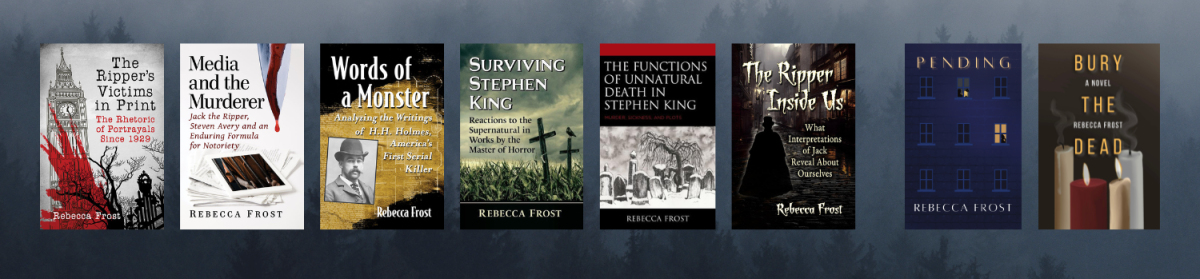

Pending – Chapter Four

Catch up on the previous chapters here

Worry meant Nell tried to stay awake until Kent came to bed, but she didn’t make it. And she was so exhausted the alarm had to wake her, which was rare—usually she was up before it, so it didn’t even ring. The library opened much later than Pending, so she didn’t want to disturb Kent.

He just kept snoring, so at least that was good. He probably needed the sleep.

Nell only went to the bathroom first because she really needed to pee, but she ignored the rest of it—the shower, her clothes laid out so she wouldn’t bump around in the dresser drawers, a scatter of hair clips—to go into the main room of the apartment and look for the book.

Kent left it on the kitchen island, next to a sticky note: Adam will be here on Saturday. xoxo

Shit. First it was bad enough that Kent called Adam—in the middle of the night?—and second, that gave her today and tomorrow to build the case. If there was a case.

Kent called Adam in the middle of the night. There was a case.

Everything felt out of joint. Her usual morning rituals were thrown off to the point where she wasn’t entirely sure she’d actually used soap in the shower and she had to check the mirror to make sure she’d remembered to fully dress.

Kent finished reading the book and called Adam. Adam was coming on Saturday. She didn’t know what time on Saturday, but it wouldn’t be much more than forty-eight hours before she’d have to discuss … back then.

On the plus side—Nell was really grasping for a plus side—she was technically reading it for Art, so she could stick the book in her bag and have it with her behind the register for any downtime.

Nell knew she didn’t forget to eat breakfast, because that, at least, was a very clear thought: usually I eat breakfast, but not this morning, thanks. Her stomach was both twisted in knots and full of snakes, so there most definitely wasn’t any room for breakfast.

The bus was on time, and this morning she couldn’t stop Margaret’s name from bubbling up in her mind as she got on, Margaret’s broad, pleasant face superimposed over the anonymous older man who neither looked over nor responded to her “Good morning.”

Margaret always grinned and said “Morning, sugar.” The bus was frequently late, but Margaret was always happy to be there.

Nell nearly missed her stop.

This morning she made sure that waving to Colton was a deliberate gesture and repeated it in her mind: I’ve already waved, so I don’t have to wave again. But everything else was out of whack, like someone had snuck in a couple ersatz puzzle pieces that looked close to the real ones but didn’t quite fit. Instead of habit, she had to think things through and run down a mental checklist that was normally subconscious. Even her eyes didn’t seem to be working properly, since she couldn’t just scan the tag wall to get an idea of what they had and what was missing. She had to pause and do the list again: how many reds? Oranges? All the way down to Mary’s favorite, purple, and oh, yeah, she had to get the chairs down before the top of the hour.

At least Colton just nodded on his way out. Imagine being so thrown that a guy you barely knew stopped and used most of his daily allotment of words to ask how you were doing.

And at least that first rush of regulars consisted of people as tired and distracted as she was. Really, they all just needed coffee, and they were all lucky Nell remembered to get it brewing and fill the urns. She had a short debate but possible wakefulness won out over the threat of increased anxiety—like it could increase—and during a pause she made herself a large latte with an extra shot.

Mary didn’t stop in. Nell asked a couple of the others about her, but all she got was grunts and shrugs as they thrust the plastic tags across the counter and waited, silently, for the cups or wrapped sandwiches. Maybe Charlie and Greg and Sam and Joan didn’t know she’d ask about them, too, if she hadn’t seen them in a few days. None of them were quite as regular as Mary, but she still noticed when they weren’t there. Maybe there were other people in the world who preferred it if their absence wasn’t noticed.

Nobody here in Colchester knew anything about her life before she’d arrived here with Kent, as newlyweds, except of course a lot of what they knew was a lie. Their names, even their birth dates … the story was that they’d run off practically the minute Nell turned eighteen, in full defiance of both families because Kent was twenty-eight and neither set of parents agreed it was a good match, and stumbled into Colchester because it was middle-of-nowhere enough that no one would find them.

It was, Nell always thought, a very teenage sort of story, because clearly any family members wishing to track them down would be able to follow their names. Kent Harris’ parents could type their son’s name into a search engine and match the results to his age, and Penelope Harris, nee Green, would turn up the same way. You needed a damn good reason to get your name changed in closed court so, even if they’d picked a different last name entirely, there would be a public record.

Apparently everyone assumed that their respective parents were so disgusted with their love story that they’d washed their hands of their children completely. Maybe they also took private bets on how long this runaway marriage would last, especially when Nell was supposed to have been a teenager at the time of the vows. Eighteen, and a very young eighteen. Young enough she forgot to get pictures of their big day.

“Hey, you okay?”

She jumped, one hand going to her chest, but even as her heart pounded in her ears Nell realized she must’ve recognized Art’s voice. “Sorry.”

He frowned a little. “That’s not really an answer to my question.”

Nell looked up at the honest concern in his eyes. This was Art worried about Nell, the human being, and not the boss ready to yell at an employee for zoning out on the job. Art, however, didn’t know. All the paperwork and references he had on her told him he’d hired a teenager named Nell Harris. She cleared her throat and shook her head. “It looks, uh … it looks like someone’s finally trying to find us, and …”

“You’re happier not being found?” he supplied.

That, at least, was clear, so she nodded firmly.

Art responded in kind. “Anyone comes in looking for you, we don’t know a thing.”

He knew she didn’t want her photo displayed anywhere, of course, and he’d always been on them about not giving other people’s schedules away. That included questions about whether someone worked here, and Art even fired someone who’d ignored these orders and cheerfully passed on the information that Jessica would be in at two.

He ducked to catch her eye. “I think you need to go home.”

“Art …”

“Take the day. Grab some sandwiches, a coffee, whatever, but … head on home, Nell. It’s okay.” Then he winced and tilted his head to show that, well, leaving now was okay, even if other things weren’t.

Nell sighed and pulled out her phone to text Kent Art’s sending me home, holding it so Art could read it upside-down.

He nodded. “Good. Go home and … look, if there’s anything else I can do to help you feel safer …”

Don’t let C. J, O’Connell come and read his book here. Oh, but actually: “If you’re going to go with the reading and stuff, all those people from all over?”

Art nodded again, so she didn’t have to finish that thought. “You won’t work that night. Promise.”

Her phone buzzed. I just got up. I was going to ask how you’re doing.

Maybe Art saw something on her face because he came around the counter and made little shooing gestures. “Grab some lunch so you don’t have to make anything. Just … shelter and regroup and get your game plan in order.”

The game plan would have to wait until they saw Adam, but Nell could certainly grab some lunch. She couldn’t take a coffee in a to-go cup on the bus, but Art found a thermos in the back and filled it up with her favorite house blend, which might have been one kindness too many, but at least a group of customers came in so they didn’t have to do some sort of goodbye involving reassurances from him and maybe a bit of stiff upper lip from her. Nell was able to slip out, sandwiches tucked in her bag next to the book and thermos in one hand, and she only had to hustle a little to catch the next bus.


from Since You Went Away by C. J. O’Connell (Penguin, 2024)

Honestly, she’s just too sweet. Rosie sits there in her Rosie way, one sock foot tucked under, the other dangling, and slowly French braids her wondrous hair as she wrinkles her nose at the news.

The guy from 17, who can never remember which parking spot actually belongs to him, has disappeared. There’s his girlfriend, tearing up as she explains the last time she saw him, clutching his photograph like it’s a candlelight vigil and not a grown man who maybe learned he can’t just do whatever the hell he wants all the time.

I had some words with 17. Words is all they were—and I even kept it civil, instead of asking him exactly how small his dick is for him to go walking around with his chest puffed out like that, swaggering like it’s the only way to move around something so hefty.

It wasn’t always Rosie’s parking spot he took, but hers is closer to the door, and she’s been driving to class more. First the bus is always late, and then the regular driver flaked off, so I guess she’s lost her trust in Metro. The downside was that 17’s schedule, if he actually had a schedule—deadbeat, living off his girlfriend, and if I were her, I wouldn’t be crying so hard that he took off—meant he’d get back when Rosie was gone, so he’d steal her parking spot.

She was resigned to it. If his car was in hers, she’d park in his. Maybe there was a risk of someone actually checking the license plates against the assigned spots, but if she didn’t complain about 17, then he wasn’t going to complain about her and risk his own getting towed in the bargain.

If he had, I would’ve made sure his got towed. Check the entire lot, spot by spot, and go to town.

Rosie resigns herself to things she shouldn’t have to endure. Guys like 17, who will just keep taking and pushing and swaggering their way through life until they come up against someone who can’t be moved.

I told him I wouldn’t be moved. Maybe he suspects it’s because of Rosie, specifically, but hers isn’t the only spot he was poaching, and I work for the whole apartment complex. I thought about pulling him aside and doing a sort of bro confidential, “warning” him that management was going to start checking all the parking jobs against official lists, but 17 isn’t the kind who’d appreciate a bro helping him out.

That’s not the sort of conversation a guy like him would understand.

It’s even clearer now, though, watching the news switch to whatever comes next, that he’s really more of a mouse than a man. All he had to do was keep his car in the proper spot, but he left, instead. He didn’t want to risk running across me again, knowing he wasn’t the alpha. All he had to do was keep his head down and follow the rules, but he couldn’t even manage that.

Rosie looks at me. “Penny for your thoughts?”

“She’s better off without him.”

She tilts her head, because that’s not the sort of thing Rosie would want to actually admit, but she doesn’t say no. Because Rosie’s not one to lie, either.

I’d put my arm around her, but I don’t want to presume. Enough people take advantage of her already. This is one time when she gets to call the shots.


Chapter Five

Pending table of contents

Pending – Chapter Three

Catch up on the previous chapters here

Nell saw the way Kent kept looking at her on the bus ride back to their apartment, but he didn’t say anything. He let her keep her mouth shut until they got off, and walked hand-in-hand a couple more blocks, and she got out her keys and opened the first door, and they went up the stairs so she could open the second door, and as they took off their shoes and hung up their keys and put their bags away.

Then he just stood there in the little entryway, head cocked and eyebrows raised.

“It’s fine.”

“Penelope.”

She shook her head and went into the kitchen to check the fridge. “I’m reading too much into it, that’s all. Rosie’s a senior at K, she’s majoring in Classics, she studied in Rome …”

Silence. Kent was good at using silence.

“She’s about five four, he gives her a weight but it’s probably wrong, says she’s solid because he doesn’t want to say fat, long blonde hair, wears hoodies and jeans and Converse, takes the bus to campus every day even though she’s got a car parked right there in her space in the apartment lot …”

More silence.

Nell made a unilateral decision and went for the freezer instead. Sweet and sour chicken and spring rolls, check. “Rosie’s got a grandmother a couple hours away, but no other family. Plus her roommate’s, like, practically a stranger, because housing fell through.”

“Nell …”

She checked the cooking instructions on the spring rolls and started punching numbers on the microwave. “It doesn’t mean anything.”

The floorboards squeaked as Kent went back to the second bedroom and then returned with the laptop they shared, setting it on the kitchen island. “O’Connell?” he asked, opening it up and waiting for the old machine to boot.

“C. J. Since You Went Away.” Because no, she hadn’t Googled it yet. Things could still be a coincidence. Hey, if it wasn’t a coincidence, then this was still one heck of a coincidence. Unless O’Connell sent it to Pending because he knew she worked there. “We’re jumping at shadows,” she murmured, but Nell could barely hear herself over the whir of the microwave.

Kent typed, clicked, scrolled, clicked again, and frowned.

Seriously, enough with the silence. “What?”

“There’s no photo.” He turned the laptop around so she could see the book’s title, and apparently the real cover—a zoomed-out version of the color-blocked full cover on the advance copy, showing an apartment building far taller than should be in Kalamazoo—with more words underneath. “He doesn’t have an author photo. That’s one thing if he’s writing under a pseudonym, but if he’s going to be doing readings and showing his face …”

“Doesn’t Chuck Tingle do events with a bag over his head?”

Kent shook his head a little and started clicking and typing something else. “Very different backstory there. O’Connell’s a debut novelist with nothing else attached to his name. Everything says first book, there’s nothing—yeah, see?” He gestured at the screen even though it was turned so no, she couldn’t actually see. “A bunch of people are asking the same question. Who is this guy? Is the author actually the narrator? Is …?”

Nell waited as she rotated the spring rolls, but seriously. “Is?” she prompted.

He turned the laptop back around so she could read the headline. Is Rosie Real? And, underneath that, in slightly smaller font: Advance readers of C. J. O’Connell’s debut novel ask how much of this emotional tribute to a lost love is truly fictional. “There’s already a hashtag,” he said tonelessly when she just kept staring. “#FindRosie.”

She tried to lick her lips, but her tongue was dry and swallowing hurt. “Look, we can’t … we aren’t actually saying this.”

“Nell …”

“After a couple chapters and a couple Google searches?” she persisted. “You’re not actually … come on. It’s not the same story anyway. Emotional tribute? What did Brandon say—tender? Something about being tender? It can’t be.”

“Is Rosie’s bus always late in the morning?”

Forgetting herself, she tried to swallow again. “Yeah, but …”

“What’s the bus driver’s name?”

Margaret. The bus driver’s name had been Margaret. Not Meg, not Marge, not Peggy—Margaret. “The book doesn’t say.” Yet, at least. But she hadn’t read far enough into the year for that to matter, anyway.

The newspapers reported it on Friday, October 26: Margaret Renee Henderson had been murdered, likely on the previous Wednesday, and her live-in boyfriend—who’d recently fought with her and moved out—had been arrested.

“Look, fiction can imagine anything,” she burst out. “Maybe somebody went back through the papers and found the crimes and just … look, there was that one K prof who wrote the novel about the Raines brothers based on a real case.”

Kent gestured to the laptop. “There’s nothing in there that says O’Connell, if that’s his real name, was inspired by a real case. Or even if he’s from Kalamazoo, or was living there in 2018 when all this started, or …” He shook his head. “It’s too damn close to the truth for it not to be influenced by it, but if he read about it and liked it and, what, took the murders out? Turned it into the kind of love story you’d find on Art’s wall?”

“We’re not saying that because I’m not nearly far enough into it to say that,” she all but snapped back. “It’s just—it’s a book Art got in the mail because of the stupid missed connection thing, which means it’s a love story, because nobody would send a freaking serial killer novel to a place like his, okay? And it just—ugh.” She turned away and started opening the cupboards like she’d forgotten where they kept the plates. “It’s nothing, and even if it’s not nothing, it’s a coincidence, because if it’s not a coincidence …”

“Hey, babe.” He got up so quickly the stool toppled over, and the clatter made her flinch, and that was it. That was enough. The fragile hold she’d had on herself, that oh God please no feeling, broke. It wasn’t tears—it was shivering and shuddering in the circle of Kent’s arms, because, seriously, that was all ages ago. All of them, Margaret and Trevor and Kelsey and Ashleigh and Heidi, that was all years ago, in another state, another time, another life, and this couldn’t … it honestly couldn’t …

Nell struggled to control her breath because she had to say something, to encompass it in words and make it manageable. “He wouldn’t … confess to freaking … serial murder in … a novel,” she managed, spitting out the syllables with as much breath as her lungs let her draw, and there, good. It was out: the phrase neither of them had uttered since coming to Iowa. “A freaking serial killer … isn’t going to confess in a novel.”

Kent’s breath caught, but this silence was shorter, a mere hesitation. “They never proved it was actually a serial killer.”

Another thing neither of them had said since coming to Iowa.

“I mean, I know … but …”

She tried a deeper breath and pulled back to try to catch his eyes and see the emotion hiding in them.

Kent shook his head a little. “Nell … if someone did go back through all the papers and find all that … they would conclude it’s a serial killer. Nobody would make that a love story.”

That was entirely the reason she’d been avoiding true crime and thrillers for years, thanks. “So it’s not him. And it’s not—I’m going to read the rest of it, and Art’s going to pay me for reading the rest of it, and it’s going to end up veering and being absolutely nothing.” She licked her lips again, forgetting. “It’s nothing. He didn’t find me.”

“Nell …”

“I mean, he didn’t anyway,” she rushed on, because no, Kent hadn’t made it that far yet on his own. “It was his agent or publisher or someone, and it’s because Art called the place Pending and has all that info on his website.” Where there weren’t any pictures of her. Because there weren’t any photos of her since coming to Iowa. None online, none on her phone, none on Kent’s … they stuck with friends who knew and respected her wishes on that without needing to have the full explanation of why, and they didn’t have people over, either, to ask why the couple who’d run away to get married didn’t have at least a single iPhone snap of the day itself.

This couldn’t unravel now. She couldn’t unravel now.

Kent pulled her in closer and slowly dropped his head to hers so he didn’t jar his cheekbone on her skull. “Fuck, honey. I’m sorry. Is there anything …?”

Usually when someone asked that, there wasn’t. They said it because they wanted to feel better about offering, but in the end there wasn’t anything for them to do but make that empty offer.

He didn’t work tomorrow. Nell did, but he didn’t. And he was a fast reader. “How long do you think it would take you to get through the whole book?”

Kent took a slow breath through his nose and held it before letting it gust out in a sigh. “Probably not by midnight, but definitely before morning.”

“Would you?”

He squeezed her tighter before letting go. “Do you want me to start now?”

What Nell really wanted was to rewind back to a time she didn’t know the damn book existed, but she nodded. The second-best thing was to get this over with, and behind them, as quickly as possible.


from Since You Went Away by C. J. O’Connell (Penguin, 2024)

Rosie is full of unspoken words. She tamps things down, and you have to be quick to catch it—the way she swallows a sentence or entombs a paragraph or gently folds a monologue like a flag to drop it into the grave. People like Hailey and Kayleigh don’t even notice and just continue yammering: about grades, about professors, about their own problems. They fail to realize that they, personally, might be making themselves into a problem.

I know Rosie just has to make it through this year. It’s her senior year, the only year K College really lets its students live off-campus and make that next step before becoming full adults, and come June she’ll be free from all of them. Kayleigh’s followed her from high school, clinging like a leech that will never have its fill. They’ll keep sucking her dry until she drops dead or shakes them free, and Rosie is too sweet to shake them free.

I keep having to remind myself that, even though she’s twenty-one to my twenty-four, I’ve been an adult longer than she has. She laughs at me for it sometimes: Cal, you’ve been on your own too long.

That’s true, but it’s nice to have the external validation. Especially from someone who so often swallows her words.

I can’t say anything about Kayleigh, because she’s known her forever and this is one of those inconveniences Rosie budgets for in her life, and I can’t say anything against Hailey—who always looks at me haughtily from half-closed eyes, like she’s applied too much smoky gray to the lids—because Rosie has nowhere else to live, but there’s another thing that’s gone on just about long enough.

Rosie takes the bus in to campus. Hailey complains about the parking situation at K, but that’s something Rosie’s even actually mentioned to me: campus is small, freshmen can’t have cars anyway, and there just aren’t many spaces. “If I drove in, I’d have to leave hours early,” she sighed, and she never sighs. A sigh would be a sign that she’s not taking everyone’s complaints and filing them away properly.

Rosie hoards her sighs. It’s a privilege to hear one.

“And it’s not the bus schedule,” she added, one leg tucked under her, the other foot swinging. Those are tall couches in the furnished apartments, and she’s not an especially tall woman.

I know it’s not the bus schedule. If they ran on time, then Rosie wouldn’t have an issue catching one and showing up with plenty of time to walk through the door before class started. It’s just that the bus that should be here at 9:40 rarely is. It runs late, and later with each stop, and Rosie either has to try to catch the bus an hour earlier—she might as well drive her car in and at least be free of the timetable entirely—or hustle in late, hoping not to attract too much attention as she heads to her seat.

Rosie doesn’t like attracting attention. That is, not loud attention. Her eyes catch mine, and she looks away as she tucks her hair behind her ear, but then she looks back to make sure she still has my attention. My quiet attention.

But she’s slow to get going in the mornings, slow to wake up, and having Hailey as a roommate means she can’t just go to bed earlier. Duke’s caught complaints from other units about her music, or her voice, or her random midnight vacuum cleaner jags. At least 12 has never been the site of loud sex. Imagine a man looking at Hailey and thinking he’d want to negotiate all of that.

She’d probably keep monologuing throughout. A litany of complaints.

Rosie doesn’t complain. She simply won’t, ever. She’ll endure the roommate, and endure the loud friend from her past, and endure the late bus, but I can do something about one of those. Tomorrow I’m going to call Metro and have a few words.


Chapter Four

Pending – Chapter Two

Read Chapter One here

Nell’s shift was over before the library closed, so she tucked Art’s not-quite-a-gift book in her messenger bag and caught the bus to head over there. Not that it was far—Colchester wasn’t exactly a city—but she had a bus pass, so she might as well use it. Plus, this way she could start paging through Since You Went Away on the ride over and see exactly how much Art might end up paying her for.

First person, ugh. So trendy. And present tense. Wasn’t that the domain of indie presses and self-publishers? Too hip and chatty for the trades, right? Apparently wrong, because here it was, I this and I that, after the first dozen pages or so of advance praise from big-name authors who got to use this chance to have their most recent books put after their names.

Nell blinked and had to laugh because she wasn’t a failed author or anything. Just grumpy, apparently. She tucked the book back in her bag in time for her stop, swung easily off the bus, and headed to the library door.

Kent was at the front desk, not behind it but talking to Emmy, and he grinned and straightened up when he saw her. “Hey there, pretty lady.” He was tall and broad, and although he wore a plain blue dress shirt, he looked like a biker with his dark hair pulled into a ponytail, his thick beard, and the tattoos poking out of his sleeves and down the backs of his hands.

“I’m not here for you,” Nell informed him sweetly as he bent down for a kiss.

“Dammit,” he whispered, in case any patrons were close enough to overhear. Not that many people tended to approach the guy who, despite wearing an official name badge, was over six feet tall and clearly regularly hit the gym. When Kent walked, the ear added in the jingle of chains and the squeak of leather no matter what he was currently wearing. “Who are you leaving me for?”

“I’m not sure, actually.” Nell pulled out the book and turned it so Emmy could see. “Art said it’s like … literary romance or something?”

“Oh my God, girl, is that an advance copy of Since You Went Away?” Brandon demanded in a very un-librarian voice as he all but vaulted out of the back office and swooped in to snatch it before Emmy could properly focus on the cover.

Emmy and Kent shared a look and a shrug, but Nell nodded. “Art said the agent or someone sent it to him because the author wants to do one of his readings at Pending.”

“Okay, and Art immediately wrote back and said hell yeah, right?” Brandon demanded, running his long fingers down the spine of the book like it was the basis for his new religion. Next to Kent he looked very short and very skinny indeed, but Nell thought he was far more intimidating. Kent was a teddy bear, but Brandon was a honey badger.

Nell shrugged. “He just got it. He gave it to me so I can read him and warn him if there’s any … I don’t know. If there’s anything he should know about before he says yes.”

Brandon held it up in both hands, not so much a minister now as a cult leader. “Art says yes to this. My God, C. J. O’Connell coming here on his debut tour? Shut up!”

Kent tilted his head. “Looks like you’re here for Brandon.”

“Oh, come on,” the man in question sassed back, pushing his wire-rimmed glasses up on his nose. “Don’t act like you’ve never heard of it. This book’s everywhere and it’s not even out yet.”

“Well I hadn’t heard of it,” Nell cut in before this could turn into some sort of literary pissing contest. “And neither had Art.”

Brandon set it down on the circulation desk, still reverent. He was over-the-top most days, which made him an odd choice for library director, but now he looked like he was on the verge of a heart attack. “It’s a beautifully tender story of a man who happily exists in the friend zone and supports a woman who may or may not be worthy of his complete love and devotion.”

Emmy put a hand to her lips to either stifle a giggle or cover up how she’d just puked a little in her mouth.

“Beautifully tender,” Brandon repeated. “It makes you think that maybe some of the straights are okay, after all.”

“Ouch,” Kent muttered.

“Look, we all know you, and you’re not okay, so …”

“Ouch,” Nell agreed. “I’m not sure I want to take your book recommendations.”

Brandon sighed and folded his hands professionally on the edge of the countertop. “Having C. J. O’Connell come to Colchester and read at Pending would do nothing but good for Art and this town. You’ll get publicity, people will stop thinking we mean Colchester Lake … I’m talking national, if not international, coverage for the work you all do there, okay? I haven’t heard anything bad or ‘out there’ about the book, so read it, if that’s what Art wants, and tell him yes, and then loan it to me, okay?”

“It’s technically Art’s book, so I’ll have to ask if I can loan it to you.”

He shrugged. “I can be charming to Art.”

“I think Art’s immune to your charms,” Emmy cautioned, then frowned a little. “I think Art’s immune to all charms.”

Brandon waved that away. “I’ve got my ways.”

Ways, Nell mused, that apparently weren’t charming. “Okay. I’ll pass on your recommendation. And your request.”

Kent slipped an arm around her shoulders because even he wasn’t going to grab her ass in front of his boss. “Are you going to wait for me?”

“I would, but I don’t have anything to read.” Nell went up on her tiptoes, but he still had to duck his head so her kiss could land somewhere near his cheek. “Is there someone in my favorite chair?”

“Not last I saw.”

“Okay. You know where to look for me.” Nell picked up the book and accepted the bookmark Brandon pulled out of their display and pointedly handed to her, in case she dared to dog-ear one of the pages.

Kent tried to tamp down a smirk. “I’ll walk you up.”

“No making out in the stacks!” Brandon ordered. “Remember the cameras!”

“Look, just because you’re overwhelmed by the desire to make out with Nell in public doesn’t mean the rest of us can’t control ourselves,” Kent countered, leading her away from the desk and toward the stairs and dropping his voice. “You okay?”

She grimaced, because come on, it wasn’t actually obvious, was it? “I read the first couple pages. It takes place in Kalamazoo. He says she went to K College.”

Kent looked down at her for so long it was good no one was descending the stairs. “Nell.”

“It’s okay. It’s just a book. A novel.” Except clearly it wasn’t okay, because he’d seen something, and gotten her alone so he could mention it. “Art’s paying me two bucks a page to read it and report back.”

He made a grumbling noise that expressed any number of sentiments, including A good therapist costs more than that.

“I’ll tell you if it’s too much, okay?” The top of the stairs was enough for her to see her favorite chair, and it was empty. That entire grouping was empty. “You can be on me about it, but you have to trust me to be truthful.”

That almost made Kent smile. “I trust that you’re telling me the same thing you tell yourself, but that doesn’t mean I trust you’re telling yourself the truth.”

Forget therapy—she had him. “And we can talk about that too, then, later, if you think we need to. But right now you’re supposed to be at work.”

He sighed and leaned down to kiss her gently on the lips. “Okay. But grab a different book if that one gets to be too …” He flapped a hand to show that too could be followed by any number of adjectives.

“Excuse me, do you work here?” someone asked in the sort of voice that clearly meant Stop making out with that girl when you’re on the clock. Nell and Kent each wore a wedding band, plain gold, so even though they looked young it wasn’t like they were teenagers or something.

Kent smiled, though, and turned to the stranger—severe gray haircut, pantsuit, cat’s-eye glasses—and answered, “I do. How can I be of service?”

The woman sniffed and adjusted those glasses with a look at Nell that meant she gamely retreated to her favorite chair, far enough away that the patron could make her request in full privacy, like she was consulting a priest instead of a librarian.

Okay some days Nell forgot she’d leaned hard into the manic pixie dream girl thing and the hair pulled back from her face—aside from the required bangs, of course—was bubblegum pink, so maybe that was part of the reaction. Plus Kent, with his beard and breadth, looked older than his age, so when she looked younger …

Nell sat down in the chair and plunked her messenger bag by her feet, crossing her legs primly even though she had capri-length leggings underneath the sundress just in case anyone tried to take a peek, and opened the book in her lap to wait for Kent to be done.


from Since You Went Away by C. J. O’Connell (Penguin, 2024)

Describing people in books always seems like an exercise in futility. Each of us always ends up with our own personal idea of what famous characters look like, which is never like the actor who plays them on screen, and often has nothing to do with what the author describes, anyway. By the time we’re told the hunky hero has a single lock of black hair that falls across his forehead, he’s already stuck in our minds as a redhead or blond.

The first time I saw Rosie, my eyes caught on her, but any description seems trite. Blonde, yes, but her hair is thick, and long, and not quite honey but not entirely golden, either. Initially it was down, the ends curling slightly below her shoulder blades, but as she went back and forth to carry more things in, she pulled it up into a messy bun. The kind of effortless messy bun blonde women in Uggs do all the time, but Rosie was in Converse today, and jeans, and a band t-shirt that was honestly washed and worn instead of bought to just look that way.

She’s the new renter in 12, sharing with that pale, chubby, doughy girl with the straight black hair and heavy bangs. Hailey doesn’t have an indoor voice, so I’m not the only one who knows her previous choice for a roommate fell through—left her for some brain-dead hunk, she says, but “escaped” is more like it—and Rosie all but took pity on her. I don’t know what Rosie’s plans were before this, because Hailey’s never complained about those, but my God.

She moves smoothly, but without the arrogance of a ballet dancer. She’s solid, but strong—I saw her carry in any number of boxes while Hailey trailed after her, a single tote bag hung indifferently over one arm. And, despite Hailey’s drone of a monologue, she offered me a smile every time I saw her.

Rosie’s eyes are gray and she has a dimple on her right cheek. Not the left—just the right.

12 is on the first floor, so I didn’t get a chance to see if she’d struggle with those suitcases on the stairs, and it’s also one of our semi-furnished units, so nobody had to help her carry in a bed frame or a sofa. I’m not supposed to—that’s not part of my job description—but I would’ve offered, for her. Especially because she wouldn’t have ordered, and maybe wouldn’t even have asked. There’s independence in that no-nonsense lift of her chin, and combine that with the quick intelligence in her eyes …

She was alone in the parking lot, conscientiously locking the doors on her silver Saturn when I was leaving, and those eyes caught mine, and she smiled again.

I stopped. When a woman like that smiles at you, you stop, even if you know she’s leagues above you and climbing.

“Hi. I’m Rosie.” She held out her hand, and we shook, my calluses against her silken palm.

“Calvin.” I cleared my throat. “Cal. Facilities management.”

The smile played around the corners of her mouth again. “Well. I guess I hope I won’t be seeing that much of you, then.”

That’s what her mouth said. Her eyes told me another story.


Chapter Three

Pending – Chapter One

Part One: Connections

Mornings were Nell’s favorite shift. She’d come in around the time Colton finished filling up the bakery, clocking in right before he clocked out and sharing a wave or a nod but not words. Colton didn’t talk much ever, and Nell didn’t talk much during her first couple hours awake, so that was fine. She checked the cases, and the till, and started the drip coffee, and scanned the walls, and flipped all the chairs back onto the floor, switching the music over when Colton left and she unlocked the front doors.

Mornings started out slow, and that was just how Nell liked it. She was alone for a couple hours, which meant she didn’t have much time to chat with customers even if they were awake enough to try to start a conversation. Most people only popped in to grab a drip coffee, anyway, dropping their crumpled bills on the counter and filling up their personal travel mugs, eyes at half-mast and speech barely up to grunts.

In the mornings, Nell didn’t have to clarify that yes, the café was called Pending, and one of the walls held plastic tags that meant the food and drinks had already been paid for. She didn’t have to argue with people that yes, fine, other places called those suspended coffees and whatnot, except that wasn’t the name of the place, because the other wall was where people could post their pending connections, and yes, those were often called missed connections, but Art hadn’t named the place Suspended/Missed, now, had he? He’d picked the broader gerund to unite all the purposes of his dream café, and if you didn’t get it, stranger, you were welcome to travel another twenty miles and hit up a Starbucks. Nell didn’t think she was a coffee snob, but she’d probably turned into a Pending snob.

She felt her smile turn real when a woman with frizzy gray hair and a long coat, worn all seasons, shuffled in and frowned at the section of the wall labeled sandwiches. A number of the hooks held brightly colored plastic tags, but Nell grabbed a purple one from under the register. “Mary! There was only one, so I pulled it in case you wanted it.”

Mary turned, still squinting—Nell suspected she really needed glasses—and grinned broadly, showing off the gaps between her remaining teeth. “Double tips today!” she crowed, shuffling a bit further along the wall in a pair of slippers that, like the coat, was part of her all-weather look.

Nell hooked the tag—Roast Beef—back onto the peg board behind the counter and got out the proper sandwich while Mary selected a plain bagel with cream cheese and a large coffee. “Staying today?” Nell asked, taking the two other tags and handing over a to-go cup.

“I think I’ll dine in the park this morning,” Mary sniffed, straightening imperiously. “But toast that bagel anyway.”

Nodding, Nell went to slice and toast, thankful that there weren’t any through-travelers here to sneer and act uncomfortable and so darn superior. As though the whole point of the pending food wasn’t to provide for people who didn’t have ready access to it. It was weird how some could come in and make loud excuses for their own splurges and still look down on others, dismissing them as millennials wasting money on fancy lattes and avocado toast. Pending had some fancy lattes, but Art didn’t get the appeal of avocados.

“Same bag or different ones?” Nell asked, because the sandwich was cold and had to last until whenever Mary decided to eat it. The local shelter provided dinner, but there were strict hours when the doors were open, so everyone had to be out on the street before they were locked in the morning and got grief if they lined up too early before dinner.

“I’ll put the roast beef in my pocket.” Mary came back to the counter for a drink sleeve, setting the cup down and flexing her hands.

“Aspirin?” Nell offered. It looked like it was going to be a lovely spring day, but that didn’t mean Mary’s arthritis wasn’t acting up.

But she shook her head. “I got some better stuff, but I can’t mix it, and they’ll frisk me.”

Nell wasn’t entirely sure the frisking part was the truth, but she also wasn’t sure it was pure exaggeration, so she nodded. “Come back in if you need a warmup.” She nodded at the coffee, but she meant Mary herself, too.

Mary smiled at her as she tucked the sandwich in her pocket and hooked the plastic handles over her wrist. There were paper bags, but those weren’t always the easiest for people to carry. “You know you’re doing enough, don’t you, dear?”

Nell supposed her expression was a little rueful, and maybe Mary needed reading glasses, but she just nodded when Nell shifted her weight and didn’t answer, because … well. Feeling like she was doing enough certainly wasn’t Nell’s factory setting.

The bell over the door jingled as Mary nodded and picked up her cup. “Have a good day, Nell.”

“You too, Mary.”

Art nodded and held the door for Mary, who nodded back but didn’t pause to say anything to him. Mary didn’t particularly like interacting with men, which was part of the reason she came in when Nell had her shift.

Art didn’t seem to mind. He hardly ever seemed to mind much of anything. He was tall and overweight with thinning brown hair and glasses that were too small for his face, but most people—the best people—noticed the sparkle in his brown eyes and the warmth in his smile. He scanned the wall as he came to the counter, combining his “Morning, Nell” with “Throw some roast beefs and sausages up there, will you? Did Mary get hers?”

“Yeah, I pulled the one we already had.” Nell took some purple and red tags and passed them over.

Art set down his tote bag with a heavy thump and scattered the new tags among the old ones, making it look like they’d been purchased by customers instead of added all as a group out of the goodness of his own heart. He didn’t take down any of the other tags, though. It was rare that things didn’t even out but, if they didn’t, Art covered up the deficit out of his own pocket. He was the type of guy who cared more about people having choices than … well, almost anything else. Dignity, he’d once lectured Nell, back when he thought she was still the sort of person who needed such a lecture. It’s hard enough for people to take handouts, and worse for them to have no choice whatsoever. Nell didn’t know if Art had ever been unhoused, but signs pointed toward yes.

“Check that out, by the way,” Art invited, tilting his head to indicate his bag. “I just got the mail.”

The mail for the café wasn’t usually interesting, so Nell lifted the edge of the bag a bit warily and then frowned. The thing that made the bag thunk was … a book. An uncorrected proof copy, according to the words across the top, but the cover was strange. It was done in shades of blue, apparently a building with mostly dark windows, except one had a yellow cone of light going from a desk lamp to the silhouette of someone writing with a pen, and a second, down one and over to the right, had the silhouette of a woman with her chin on her hand, looking away from the other lit window. Nell had to open it to find the title: Since You Went Away, a novel by C. J. O’Connell. She raised an eyebrow at Art.

“Okay, so this”—he came back to the counter and tapped the book with one finger—“is apparently getting major buzz. All these actresses are fighting over it for their book clubs and this guy’s going to be on all the talk shows, that kind of thing.”

That explained nothing.

He tapped it again, more firmly this time. “It’s about a lost love, which he’s calling a missed connection, but his agent heard about us and wants to put us on his reading tour.”

Nell looked out at Pending, which wasn’t really all that big.

“Nell, it’s perfect,” Art insisted. “The whole conceit of this book, okay, is that the narrator’s writing it as a sort of open letter so he can track down the one that got away. And the whole marketing thing is O’Connell being a coy bastard, you know? Like is it true or isn’t it? Is Rosie real or is it all just a novel and O’Connell’s a publicity genius?”

She tried not to wrinkle her nose. “You’re the kind of guy who says conceit now?”

“Look, it’s all in the letter.” He closed the book and pushed it across the counter at her. “So I need you to read this and let me know if there’s a reason I should say no to all the free publicity that’s going to come our way.” He gestured behind him—to the food wall, not the connections wall. “We could really use this.”

She tried not to sigh. “And you want me to read it because …?”

He wrinkled his nose. “It’s a romantic literary something. Those two words I definitely don’t do. But I need to know if it’s, like …”

“Spicy?” Nell suggested.

“Is that what you call it when they have to use synonyms for body parts?”

She tried to control the giggles, but Nell had never seen Art reading anything, and she didn’t know if he’d ever had a sex life. “That is, yeah. Well, spicy and open door. You call it closed door if it pans to the curtains or fades out once they get started.”

“Yeah, so …” His hand twitched like he wanted to push it even closer to her. “Ask Kent, too. I think it’s a good idea, but I don’t want any surprises.”

Nell wrinkled her nose, because romantic literary something wasn’t really her thing, either. “Is this a favor for a friend?”

“A friend who’ll pay you two bucks for every page you read.”

Her look changed.

Art laughed, holding up his hands. “You’re a fast reader! And it’s like two hundred fifty pages! I’m desperate, but mostly I’m poor!”

Sighing, she fanned the pages to double-check the font size. “Two bucks for every page I finish. I’m not guaranteeing I’ll read the whole book.”

He held out his hand and they shook on it.


from Since You Went Away by C. J. O’Connell (Penguin, 2024)

I am not the sort of man who’d star in a Hallmark movie. Kalamazoo’s not really a small town, for one. I’ve got the jeans and plaid shirts and work boots, sure, but no big-city woman’s going to move back home and fall for a facilities manager at an apartment complex. A carpenter’s sexy, sure, but a jack of all trades? No hope.

That didn’t matter until today.

She’s not some big-city woman moving back home to help out a sick mother or whatever other plot device Hallmark scriptwriters are allowed to pick from the list. She’s a college student. A college senior, mind, so I’m not a creep. That makes her maybe three years younger than I am. College, though. Not Western, either—K College. The one where you have to be rich, or smart, or both, to get in.

I didn’t go to college, I’m not rich, and my smarts aren’t book-related. So.

Okay, stop it there, Cal. Repeat what Mom always says: I’m smart. I’m a reader. A voracious reader, and that’s probably the biggest word she knows.

My mom exists in this bubble of if she says it, it’s true, but that one happens to be anyway. These days it’s a brag, but she used to worry about it. Say it quietly over the backyard fence: Cal doesn’t have any friends. He’s always at home with his nose in a book.

It was the lack of friends that bothered her. Once she realized a library card was free, she was all in on the books. I could pick up as many as they’d let me, as long as I knew it was on my head if I lost any or returned them late. These days libraries are getting rid of fees, so they aren’t quite as scary to little kids who only have a tiny allowance and parents who aren’t more than half-supportive of their larvae bookworms, but back then I was very careful to always know the date. I kept the books in a specific pile in my room, which she didn’t enter—I was supposed to keep that clean, too, and bring out all my dirty laundry, even if I didn’t have to run the machine yet.

She wasn’t going to raise a kid who couldn’t handle life on his own once he hit eighteen. As soon as I was tall enough to reach all the way down into the top-loading washer, I did my own laundry.

These days kids who aren’t prepared to handle life on their own pay my salary. They call me for the strangest things sometimes. The smallest things.

Like today, for example. One of the students moving in—yes, this late, because K’s on the quarter system, which they all feel the need to explain as though I’ve never heard of such a thing before—called because of a stuck cupboard door. You would’ve thought a small child had accidentally locked itself in behind it. I was at one of the other properties for an actual issue—leaky faucet—but drove over as quickly as I could, and it turns out it was just in time.

I was there to hold open the door when Rosie walked in.


Chapter Two

Pending table of contents

2026 is Pending

2025 did not shape up to be the year I thought it would. It’s kind of hard not to focus on the downers: cancer diagnosis. Being released from the contract with my agent. So, because I need something to look forward to, this is my official announcement that I’ll be posting my new novel, Pending, to my blog here, one chapter a day, starting January 1.

I originally had this idea a couple decades ago: what if you picked up a bestselling novel and realized it was actually written about you? Then, because I’m me, and because I’ve had twenty-odd years to think about it, it morphed a bit.

Nell’s just getting her feet back under her after the terror of five years ago. She’s been in hiding since the serial killer the police dubbed “The Fairy Godfather” came into her life and started taking people out of it. She’s adopted a new identity and moved far away from home, working as a barista and flying under the radar. That is, until her boss hands her an advance copy of a highly-anticipated novel and she starts recognizing the plot.

Since You Went Away is advertised as a romantic literary experience, but Nell realizes what it really is: a serial killer’s confession not only to murder, but to his obsession. The hype around the book means everyone’s talking about it and unwittingly trying to find her, the killer’s own choice of final girl. She needs to uncover the real name behind the author’s pseudonym and learn the identity of the man who murdered her friends before he can come for her, too.

Honestly the most fun part for me is how the cover hasn’t changed since I first thought of the idea, even if so many other parts have. I sent my friend Amara the description and they designed the cover, icons, and headers for me. Don’t they look awesome? And yes, there will totally be a knitting pattern inspired by the cover. Stay tuned!

Pending will be posted here, one chapter a day, from January 1 through February 10, 2026. It’ll be free. Options will be coming to purchase the entire thing, definitely as an eBook and hopefully as a hard copy, because I know some of you will ask about that. For now, let it be known that I’ve decided to make 2026 something I can look forward to, in a way that’s entirely under my own control.

I hope you all have a happy holiday season and I look forward to seeing what the new year brings!

A Millennial’s Guide to Breast Cancer: And So It Goes

For my fortieth birthday, I bought myself a five-year journal. I’d gone back and forth on it for a while, because I’m not exactly a daily journal writer, but I figured I could make myself do a few sentences each day. It would be fun to look back on things and see what happened, even with the mundane stuff.

Before I ordered it I did think to myself that it was a bit of an optimistic gift for myself: This means I need to live another 5 years, ha ha ha.

It didn’t help that I was diagnosed with laryngitis on my birthday and we had to put off celebrating until I felt better. It didn’t feel like an auspicious start. But I kept up with daily updates, not forcing myself to fill up all the given space if I didn’t feel like it, for longer than I thought I would. My initial scans and biopsy are in there, and the surgery. Later in the summer, though, it felt like it was just another “Felt terrible today. No other updates.” And other such things that I actually don’t want to remember, thanks.

Fast forward to October.

I started these blog posts at a very low time, actually. In October 2024 I’d finally (finally, finally!) signed with an agent after four years of querying. In October 2025 my now-former agent released me from contractual obligations. (That’s the official wording. Honestly it feels like being dumped and, once again, told that I’m not good enough.)

The thing is, I’d focused on my writing and presumed future publications as my reason to get through treatment. In my lowest moments, I clung to the idea that I finally would be published and in bookstores. That was my reason to push through, and then … suddenly … that reason didn’t exist anymore. Where the heck was I supposed to go from there when my path forward was just dynamited?

So I started writing these posts. I outlined twelve things I felt like I was able to talk about now, and figured six weeks was actually a pretty long stretch of time. There’s a lot to say about being diagnosed with cancer, after all, and I’ve written about 18,000 words on the subject. That’s way past a short story and into novella territory. But now I’ve come to the end of those twelve ideas, and I don’t think I’m ready to write about some of the other things yet.

They’re still too nebulous.

Some day I’ll write about how the bad days now feel even worse, even though they’re better, because I’m sooooo close to being back to normal. The bad days remind me that hey, I had cancer, and no, things aren’t normal anymore. It’s just not fair.

I’ll write about the weird compartmentalization that means I forget that I had cancer, even though I’m taking medication for it daily. The incisions still hurt from time to time, and the scars are obvious, but otherwise I try to ignore it … unless it gets stuck in my head and I dwell on it.

I’ll look back on this first holiday season after my diagnosis and maybe have an answer as to whether this is normal “getting back to life after cancer” or if the holidays themselves actually add to the emotional tornado. There’s no way of knowing how bad things would be if I hadn’t had that mammogram, and the chances of me having died by now without a diagnosis are slim (breast cancer is usually slow-growing), but I can’t help but think these things. The what ifs? run in herds.

Someday—I hope—I’ll also be able to tell you exactly when you feel like you’re actually past the cancer and not just waiting for the next bad news. Yeah, that’s a pretty big hope. I don’t know if that will ever happen, but I won’t even have my first post-treatment mammogram until next spring. I didn’t know I had cancer before, so there’s no way for me to be sure I don’t have it now.

That’s also wrapped up in this idea that I shy away from thinking of myself as a “survivor.” Like yes, I’m still here, but have I won? Is it really over? And why does it feel like it’s the treatment I had to survive, not the cancer itself?

I’m sure there’s also a whole essay behind saying memento vivere instead of the more common memento mori, but right now I feel like it’s so obvious that, if you don’t get it, I can’t explain it. That means I’m still too close to really write about it.

So the main thing is, it’s not over.

I’m still reminded of my cancer every day, sometimes multiple times a day. I’m still negotiating the side effects of the medication I have to be on to reduce the chances of the cancer ever coming back. (I’m still doing gymnastics to word sentences that way because there’s no guarantee it will completely prevent the cancer from coming back.)

Since my own diagnosis, two people I know and one friend of a friend have been diagnosed with breast cancer. Sharing stories is remembering, too, and dealing with the conflicting emotions between the memory of how bad it was with the idea that I’m still so lucky. This is a thing that happened to me, and parts of it are still happening, and it’s not like I just “can’t let it go.” It’s simply not over. There will be more.

I hope you have a wonderfully warm and bright holiday season with those you love. Memento vivere, and find the joy everywhere it exists.


A Millennial’s Guide to Breast Cancer – all posts

A Millennial’s Guide to Breast Cancer: Write What You Know

I didn’t start reading Stephen King until the summer after college. I’ve always been a voracious reader, and I can only remember one time when my parents intervened. I wanted to read Pet Sematary (it had a kitty on the cover!) but I was in second grade, so they suggested that maybe I put that one off for a while. There’s no real reason I put it off for so long, but it generally surprises people that I got such a late start.

In ‘Salem’s Lot, Catholic priest Father Callahan visits another character in the hospital and spends some time musing about how his parishioners usually react to sudden medical news like cancer, a heart attack, or stroke. Father Callahan’s experience tells him that these hospital visits are usually with someone who feels betrayed by their own body, but they can’t get away from the betrayer like they could if it was a backstabbing friend. It’s a dark assessment from a priest who’s losing his faith but who, at that point, has only really observed such things from the outside.

King was 28 when it ‘Salem’s Lot was published, and although he had personal experience with Callahan’s alcoholic, he was still decades way from the car accident that turned him into the patient. Characters like Edgar Freemantle in Duma Key (one of my favorites, and sadly not as well known) clearly come from his own lived experience, but Callahan’s dour assessment comes as an outsider.

Even though I was in my early twenties when I read it, though, it stuck with me. You can bet that scene ran through my mind after my own diagnosis.

Callahan’s not my favorite character

At least, not in ‘Salem’s Lot. He shows up again in The Dark Tower series, and although he’s not exactly young in ‘Salem’s Lot, this second appearance gives him more depth and complexity. The original Callahan is a bit whiny, wishing he had a true battle to fight for his faith. It’s one of those “Be careful what you ask for” situations, and Callahan’s one of King’s tragic characters in his initial arc. When he goes to visit the sick character in the hospital, he hasn’t really been tested himself. He means well, but he doesn’t know what he’s talking about. Callahan’s looking from the outside in.

Even though I didn’t start reading King until I was older than most fans, his works are still a major component of my life. I’m the co-chair for the Stephen King area of the National Popular Culture Association conference, and I’ve written multiple chapters and two books about his works. I’ve got all his books in paper, digital, and audio formats. I’m most definitely a Constant Reader (but do not claim to be his number-one fan). Granted, King’s brand of horror isn’t exactly what you want to relate to in your daily life, anyway, but my mind automatically goes to make connections, not just from one of his books to the next, but between what he writes and what I experience.

To be fair, it’s not just King. When I was very young I read Eighty-Eight Steps to September and cried my eyes out when the main character’s little brother died from leukemia. Jan Marino just kind of paved the way for a Lurlene McDaniel phase later on. If you’ve never read one of her young adult novels, they’re full of teens going through incredibly traumatic medical diagnoses. Lots of her characters die. If the main character isn’t diagnosed with something, then their love interest is.

As we’re growing up, that’s our usual experience with intense medical issues: whatever we see or read in the media. And, let’s face it, a lot of those stories end with death. I remember my mom explaining to me that Eighty-Eight Steps to September was set far in the past (okay I think it was the fifties, but I’m trying to remember something I read in like 1991, so maybe that just felt like the far past to me at the time) and little kids don’t die from cancer like that anymore. That’s not quite true, but she had to say something to a six-year-old crying over a fictional character.

But that’s what fiction has taught me: that kind of diagnosis is an utter betrayal, once you can’t get away from, and one that’s going to end tragically.

Life imitates art?

At this point I think the most unrealistic thing about Father Callahan’s assessment is that it means his parishioners had to speed-run the stages of grief. I still have times when the thought “I had cancer” just doesn’t make sense. One of my friends said he mother-in-law sometimes gets hit with it, and her diagnosis was five years ago: “Huh. That happened. I lived through all that.” If I’m going to feel betrayed by my body, then I need to actually internalize what happened to my body.

And I also get that it’s weird to think that I should feel something just because some author somewhere put it in one of his character’s heads. It doesn’t even have to be what King himself thought back then, because he usually writes about entire towns and has plenty of opportunities to explore different points of view. It’s just a scene that was so vivid, something Callahan dwelt on in his own mind for quite a while, that it stuck. When you have cancer or a heart attack or a stroke, you feel like your body’s betrayed you.

I’ve actually spent a lot of time thinking about it. To my mind, the cancer isn’t a betrayal by my body, because it’s not me. It’s like a little mutant invasion. (Now y’all might also need to reassess how well you think I’m coping. The journey’s a long one.)

The other side of things—the Lurlene McDaniel side of things—means trying to work the whole “It’s statistically unlikely I’m going to die from this” thing into any initial announcement. Cancer is a big scary word, and the people who care about you want to know how bad it is. If caught early, invasive ductal carcinoma has a 5-year survival rate of 99%. I’m too old to be a Lurlene McDaniel heroine, anyway, but the odds were in my favor.

That doesn’t mean nobody asked if I was going to die. You can kind of guess how the age of the person in question factors into things, because hey, the younger you are, the more likely it is that your only association is cancer equals death. But even calling it “breast cancer” means there are so many possibilities for how things are going to unfold. People who’ve watched loved ones on their own journeys had more questions, and maybe more worries, than others. They had a better, more personal understanding.

Wait, so should authors stop writing outside their own lived experience?

Okay, that’s a whole can of worms and there are no easy answers. When it comes to the experience of cancer patients, though … yeah, it’s still complicated. Stephen King, writing before I was born, had no idea how much that scene would stick in my head when I read it later, or how it would come back after my diagnosis. Lurlene McDaniel started writing to deal with her son’s medical diagnosis, and honestly I think she can be credited for teaching a lot of us about the different conditions she gave her characters. That’s not something the average teen can just sit down with their parents for an in-depth discussion.

I also think that these approaches come from a place of empathy. Authors can’t always write characters who are only like themselves, so they have to try to imagine all kinds of different people whose experiences and thought processes aren’t the same. Cancer and other major medical events happen in the real world, so leaving them out completely, especially over as many books as King has written, would be unrealistic. And honestly, if I’m struggling to understand my own experience, then I can’t really fault someone who’s never gone through it for writing something different than what I’m feeling. Heck, other survivors have entirely different experiences, and that doesn’t make them wrong.

In the spirit of books and scenes that maybe stuck with you longer than they should, recommend your favorite book to a friend or post about it online. Share the love for your favorite author. Read new stories, expand your horizons, and memento vivere.


A Millennial’s Guide to Breast Cancer – all posts

A Millennial’s Guide to Breast Cancer: The Dark Night of the Soul

A couple years ago I was on a writer’s forum and the discussion was about plotting. Somehow I mentioned that I’d never read Save the Cat Writes a Novel, and someone—a complete stranger—scoffed back that we have to learn the craft. After a moment of internal debate, I responded that some of us had started “the craft” before Save the Cat was even a thing.

It began as a screenwriting tool to help map the major beats of a project. The idea is that, if you follow this basic story outline, you’ll write a blockbuster (or a bestseller). If you think those beats look a lot like the hero’s journey, well, what can I tell you. There are only six plots.

One of the Save the Cat beats is called “The dark night of the soul.” It comes after the “all is lost” moment, and it lines up with Campbell’s heroic arc: the main character appears to lose everything and goes through a final trial before the ultimate confrontation. It’s the absolute lowest point but, because it’s fiction, you know a) that it don’t get lower, and b) that the hero will ultimately win.

Cancer doesn’t come with those guarantees.

One day second at a time

Radiation doesn’t have as many side effects as chemotherapy, check. Advances mean that I was able to complete my therapy in five days, check. But it certainly wasn’t a frolic through a field of wildflowers.

I know a lot of things now that I really could’ve done without. Thanks to my ink dealer, I have recent enough data to know that a healing tattoo doesn’t feel as bad as radiation burns. I also know that using the same ointment on said tattoo that you used on said radiation burns gives too many flashbacks. That smell will forever be tied to last August.

I also know that standing still takes more energy than walking. If you think I’m full of it, then you’ve never been that tired. Spoonies get me. How tired is that? Well. It’s too tired to even keep sitting up, but it’s not the kind of tired that means you can nap. It means you lie there, eyes closed, and you feel every passing second as in individual thing. Even playing those audiobooks I mentioned last week doesn’t always help. That takes a certain level of concentration, and concentration takes energy.

And this is also too tired for reading paper books, by the way. If you’re too tired to sit up, you’re too tired to hold a book or a Kindle in bed, and keeping your eyes open so you can see the words? Hah. Too tired for that, too. It’s the sort of tired you would dearly, desperately love to sleep through, but you can’t sleep.

For me, the lowest point (I confidently type now more than four months after my surgery) was the Sunday during my radiation treatments. I had the first three Wednesday-Friday, so the weekend was “off” before my final two appointments. Saturday wasn’t good, but Sunday was “lie in bed and wonder why the hell you’re putting yourself through this” bad. Seriously, it’s a mindfuck when you felt fine and it’s the treatment that makes you feel like crap. (My mom doesn’t like it when I swear, but le mot juste is le mot juste.)

And the thing is, in those dark nights of the soul, it’s just you. There’s not really anything anyone else can do in that moment, because nothing’s the right thing, anyway.

All that’s left is you

And that brings us to one of my favorite tweets:

During the whole cancer experience—not just the dark nights of the soul—I found myself relying on past experiences. I’m not particularly good at meditation, but I’ve tried it before, so I could count and do the 4-7-8 breathing technique. I can’t say for sure that it really helped with relaxation, but it gave me something to focus on.

I’ve already sung the praises of Dan Stevens and his audiobooks, but comfort media really comes in handy when you don’t have the energy for something new. You don’t have to follow along with plot twists because you already know them. I’m not saying I could recite the entirety of And Then There Were None, but that’s one I could play while I lay in bed, not sleeping, because I could drift off and tune back in. It could run, and mark the passing time, but if I missed a part, I wouldn’t really miss it. (Did you know that clocks are pretty much everywhere in hospitals? There’s got to be a study about the visual marking of the passage of time in those kinds of situations.)

There’s also all sorts of emotional regulation that has to happen when you’re going through cancer. You don’t want to explode and alienate the people who are helping you through it, and maybe you really just don’t want to break down and cry in front of someone. In the moment it’s hard to explain exactly why it sucks, because there’s nothing specific. There’s not a pain right here that you can point to, and on top of it, you’re probably not sleeping well, so your thoughts are fuzzy. It just sucks, in a very general kind of suck, but there’s nothing you can do to get out of it except pass the time.

This is why you’ll want to lay in the comfort foods and make sure your favorite clothes are handy. You’ve got so little room for discomfort outside of the stuff you just can’t avoid, and so little patience. Your world gets very small when you have cancer and all the energy you have left is seriously put into survival.

It’s not even glamorous survival. You’re not a prepper, laying in stores in case the world goes through an upheaval. You’re not in a zombie movie, defending your home and loved ones against a visible, common threat. You’re not in the death zone on Everest, focused on your goal of reaching the summit and standing on top of the world. You’re just … breathing, and trying to convince yourself that it’s honestly worthwhile to keep breathing.

Cancer sucks.

Sometimes what sucks about it the most is the inability to explain exactly why it sucks. You just feel cruddy, but none of the usual remedies help the way you’re used to. Seriously, I’m still betrayed by the inability to nap.

Cancer really does kind of reduce you, except in this case I mean it the way you reduce a sauce: the excess goes way and leaves you with your core. That’s what gets you through it, second by second. Nobody really prepares to get that diagnosis, but everything you do in life comes back to you in surprising ways.

Today you should remember one of your past loves and try it again. Get out the crayons—bonus if it’s the box of 64 with the built-in sharpener—and draw something colorful. Plunk out a song on the piano. Sew something small. Whatever it is, whatever your love, let it come back to you, and memento vivere.


A Millennial’s Guide to Cancer – all posts

A Millennial’s Guide to Breast Cancer: “If There’s Anything I Can Do …”

This is the other side of the coin: after you tell someone you have cancer, their most likely response is “Let me know if there’s anything I can do.” We’re not trained on what to say to bad news, and I can’t say I’ve come up with anything better. The thing is, though, that it puts all of the responsibility back onto the person at the center of the bad news.

The way I figure it, this post can go two ways. If you’ve recently been diagnosed with breast cancer, it can give you some ideas if you’re looking to plan ahead. It can also be shared with the people who say to let them know if there’s anything they can do because … well, it’s a list of things that helped me.

I will say that, sadly, having a list doesn’t always help. I made a similar Facebook post shortly after my diagnosis with some ideas and a wish list link, and a couple people apparently decided I either didn’t really mean it, or that they should get me something even more special. They said yes, of course, they saw the list … but what did I really want? So it’s not foolproof, but also, if someone you know has cancer and made a list, buy them something off it.

For clarity’s sake, none of these are sponsored items. I don’t earn or get anything if you click the links. It’s just me trying to share in the hopes that it will make someone else’s journey reasonable.

Feed me

This is a case of knowing what’s really going to help someone and their household. My husband likes cooking, so my close friends asked what they could do that wouldn’t interfere with that part of it. They didn’t want to take that away from him. I suggested gift cards for our preferred meal box, Blue Apron; Misfits Market, where we also frequently order; or to our local grocery store. We live in a very rural area, so I made sure people knew that cards to places like Walmart wouldn’t be as helpful – the closest one is still over 50 miles away. Keep in mind, too, that not every place has something like Uber Eats, although that would absolutely be useful for anyone who lives where they can order that way.

It’s also totally the time for comforting favorites. We didn’t have a local cafe, but if someone loves getting a coffee or a treat and you know their favorite spot, get them a gift card to use there. Some days even just leaving the house to go get a latte or a smoothie was worth the effort of getting ready … because it wasn’t leaving the house for another appointment. Heck, get someone a gift card for avocado toast.

Stress alone can make it difficult to eat, even outside of the side effects from treatment. I stocked up on Soylent, which is my preferred meal replacement drink. The original flavor is oaty but not as sweet as most meal replacement shakes. I needed something I could just drink and be done with when I really didn’t feel like eating, and Soylent is the one I can chug. It’s helpful to have a supply on hand for the times when nothing sounds good, but you know you’re just going to feel worse if you don’t eat.

Microwavable and other ready meals also help. I had a lot of comfort food: macaroni and cheese, chicken nuggets, pizza rolls … Yes, on the one hand you want to eat healthy, but on the other, seriously, some days it’s hard to eat anything at all. Sometimes you’re microwaving another breakfast burrito and chanting “Fed is best” as it spins around. Reality is what it is, and you really don’t have the time or the energy to waste wishing things were different or that you could be “better” about your diet.

Creature comforts

Get a seatbelt cover before your surgery date. Even if you’re sure your incision isn’t going to end up in seatbelt range, bodies aren’t logical. It’s really weird sometimes what will make things hurt, and you don’t want to aggravate it. Sometimes even a short encounter can have effects that last for days.

I wore a SheFit bra on my surgery day. The front closure makes for easy on and off, and I already had some for exercise, so I knew I’d get a lot of use out of them. The closure ended up irritating my incision, though, so I switched to Yana Dee bras. They’re easy to step into and comfy for all-day wear. And I’m also still wearing them four months after surgery – I tried one of my previously comfortable everyday bras once and had to take it off after an hour, so I’m willing to wait a while before trying again. It’s good to have choices, because you don’t really know what things will be like when you wake up.

I had mug warmers long before this, but they’re lovely to have when you’re not sure if you want to keep getting up and moving around. This one has three different temperature settings so you can keep your drink just as hot as you like. It’s a small thing, but in the middle of trying to just get through another minute, the small things add up.

Part of the exhaustion will mean napping at all hours of the day, so you’ll want a good eye mask. Overstimulation is also real, so consider some earplugs – this version from Loop lets you pick exactly how much ambient nose you want to hear. And speaking of bed, you’ll end up wanting different blankets: a fuzzy comforting one, and also a cooling blanket for when you start getting hot flashes. I’ve got a cooling pillowcase, too.

Time after time

If you’re not good at being patient – and who really is? – then you’ll want to prepare for all the waiting. I knew that this would be particularly difficult for me, in part because everything was happening during summer vacation. I didn’t have to worry about my job, but I also had to figure out how to fill up the time myself when I didn’t have enough concentration or energy for everything I’d planned to do.

Audiobooks are one good way for me to reassure myself that time’s passing even if it doesn’t feel like it. I started with audio versions of books that I’d already read and branched out from there. Dan Stevens is one of my favorite narrators, and his version of And Then There Were None is one of my comfort listens. I could go lie down, not sure if I was tired enough to sleep or just not awake enough to sit up anymore, hit play, and it didn’t matter if I fell asleep because I know the story so well.

The main thing I suggested for people who wanted to help was craft kits. All kinds of craft kits. I’m already a knitter and have plenty of yarn, but I branched out to brick painting, mosaics, window clings, latch hook, and more. Basically if it came all together in a kit, I’d take it. Some of them took less time and energy, so I’d pick those when I needed to feel a sense of having accomplished something. Others took longer, so I’d have to figure out a good time to put it down and pick it back up again later. Mostly I just had so many hours to fill, and I needed to do my best to take my mind off of what was coming next or why I was so darn exhausted all the time.

And of course, if all else fails, there are gift cards. Get them to a specific place, or give someone a card with money to spend wherever will help the most. This is absolutely the time to let people have little treats because hey, we’re fighting for our lives. Even if we didn’t realize we had cancer and that wasn’t making us sick, the treatment packs a huge punch.

And if you don’t have money, give time

It doesn’t even have to be much time. People sent me text to let me know they were thinking of me. They shared memes at 3am for me to find later. It’s called pebbling, and it’s a solid way to support someone. Listen, it’s morbid, but we need to know for sure that someone’s going to miss us if we die. In the darkest moments in the middle of treatment, when it’s just absolutely so freaking unfair that it’s the cure that’s making us sick, we’ll cling to whatever we can get. Send the stupid meme.

I believe that last part so much that I’m making it your action item: send a message, meme, or gif to someone you care about. Let them know you’re thinking about them even when they’re not around to remind you they exist. Memento vivere, and may they send you a 3am meme in return.


A Millennial’s Guide to Breast Cancer – all posts

A Millennial’s Guide to Breast Cancer: I Don’t Know How to Say This, But …

It’s kind of ironic that I don’t know how to start this post. Do I tell you that I’m the kind of person who can carry a heavy load but will completely and totally break down at the last straw, baffling everyone who just sees a single straw? Or how I really hate speaking bad news out loud because that’s what makes it real? I can text it just fine, but if I have to say the words, I’ll start crying.

I could also start by explaining that the seniors get out earlier than the rest of the students. This wasn’t true when I was in high school, but that’s how it works where I teach: near the end of May, seniors have a short week with some days of normal classes and then two short days for all their exams. This happens at the same time all the other grades are going through their usual hours, so we have to get the exams to the office so someone can oversee them. Students can be exempt from their spring exams, too, so they don’t even always have to come to school on their last day.

I found out that I had cancer on the seniors’ last exam day. I was done with my other classes, and I wasn’t going to see the seniors, so I didn’t miss anything that day. It was also the Friday before Memorial Day weekend, so that gave me time to think. Too much time, maybe. Do I say something? And, if I want to say something … what?

Good news, everyone!

(Okay, if you don’t watch Futurama, you really need the explanation on the wiki: “Good news, everyone!” is Professor Hubert J. Farnsworth’s catchphrase. His good news usually means a suicidal mission for the Planet Express crew. Very infrequently is the news actually good.)

Is there ever a good way to share bad news? Considering the timing, I had some leeway about it, but it wasn’t really a question of whether I could get away with not saying anything. Even on that first day I figured I’d end up missing some of the end of the school year, and it was only a few days before I learned I’d be missing graduation. They’d notice I wasn’t there.

The thing is, though, that when you tell someone bad news, you also have to handle their emotions about it. They’re going to respond, because we’re taught that the right thing is to respond, even if we don’t necessarily have a good thing to say. It’s like how we ask “How are you?” when we greet someone, even when that’s actually not a good question. Did every nurse ask me that through every appointment? Yes, except for the one I told not to before she could do more than say hello. And that felt rude, because it’s just what people say.

So that was in my mind as I figured out how, exactly, to do this. I sent texts to people I usually text, and then came up with this post for Facebook:

Hey everyone, this is a PSA to get your screenings. I had my first mammogram 15 days ago – they don’t push it at 40 anymore, but with my family history, I figured “Better safe than sorry.”

Then I had an ultrasound 11 days ago, and a biopsy 4 days ago. Today I found out I have breast cancer but, because of the mammogram, they caught it early. We’re working on the treatment plan but, if you happen to think I’m distracted or more emotional than usual, now you know why.

You don’t have to comment. It’s hard enough to find words, and I doubt I have the energy to respond to everyone. You can just hit that “care” emoji and we’ll know the entire conversation that happened between us. Thanks for caring. 

Remember, this was a Friday night before a long weekend. I figured I’d be able to keep track of who reacted to it and trace how far it would spread. I wouldn’t have to say anything on Tuesday at school, because they’d all already know, and I wouldn’t have to force students to process their initial reaction in public, in real time. That was my brilliant plan.

Ope.

Partway through first hour, a student turned to me and asked if I was looking forward to summer vacation. That’s when I realized that I’d have to say something, after all. It’s really hard to find the proper balance of “I have cancer” and “But there’s like a 95% chance I’m not going to die.” The main concern with students is if they’re going to have a sub, and who the sub’s going to be. On Tuesday I didn’t know if and when they’d have one, but it was a good thing I’d said something because I came back on Wednesday to say well actually you’ll have a sub tomorrow and Friday.

Sometimes you can delegate someone to do the telling. I asked the principal to tell the seniors, considering the speed of my travel plans and the fact that there was no way I’d be able to tell them I was missing their graduation. That was a situation I could anticipate, and at least I did have someone who was willing to do it. But the thing is … it doesn’t end.

Every person you see for the first time after your diagnosis is a potential land mine. Even if a student’s mom had liked my post, I might run into the dad at the grocery store, and he wouldn’t know. When I scheduled the hot pink dye job with my hairdresser, I put a note in the appointment request. A friend asked if she could announce it at church and ask for prayers, maybe not saying why, and then my mom decided to announce it as well, with the full news. She said there were gasps, but then a lot of people got over the initial reaction, and she didn’t have to keep saying it.

It’s not foolproof, though. I was downstate for treatment until right before school started, which means I missed our all-school professional development. One teacher turned to another and asked where I was, so she had to tell him. It’s just a law of the universe, I guess: the one time you hope gossip will get there before you do, it has lead shoes.

And honestly, it just doesn’t end. I had a dentist appointment in the middle of everything and had to tell both the hygienist and the dentist. Even some of the medical calls from people who know full well what’s going on ask you to explain it in your own words, and you have to say it again. I told my students on the first day of school this year, explaining it’s not a secret and I hope it doesn’t impact them much, but yeah, some of my follow-up appointments mean certain hours need subs. The students in the health careers courses had more questions, which I was happy to answer, but mostly it’s died down.

Mostly. Until I once again run into someone new—say, someone who’s an occasional member of the weekly writing group and hasn’t stopped by since spring—and have to go through it all again.

Okay, I know this is a bit ironic

But writing isn’t telling. I don’t have to watch you react and process in real time when I talk about my experience or do the “I was diagnosed with cancer earlier this year” confession. Because yes, it feels like a confession. It’s a total downer, and you don’t really want to make other people think about cancer, and who it could affect and how it could be them. Except, if we don’t talk about it, then people don’t get screenings and, when they find out it is affecting them, it’s so much further along.

The thing about emotions surrounding cancer, though, is that there are a lot of them. There are, of course, more posts to come, but in the meantime cuddle in your coziest blanket, sip your favorite fall drink, and memento vivere.


A Millennial’s Guide to Breast Cancer – all posts