Chekhov has more than a gun

This is something that’s come up a few times now when I’ve been alpha– or beta-reading for other people, so I thought I’d muse on it for a bit.

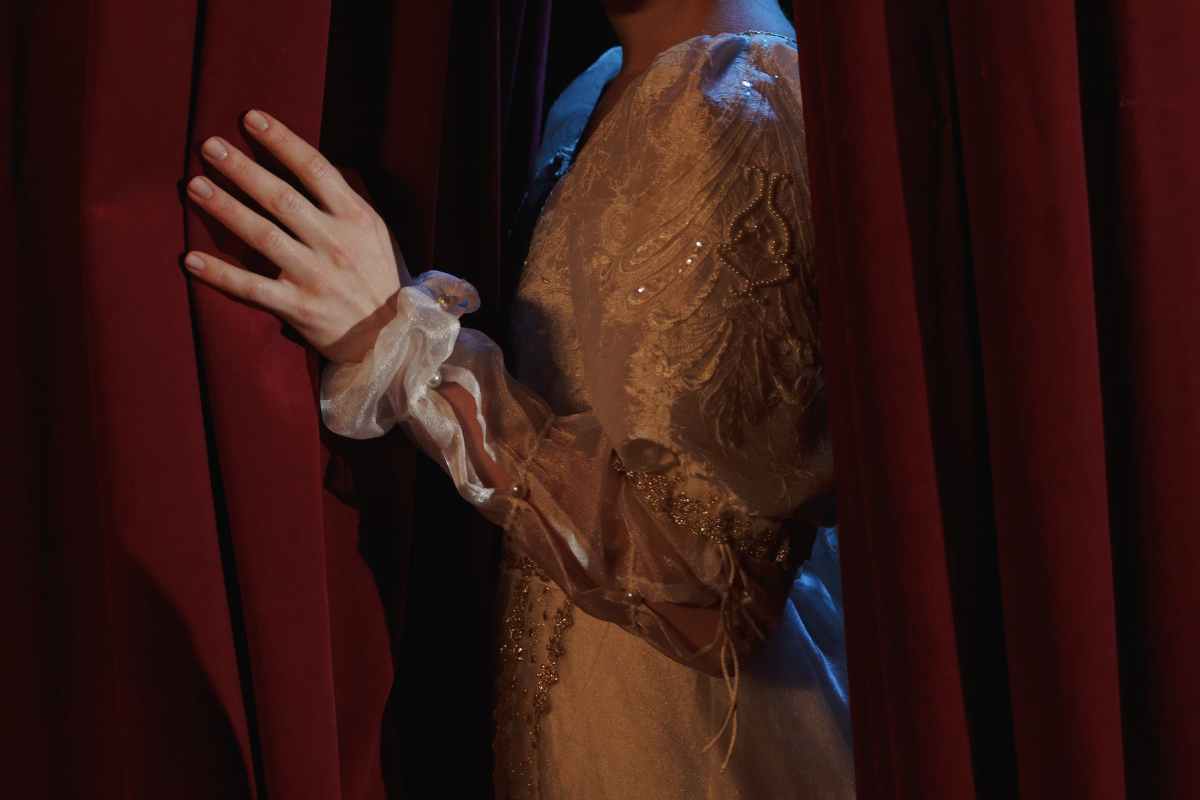
First, let’s cover that Chekhov reference. He was a Russian playwright – hence the cover photo for this post – and Chekov’s gun is a famous piece of advice. There are a few versions, but the most famous goes:

If in the first act you have hung a pistol on the wall, then in the following one it should be fired.

Anton Chekov (at least, ish)

And to a certain extent, I think all writers get that. It’s foreshadowing, right? Your main character can’t just whip out a gun in the climax if we’ve never seen a gun in the story before. That’s a bit too Deus ex machina. In Misery, Stephen King talks about the old parachute-under-the-seat trick employed by so many serials of his youth: our hero seems to be stuck in a crashing plane as one segment ends dramatically, but at the start of the next he pulls out this never-before-seen parachute and jumps to … well, not safety, but he survives long enough to make it to the next cliffhanger.

So that’s the first point of Chekov’s gun: setting up your climax.

No, you don’t want to give your whole plot away, but you want to do what all the best thrillers do: allow readers to go back through the book a second time and find all the clues they missed before. They don’t have to be obvious. You don’t need a character gesturing grandly and saying “I say, Chekov, what a big pistol you have hanging on this wall!” It can be a derringer spotted in a lady’s purse as in [redacted because hey, that gives the whole plot away].

And of course Chekov’s gun doesn’t have to be a gun. It doesn’t even have to be a weapon at all. If it’s something that’s going to be important for your character surviving the story’s climax, then we need hints at it before your character suddenly displays a new trait or skill. For example – I have to spoil American Gods for this, so skip to the next paragraph if you’d rather read it yourself – Neil Gaiman pits the old gods versus the new gods and leads them up to a final battle that our main character Shadow ends by … talking. He’s this big dude, fresh out of prison at the start of the book, and we’ve seen him fight … but only when he was goaded into it. Gaiman sets Shadow up as this pacifist who looks for other ways around the fight and only wades in when he doesn’t find other options, but that’s the most important part: he sets Shadow up that way so the final battle doesn’t come out of nowhere. We know what kind of guy Shadow is and, even if he’s a bit thrown off by all the other plot Gaiman chucks at him, there’s that core element of character that carries the day.

Spoiler over.

But the other part of Chekov’s gun comes in handling reader expectations.

I was reading the first few chapters of a friend’s book while they were still drafting it – totally alpha-reading – and I commented on a part where they’d spent a long time describing the main character’s dogs. It was something like “Oooh, I can’t wait to see how they’ll play into the book in the future!”

Their response? “I hadn’t even thought of that.”

First, it’s a first draft, so that’s totally okay. You don’t need to make Chekov’s gun work perfectly in the first draft. In fact, if you’re a discovery writer, then Chekov’s gun is totally a second draft issue. It’s absolutely, totally fine if your first draft doesn’t do everything you want your final draft to do. It just needs to do what you need a first draft to do.

Second, apparently this isn’t the usual way of thinking about it, which is why I’ve surprised a few people with those kinds of comments. So:

when you spend a lot of time describing something, you’re signaling to your readers that it’s important.

I think we all know this on a basic level but it’s not always at the front of our minds when we’re writing. Sometimes we’re just having fun describing the setting. Sometimes we’re trying to concentrate on (finally) describing the setting because we know that’s our weak point.

Sometimes it’s a slow words day and we’re just trying to get any words at all to come out.

And again: first drafts are all about getting the words on the page. We don’t judge first drafts. They’re hard-working friends who know they aren’t perfect and do their jobs well.

But, when you get to the second draft and beyond …

Chekov’s gun is a balancing act.

And, as a balancing act, it exists in more than one part of your story. Chekov indicates acts, but it works for all narratives. We need to be introduced to The Thing before we see a character use The Thing, and if we see a character taking their sweet time describing A Thing early on (Ready Player Two, I’m looking at you) then we’re primed for That Thing to show up when the character most needs it.

Once you’ve figured out how your climax and falling action are going to play out, you can look back and make the necessary changes. Did you introduce your Thing early enough? Did you spend too much time describing something that isn’t that Thing (and wasn’t meant to be a red herring)? It’s hard to strike that balance where your beta readers say something like “Wow, I should’ve seen that coming but I didn’t!” but there is middle ground between complete surprise and giving it all away.


Do you think about Chekov’s gun when you write or revise? What’s your favorite example of it being used properly? Or maybe a time when you think it could’ve been finessed just a wee bit more …

sometimes I even follow my own advice

Most times it feels like there’s a disconnect between Rebecca the Writer (outside of the high school classroom) and Rebecca the English Teacher (inside the classroom). There’s a shift between teaching writing and engaging in writing, but every so often I’ll mention to my students that, over the weekend, I did something I’ve made them do during their drafting … and they’re still shocked. Wait, these graded steps are things I actually do … when there’s not a grade?

The one I took most recently isn’t really something that could be graded, but I’ve been doing it since grad school, and it still works.

Sometimes I have to bribe myself.

Not every day is a “Golly gee wilikers, I can’t wait to write!” kind of day. I mean, do you wake up every morning absolutely thrilled to go do your job? Even if it’s true more often than it isn’t, there are still … those days. And sometimes terrible, horrible, no good, very bad days, but deadlines are real. You still need to get a draft or the edits into someone else’s hands.

I had chapter revisions due by April 30, and the thing is, they weren’t even all that bad. Comments came from a pair of editors, but neither of them was Reviewer 2. I had to clarify a couple things, but mostly … I had to change my citation style. (Oops.)

And I didn’t want to do it, of course. Citation is awful. I always leave it to the end. I’ll put the proper info after each quote, but I’ll put off formatting it as long as possible. Part of me argues that, this way, I’m totally focused on order and capitalization and punctuation, so it’ll all match, but really … I just don’t like doing it.

So, a week ago Saturday, I bribed myself into doing those edits.

I went up to Keweenaw Coffee Works to get brunch and a fancy coffee and told myself that, since I got all that and came all this way, I wasn’t allowed to leave until my edits were done.

Like I said, I’ve been doing this since grad school. I can go to 5th and Elm for lunch and a coffee, but only if I get through this reading. I can grab a cinnamon roll (sadly no longer available) from Cyberia, but only if I finish writing this paper for grad school. (Where’s that “food motivated” meme when I need it?)

Now, clearly, I know I’m bribing myself. And I know that there aren’t really any immediate consequences to going out, sitting there with my coffee and snack, and not doing the work. I’ll be in trouble if I don’t submit the thing I’ve promised, but it’s not like I’m going to send myself to bed without supper. So it doesn’t work for everyone, but it works for me. And I’ve told so many people it works for me.

And they’re still surprised to see me out at a coffee shop, working on something.

I get that some people can’t work in coffee shops, but it’s like with my students: when I break down the writing process into steps, it’s because that’s how I, personally, do those steps. My seniors had to write scripts for their presentations, and I started them off with dictating their scripts while running through their draft slides … and then did the same thing for my own PCA presentation.

The thing is, it’s not like a presentation (or a chapter, or a book, or a blog post) just springs fully formed from my head. There are so many steps that go into them, and I don’t always want to do all of those steps. Knowing those steps is a good thing, because at least I can plan out what I need to do in order to produce the thing, but doing those steps is the next hurdle.

And that’s why I bribe myself with a Brekkie Gallette and a fancy latte from KCW so I can edit my citations.


Have you ever bribed yourself to finish your writing? What’s your favorite bribe?

thinking about reading about writing

Stephen King says “If you want to be a writer, you must do two things above all others: read a lot and write a lot,” and I’m in agreement with him on that one, but I think I want to add a little wrinkle: if you want to be a writer, you must read a lot about writing.

I’ve already talked a bit how there are so many books about writing because we all write differently. Our brains aren’t the same. Our backgrounds aren’t the same. We haven’t read the same books or stayed up too late for the same tropes or drooled over the same authors. So of course we’re not all the same writers, and writing advice isn’t one size fits all. Different strokes (advice) for different folks (authors).

Except I’ve got another wrinkle for you.

I’m not the same author I was a year ago, and definitely not the same author I was when I started writing. Remember how you only learn to write the book you’ve just written and you have to keep learning if you want to keep writing? Writing is all about growth and learning what works for you, but … you change. You grow.

If a man looks at the world when he is 50 the same way he looked at it when he was 20 and it hasn’t changed, then he has wasted 30 years of his life.

Muhammad Ali

So the fun (?) part is that it doesn’t take a whole 30 years to see that you’ve changed as a writer. The question mark comes because this frequently means reading something you wrote a bit ago – something you thought was amazing at the time – and grimacing and wanting to throw the whole thing into an incinerator.

Cringing at your past self is a sign of growth.

I remember the first time I went back to a novel I’d written and didn’t cringe every other page or so. Granted, I find a lot in that manuscript to cringe about now, but we’re talking at a distance of about a year. Prior to that, I’d pick up something I’d written and see already how much I’d grown, both as a person and as a writer. (The perks of writing when you’re a teenager, I guess.) This was one I’d written during my freshman year of college and, when I looked back on it as a slightly older college student, I remember thinking “Hey, I’ve actually got something here.”

I don’t have an accurate count of how many complete or abandoned projects I’d written before getting to that one – the story of how being Robin Hood’s son wouldn’t really be any better than being his daughter, if you must know, and yes I’d seen the Keira Knightley movie shortly before coming up with the idea – but I’d written a lot by then. There’d been a lot to improve since my first attempts, and I’d made enough strides that my learning curve stopped being quite so exponential by then.

But I’m still growing and changing.

And it’s not just about how the stories I want to tell now are different from the stories I wanted to tell a couple decades ago. (Look it really helped that I was in a mediaeval history class with a professor totally willing and able to answer my obscure questions while I was writing the Robin Hood thing. Shoutout to Dr. Wickstrom from Kalamazoo College.) It’s also how I don’t go about writing the same way now as I did then.

Some of the writing “rules” I read about and dismissed because they didn’t apply to me … now apply to me.

Okay, some of that might’ve been the “I’m a special snowflake” thinking – you can’t tell me how to write because you don’t understand me – but not all of it was. I collected various pieces of writing advice and sorted through them, but even the ones that made me roll my eyes haven’t entirely been forgotten.

You have to read widely about writing not just to see how other people think, but because you won’t always think the way you do right now. The trick that never fails to work for you today might not be such a failsafe a decade from now. And, if you decide to engage in writing on a professional basis, there will be days when you really need to force yourself to get words down because deadlines are deadlines, and you don’t have the luxury of time to take a break and do your usual approaches.

For example, let’s take Hemmingway:

I learned never to empty the well of my writing, but always to stop when there was still something there in the deep part of the well, and let it refill at night from the springs that fed it.

Ernest Hemmingway

Past Rebecca definitely thought “Hah okay, Papa, maybe that works for you, but that’s not how I roll.” And Past Rebecca didn’t roll that way. She liked her ridiculous NaNoWriMo word count graphs. (And this Past Rebecca wasn’t actually too long ago, either …)

But today – literally today; I started a new draft for April Camp NaNoWriMo – I hit a word count … and stop, even if I think there’s still some water left in the well. Lately that’s what’s been working for me: hitting a goal that’s a challenge but not too high, and then … doing something else. Letting the ideas percolate in the background instead of trying to force more words and hit the next word count goal.

I’m sure there are many other changes to my process, and many other pieces of writing advice that I used to scorn but now (maybe begrudgingly) agree have their merits, but that’s the obvious one to me today. The biggest sign that I, personally, can see as to how I’ve grown and changed.

Read widely about writing advice, because you never know when you’re going to need it.


What’s your least favorite piece of writing advice? Has it changed over the years? Is there any “popular” advice you used to reject that you’ve now come to embrace?

on the idea of fearlessness

There are lots of cool things about having knitting as a hobby. For one, if you happen to knit a sweater that turns out to be too small, you can just frog it and reuse the yarn – there’s no materials waste. And, if you have leftovers from a project, you can make something out of those scraps, the same way you can make a quilt out of fabric scraps. But the scary thing about knitting is dropping a stitch: all it takes is one of them sliding off your needle and laddering down, and there goes your project.

Example of a dropped stitch from The Knitting Network. The horror!

Well. It feels like that when you start, at any rate.

When you’re struggling through your very first dishcloth or scarf or other general rectangle of a project, you’re terrified of dropped stitches, or adding a stitch, or just messing up in general. You count your stitches after every row, sometimes twice, because the idea of making a mistake is terrifying. And yeah, maybe you tell yourself that you have to be bad at something before you can be good, but you still want it to be right even if it’s not quite perfect.

That hasn’t been me for quite a while now. My grandmother first taught me to knit when I was about 8 years old, and that was definitely me back then. Part of it was how much of a struggle it was to simply create every stitch. It didn’t feel natural, or confident, and I definitely didn’t want to rip back to fix something because that meant tearing out hours of highly concentrated effort.

After more than a couple decades, I even braved the shock and furor of internet strangers to document the frogging process on Twitter about a year ago.

A twitter thread where I document frogging (ripping out) a shrug that I only wore once because it just didn’t fit.

Part of it has to be a state of mind.

I took a lot of time knitting that shrug and making sure it would be the size the pattern said it should be, and it was a struggle, because I had to rewrite some of the charts that came with the pattern. (Knitters generally have a strong preference for charts, which are visual, or written instructions, and patterns tend to tell you which one they are … unless they’re mislabeled or misrepresent themselves.) So yes, I know full well how much time and effort I’d put into it, thank you.

I also knew that I couldn’t easily get that very lovely yarn anymore. And that not many people are actually knitworthy, and come on, I really want a nice cabled shrug for me, that I can wear. Forget sunk costs. I wanted to have something I could use out of that precious yarn, so I reclaimed it.

Frogging might look more foolish than fearless, but bear with me.

I am more willing to try new (and possibly questionable) techniques because frogging is one of the tools I have in my toolbox. The thing is, if you Google “dropped stitches,” the top results are about fixing them, not defining them. A dropped stitch isn’t the end of the world (or your project) if you have the skills and techniques to fix it.

And knitting is full of all kinds of skills and techniques to help you fix mistakes in your projects. There’s more than one way to do every single technique in knitting – and yes, even knitting itself. (Continental? English? Portuguese? Combination? And those are just the major styles.) If one way doesn’t work well for you, try another. The longer you knit, the more techniques you come across, try out, and relegate to one of your major columns: use it more often, keep it around in case you need it, or heck no – always find an alterative to this one.

And the more knitting tips and tricks you amass, the more fearless you can be about knitting a new pattern or trying a new technique, because you have so many ways to “fix” it if things go wrong.

Hang on, isn’t this usually a writing blog?

I’m so glad you asked.

The more tips, tricks, tools, and techniques you know, the more fearless you can be in your first draft … whether it’s knitting or writing. It doesn’t matter as much if things go wrong, because you know you can deal with them. It’s neither a mystery nor a tangled mess.

When you start writing, you might think it has to be perfect straight off. I know when I started, I thought of them as “stories” instead of “drafts” – and certainly not “a first draft.” A first draft implies there will be other drafts that follow.

It might even imply imperfection.

I’ve already talked a bit about how I don’t think of writing rules while I’m writing, and that plays into the apparent fearlessness of a first draft. When I’m drafting, and it’s going well, there’s a lot I don’t worry about. I just … write, and know that any issues can be fixed later.

You still have to know all those expectations, and you still need to end up with a book (or a shrug) that fits the intended recipient, but the start can look like a big tangled mess if that’s what it takes to get started … or to get a draft finished.


What do your first drafts look like? Would you ever show them to someone else?

the scariest part of publishing a book

I was giving a talk this weekend about … myself, really. How I’ve come to know what I know, research what I research, and write what I write. I talked about all of my books, and read from the first few pages of Not Your Mary Sue, and gave a teaser about what happens in the rest of the book. And then one of the audience members raised a hand and asked if Marcy falls in love with Jay.

And I didn’t answer.

It seems like a simple question, right? Either she does or she doesn’t, so yes or no.

You might even think that you’d be able to ask the character herself. Maybe she says it somewhere I could quote and cite and all the rest, except … it’s also possible that characters don’t always want to admit the truth. (If you were the daughter of a famous televangelist who’d been stuck on an island with a confessed serial killer for weeks as he told you his life story and was rescued in such a condition where you were taken straight to the hospital, would you ever conceive of a situation where you’d say “Yes”?)

Except … I know how I wrote it.

But I also know not everyone reads it that way.

And I know that, once it’s published, the book isn’t yours anymore.

Look, I engage in literary criticism myself. I’ve analyzed books about Jack the Ripper and I’ve analyzed books by Stephen King. I’ve heard how Tony Magistrale gave a presentation about one of King’s short stories and King himself was in the audience, stood up at the end, and told him he was wrong … and how Tony told him that, whatever King thought, Tony was able to find evidence to support his point. (This was of course back when Stephen King attended conferences where people talked about him and his work, but I’m not sure how close it was to when he stopped this practice.)

Once you publish a book, it’s no longer your own … and maybe it’s only when other people read it that you realize exactly how much of yourself you put between the pages, and how many things you said without fully intending to say them.

On the one hand it’s great fun to see how other people read your work.

I had people I knew from high school catching teachers’ names or telling me they couldn’t stop picturing our high school choir director. (Who looks nothing like Jay. If you need to remember, this is the portrait of Jay I commissioned. That particular reader sighed with relief, stopped picturing our old choir director, and was able to move ahead.)

My own mother-in-law told me she cracked up on the very first page when Marcy starts to realize something’s weird not just because of the manacle around her ankle, but because her toothbrush is on the wrong side of the sink.

My high school kids were reading selections from Bird by Bird and asked how, exactly, authors can tell the truth if they’re writing fiction, so I read them those same first pages and asked them to call out how much of that was me.

There are things that I meant, and things that I’ve realized since publication, and – I’m sure – things I still have no idea about.

But I told them that I can’t actually tell them whether Marcy falls in love with Jay.

I do have an idea about that one. I know what I believe and I know how I meant it, but that doesn’t mean that’s how you read it.

This is actually something I have very strong feelings about, but I also don’t think it’s really my right to tell you, outside of the book, what the right answer is.

If you read the book, and find evidence for a different answer than the one I feel, then I can’t really tell you that you’re wrong. I might want to point out all this other evidence that argues my side, but that doesn’t mean the evidence you found isn’t there.

It’s complex. And it’s not just mine anymore.

And that, for me, is the scariest thing.


What do you think: was Marcy in love with Jay? (Was Jay in love with Marcy?) And do you, personally, feel like your readers might indeed sometimes be wrong?

why hello, December

I’d ask where the time went, except I know the answer to that one: NaNoWriMo. You’d think I’d be used to it by now, especially since it’s my 13th November, but no. Apparently I just have to keep learning this over and over:

You never learn how to write a novel. You just learn how to write the novel that you’re writing.

Gene Wolfe

For NaNoWriMo, I decided to write a thriller set in the UP. I’ve done that before, so that should make things easier, right? Well.

Normally I write my novels chronologically. I’m more of a discovery writer than an outliner. In NaNo parlance I’m a plantser. Before I start writing a novel, I’ve spent a good deal of time thinking about things like setting and my characters’ backstories. I tend to go into things knowing the opening scene and the first big thing I’m going to throw at them, and I’ve done enough prep that I can be fairly certain how these characters are going to react. Then, in the words of my high school mythology teacher Mr. Noller, I kick the characters in the butt and follow them.

For this November, I was dealing with a cold case. Here’s the basic setup – what I knew before going into November 1.

Ten years ago, Ollie's mom and sister were killed while she and her dad were out at the family cabin. Her high school boyfriend was put on trial for the murders and found legally not guilty, but the community decided otherwise. Recently a serial killer took responsibility for the murders, and a true crime reporter has been contracted to write a book about the case. He's on his way to Ollie so he can visit her hometown and collect interviews when she gets a call that the serial killer actually has an alibi for that night, so the case is far from solved.

So right away I started with a bang: the reporter’s about to show up, but Ollie gets this phone call, and where do you go from there? I knew it was going to be a lot about relationships: Ollie and her dad, Ollie and her mom, Ollie and her sister, Ollie and the high school boyfriend … Ollie and the reporter … so Ollie was going to be at the center of a lot of it, but there was also a lot she didn’t, or couldn’t, know. She wasn’t there that night. She didn’t actually know what her mom and her sister were thinking. So. How could I deal with it?

This is where I tried something new.

Part of the novel – every other scene – follows Ollie Today as she gets the news and things unfold in reaction to it. The other parts aren’t in chronological order and are made up of false documents that largely rely on my reporter’s interviews with other people about Ollie’s mom and sister and what they think happened. Which is confusing on its own, because they’re all recalling something that happened a decade ago, when they’ve had all this time to mold and shape their memories to fit the dominant narrative (in this case, of the former boyfriend’s guilt).

Because I’m not an outliner, I wasn’t sure how it would work. If I’d have enough interview transcripts or newspaper clippings or what have you to continue alternating between the “Now” and these other elements.

I also made things more complicated for myself because that meant figuring out a lot of the old friends and neighbors, or parents of the old friends, and what their points of view would add to the narrative … or, of course, complicate about it. There’s an incident involving the sister, for example, that we see from the dad’s, a friend’s, a friend’s mom’s and a former babysitter’s points of view. Who heard which variation, and what details do they want to pass on? All of this jumping back and forth where you first think you’ve got a handle on it, and then realize hey, actually, we all do this, don’t we? Pick which parts of ourselves to share with which other people, and why.

So I continued doing these jumps, back and forth between the plot I was discovering and the past I was pretty sure I had a handle on, fleshing things out and working toward the climax.

… and I think it worked?

I’m not going to be more certain about it for a while yet, since I’m still too close to the story, but the writing part worked. I was able to sit down and keep up with my intended word count each day while at the same time moving back and forth between Now and Supplementary Documents. It forced me to think about things in new days, with new depths that I don’t usually find until it’s time for the second draft.

It does need time to sit, though, and get out of my immediate consciousness so I can come back to it in a couple months with a less-biased eye. It’s impossible to be completely unbiased about your own work, but the pause can certainly help. Plus by then my usual immediate readers might’ve had the chance to go through it and tell me their initial thoughts.

Because that, of course, is the next scary but necessary step: finding out if other people think it worked. If maybe I overdid it. If it’s too confusing even for a thriller with false documents and unreliable narration. It’s not just about a search for the truth of that one night, but one of my favorite topics: personal identity. Who really knows who we are? Do we even know that about ourselves?

All in all, I think it was a productive November and not just a busy one. I’ve got a complete draft, at any rate, and even if nothing comes of it, I’ve got these new experiences from writing it. I kind of doubt the rest of the year will slow down at all, but at least I know where November went – I’ve got the document to prove it.


Did you participate in NaNoWriMo this year? How did that go? Did you learn anything new about yourself and your writing?

thoughts on this NaNoWriMo eve

It’s almost November, one of my favorite months of the year. If you’ve yet to hear the good news of NaNoWriMo

I’ve been participating in National Novel Writing Month since 2010, when my friend Karen mentioned it to me and suggested I might enjoy it. Well, she was right. I’ve been hooked.

Although there are rebels and the “rules” have relaxed a bit since those old days, the main goal of NaNoWriMo is to quickly write the first draft of a novel during a single month. To “win,” you write 50,000 words over the 30 days of November, which averages out to 1,667 words a day. (Although there aren’t any NaNo police. There’s no penalty for signing up, trying, and not hitting 50k. No police, but plenty of cheerleaders if you want to sign up.)

I had no idea what to expect of myself that first November.

I’d written stories before, sure, and long ones, but I’d never tried to hit a certain word count goal with a specific timeline. I signed up for NaNo on October 6, 2010 (coincidentally that’s my dad’s birthday – you know, my biggest cheerleader?) and then spent the rest of October working my way through not only three different plots, but working out an entire village of characters. (I’ve still got that notebook. I worked out the hours of each shop on the village main street, for crying out loud.)

And then, come November, I ignored every last bit of my outlines and just … went for it. I wrote at a speed that felt good for me and ended up writing 120,039 words, so that means averaging 4k/day while being excited and pushing myself, but not too hard.

My second year, in 2011, I pushed harder and ended up with 180,508 words. The site keeps track of such things for you. Sadly my first year’s data got lost, but I still have the file for my final word count. From 2011 on I can go back and look at graphs like this one:

The gray line shows the proposed steady progress of the magical 1,667 words per day. My blue line shows how I sped up and over 180k. (And the story still wasn’t done – I’d written myself into a bit of a corner with this epic, but in April 2018, for a Camp NaNoWriMo session, I ended up finishing it. Whatever little idea I’d had at the start of November 2011 turned into five books of an epic that became a whopping 249,152 words.)

By 2011, I’d already started seeing a pattern in my NaNo that has more or less continued to this day:

I go into it knowing more or less the first half of the story.

Usually less. When I prep, I build up locations (that’s become easier since I’ve moved from fantasy to real-life places and I pick the ones I know well) and character’s bios up until the moment we meet them on the first page. I do a lot of work fleshing out who they all are, so I have a good idea of how they’ll react when I throw different things their way. Then, in the words of Mr. Noller, my twelfth-grade mythology teacher (who, I believe, was passing on something one of his college professors told him), “Kick your characters in the butt and follow them.”

For me, NaNo is a lot of following. I know (more or less … sometimes a lot less) where they’re going for the first half of the novel, and then …

Then. The muddy middle.

Every. Single. Time.

And look, I’m not alone. In Neil Gaiman’s NaNo pep talk from 2007, which I have found and cherished and passed on to so many other writers, Neil himself explains:

The last novel I wrote (it was ANANSI BOYS, in case you were wondering) when I got three-quarters of the way through I called my agent. I told her how stupid I felt writing something no-one would ever want to read, how thin the characters were, how pointless the plot. I strongly suggested that I was ready to abandon this book and write something else instead, or perhaps I could abandon the book and take up a new life as a landscape gardener, bank-robber, short-order cook or marine biologist.

I don’t know how many times I’ve gone back and read this pep talk because I really, really need it.

(The solution, in case you’re wondering, isn’t giving up and becoming a landscape gardener, bank-robber, short-order cook, or marine biologist. It’s to keep writing.)

So the rest has to come one word at a time.

Which, to be fair, is how the fun first part gets written, too. It just happens a lot faster when the idea is new and shiny and I’m closest to the bit I already know: the opening scene. The further I get from there, the more things veer off.

What I’ve learned about myself and my writing, though, is that I need to be consistent. Like seriously consistent. Some of my more recent graphs clock in at almost exactly 5,000 words a day for every. Single. Day.

Remember how my original 2010 speed of 4k.day was pushing myself, but not too hard? Let’s have a peek at my graph from 2020 for comparison.

Yeah we don’t even need the whole month on this one. In case you’re wondering, my word count for November 1 was 31,423. I hit my 50k before 8pm on November 2. Why? Because in 2019 I’d hit 50k on November 3, so I wanted to push it. This was my Everest: why climb it? Because it’s there.

Look sometimes we have to go too far and then spend a long time afterward babying our hands and getting Dragon to dictate things instead of type them before we’re willing to try something like moderation.

My 2020 novel is still unfinished. It was a rush to hit 50k that quickly, but it sucked a lot of the fun out of the process. Maybe even all of the fun, in the end. I barely slept on the first, and man, November 2 was pretty darn awful, because I had to force myself through the muddy middle at record speed. Not recommended.

Since then, I’ve stuck with my own personal Goldilocks number. On the fast days, I hit my 5k pretty early … and then push back from the keyboard and go do something else. (Put some words back in, you might say.) Then, on the muddy middle days, I push through … up to 5k. I don’t let myself stop, but I don’t force it like I did in 2020, either. I have goals, but I am allowed breaks.

So I imagine this November will be about the same.

I’ll sit down tomorrow to write the scene where I’m 99% sure I know what’s going to happen. The first week, maybe more, will be coasting on that energy and my general idea of where my characters are headed. I don’t know for sure if I’ll be able to do the 5k/day thing with everything else going on in my life, but, aside from my local region’s writing marathon scheduled for the 5th, I won’t be aiming for more than 5k.

I do want to write every day, no matter what the word count, to help push my way through that muddy middle. That, at least, should be doable – if nothing else, I can steal 20 minutes here and there between grading and prep, and chant to myself “A change is as good as a rest.” Like I said, November is busy. But I’ve got goals, and I’ve got experience on my side. Writer, know thyself.


Are you doing NaNoWriMo this year? Have you done it before? What tips and tricks do you have for other Wrimos out there staring down the next 30 days?

Put some words back in

I’ve talked a bit about my writing schedule, and mused about writing on both good days and bad, and compared writing to going to the faucet, but lately I’ve been thinking about the part of the process my friend Angela likes to stress: the breaks. Angela’s really big on telling me I need to take breaks. (I’m not really so big on listening to her.)

I’ve got what’s become a stock phrase for me, but when I dropped it in a Discord writing conversation, I realized that this thing so familiar to me is new and different to other people. When someone mentioned how draining it is to be working on a long-term writing project, I said oh, yeah – when you’re doing that, you need to pause now and then to put some words back in.

I don’t know if they actually blinked, but the “is typing” notification was up for quite a while before they came back with “Tell me more.”

I guess sometimes I picture my brain to be the Kool-Aid man.

Not because I’m made of glass or because I like to bust through walls, but because my words are the Kool-Aid. When I write, I pour them out. Now, I’m not entirely sure what would happen to the Kool-Aid Man if you emptied his pitcher, but I know how I feel after a long writing session: drained. (Ba dum tss.)

Aside from things like breathing and blinking, I’m not sure we’re built for sustained anything as a constant. Marathon runners train themselves to be able to keep it up for that long (or, if you’re Eddie Izzard, you run 32 marathons in 31 days.) I’d say “HOW?” but the answer is “training.”

National Novel Writing Month is a marathon. They have word sprints (because apparently running is a very apt metaphor for writing a novel) where participants see how many words they can write in a short amount of time, from 5 minutes to attempting a #1k30 challenge and writing one thousand words in thirty minutes, but NaNoWriMo itself is a marathon. For 30 days, the goal is to write 1,667 words and end up with 50,000 words of a first draft by the time November’s over.

At the average typing speed of 40 words per minute, that means writing for 42 minutes a day and 20 hours, 50 minutes over the course of the month to finish the novel. (One of my past NaNoWriMo notebooks has a nifty little writing time conversion chart in the back cover.) And maybe you think hey, 42 minutes a day? Totally doable. But that 42 minutes assumes that you know each and every one of those 1,667 words and don’t have to sit there and grasp for the next one.

Let’s say you have a good day and 42 minutes is all it takes. You’ve still pulled 1,667 words out of your head. So … now what?

Time to refill.

I personally don’t stop at 1,667 because I’ve been doing NaNoWriMo since 2010, so I know my own personal Goldilocks zone as far as word counts go. (Yeah, I know that’s for planets that can sustain life, but really it’s my wordcount that sustains both my life and my novel’s.) But the most important thing, especially as far as my friend Angela is concerned, is knowing when to stop.

Yes, you can absolutely write more than 1,667 words. Some people front-load their wordcounts and do what’s been termed a Reverse NaNo, getting ahead early in the month and only needing a single word on a final day. Others try a 50K Weekend to get all those words down in … well, that one might be self-explanatory. And if that’s what you’re looking for, then go for it.

I did 50k in two days in November 2020, hitting the goal before 8pm on November 2. There was more story to tell, but I was burned out at that point. I think I wrote another thousand or so words over the other 28 days of the month, but that rough draft is still unfinished. While a 50K weekend is possible for me, it’s not my Goldilocks zone.

Through decades and millions of words of practice, I’ve found my Goldilocks word count: on good days, I zoom through it before noon. On slower days, I can still make the goal, but it’s much more of a push. But the most important part of the process is this:

When I hit my word count goal, I’m done writing for the day.

It becomes time to put words back in my brain and fill that Kool-Aid pitcher back up.

What that actually looks like depends on the day. Sometimes it’s exercise. Sometimes it’s reading something, new or a re-read. It could be watching something. Basically my brain needs to do something other than shove words out through my fingertips, and it’s happiest when I put something back in it.

In case this wasn’t obvious with Angela having to remind me about breaks, I wasn’t always like this. I used to treat writing as write-write-write and nothing else. If I was awake, I should be writing … and nothing else. I didn’t have a broader definition of all the different steps writing requires, including (yes, Angela) breaks.


Has your approach to writing changed over time? Do you prefer to write as much as possible every single day, take it slow and steady, or something in between?

okay, next?

I recently completed the first first draft since Not Your Mary Sue came out, and … it’s been weird. Let’s face it, I didn’t think I was going to have any sort of sophomore novel jitters because a) I’ve written so many novels before and after that first draft of NYMS, and b) I know what novel’s being published next and it was already written before NYMS came out, but … still, it’s been weird.

I’m not a new writer. I’ve been writing novels since 2000, when I had a story I wanted to tell that didn’t fit into fanfiction. And yeah, okay, that one’s probably not long enough to classify as a novel based on word count, but come on. I was 15. I’m counting it.

I’ve written about how no, I don’t finish every manuscript I start. Yes, I’ve written novels into the double digits, but that’s nothing compared to the false starts. Which I did write about. And marvel over, because hey, Teenage Rebecca kept at it even when the starts-to-completion ratio was 20:1.

Let’s just say false starts feel a bit scarier now.

My academic writing has always felt different from my “fun” writing, and I don’t remember feeling this way after Ripper’s Victims came out. I don’t think it’s just the difference in process between proposing, and then writing, an academic book, or drafting a whole novel, but maybe. It is a different approach, after all.

I think it’s easier somehow for me to see academic writing as an honest draft, to be revised by me before anyone else sees it, and then revised again based on peer review or editorial comments. It’s easier, maybe, to think of academic writing as an actual process. There are multiple steps, and turning a blank document into a bunch of words is only the first one.

I didn’t really want to tell anyone I’d started a new novel. When I set my goals for the week, it was a bit superstitious: well I’d like to keep up my progress, but no worries, universe, if I can’t. It’s not that important. It’s fine.

(It was totally that important.)

The thing is, with all those partial files and all the work I’ve done in the past, I know what it feels like when a book isn’t working. Except “when a book isn’t working” can also be “not a great day on a book that is working.” So you have to push through the one not-so-great day and hope it doesn’t pile up into two, and then three, and then fizzle.

Plus you’re alone in the room, staring at the screen, and at the same time you know you’re the only one putting this pressure on yourself, it’s still valid pressure. “C’mon, you’ve done this how many times before? You know you can do it.”

While your recently-published book just sits there and stares at you.

The demonstrated ability to write a novel just doesn’t feel like a guarantee.

Yes, I’ve done it. I’ve been doing it for years. And now you can see that I’ve done it. This isn’t just something between me and a small group of people I can name and call up if I want to. Complete strangers can buy my book (and read it and judge me).

Because yeah, that’s part of it. This time when I sat down to draft, I thought “Oh crap, people are going to read this.” I’ve spent a couple decades doing these fun stories and sharing them with people who know me and who will be kind about their critique. People I know. And when the drafting’s going well, I don’t even think about them – how they’d react to reading a certain scene or anything. When the drafting’s going well, it just flows.

And this one (which I’m only writing about because the first draft is complete) did flow. I’ve got my Goldilocks zone for a first draft, based on word count: if I write this many words a day, then it means the story’s hot because I can write that many words. Some days are hot and fast and I’m done well before noon, and others are slower and harder (and make me worry that this thing’s going to go into the half-finished file and get lost), but I’ve found the word count that works for me.

Even on the days when it’s fast, I stop at that word count and then … do other things. Regular life things. Let the story sit until the next day and percolate in the background.

But, even then, even when I was like “Oh yeah tomorrow will be enough to finish this,” I didn’t want to trust it.

Trusting it feels like jinxing it.

Like yeah, maybe the writing ability – or just the joy – is a gift from some temperamental fairies who’ll take it back the moment they see me taking it for granted. (I’m pretty sure academic writing doesn’t come from fairies, temperamental or otherwise. That’s always more of a grind and feels more like honest work.)

I also feel like this draft was more of a first draft than I usually write. There are a lot of placeholders, mostly for names – a couple characters are X and Y LastName (no relation), because stopping to try to figure one out felt like it might derail the whole thing.

But it also feels like more of a first draft because I’ve spent so much time with a published book. It’s easy to forget everything that happened between the end of November 2017 and June 7, 2022, when it got published. All of the steps and revisions and feedback and more revisions that happened between the thing I wrote, having fun, and the thing other people get to buy.

I’ve also been a bit tired out from all that writing and the whole balancing act, which is why I haven’t written a post lately. Because writing is work, even when it’s fun.


How do you feel when you’re shifting between projects? Do you have any tips for starting The Next Thing?

About all those writing rules that everyone should follow …

So a couple weeks ago now a friend of mine made an observation on Twitter:

And that, combined with some other recent twitter discourse, makes me want to repeat my response to Danielle a bit louder, and a bit longer.

The thing is, writing advice isn’t one size fits all.

Except it’s like math: they start of telling you that you can’t subtract a bigger number from a smaller number. You just can’t. If you’re kid who pipes up about negative numbers, they shush you until the curriculum says that it’s information you’re allowed to receive. “Don’t confuse the other kids!” (That may have been the last time in my life I was actually ahead of the other kids concerning mathematical knowledge.)

Here’s another elementary school memory that resonates: in second grade we had to write storybooks with a partner. Stephanie and I wrote about a bunny who went on an adventure to a strange land and then came home and … I don’t remember exactly what, but it was very Hero’s Journey of the little rabbit. We even included dialogue to prove we’d learned all the punctuation rules.

But I remember Mrs. Knitz reading it and telling us that we couldn’t start a sentence with a conjunction. (In this case it was “and.”) So we had to erase our carefully-penciled text and cover up the weird gap it left.

It goes beyond learning the rules so you can break them.

More recently – I guess this post is a bunch of anecdotes – I had someone tell me that you have to learn the rules before you can break them because I said I don’t know the beats of Save the Cat. The internet’s a weird place, and you don’t always know who you’re talking to. I’m sure they meant it for the best. But I had to point out that some of us learned the rules before the original Save the Cat was published in 2005.

And yes, it’s important to know the expectations of the genre you’re writing. That’s really the whole point of a genre: it tells audiences what they can expect. It helps us pick the thing we want to engage with next. Some days you’re in the mood for horror, and others you just want a romantic comedy. The third-act misunderstanding (and maybe a breakup) is absolutely expected and necessary, but so is that happily ever after (or at least a happily-for-now).

Can you mess with generic formats? Yes, but. That’s getting complicated beyond what I’m trying to say here. Hold on to your knowledge of negative numbers until the rest of the class is ready to learn.

The point I’m trying to make is that there are all sorts of rules about how to write.

You get grammar and punctuation and formatting rules. You get genre- and format-specific rules. If you take a class, you get instructor-specific rules. (I had one in college who was obsessed with food. Your characters had to eat something, and it was always meaningful.) Pick up a book on writing and get a few more rules.

So now we’re circling back to Danielle’s lament that a very common writing rule doesn’t work for her. And my response:

I think I’ve generally seen it as “Don’t edit while you write … if it’s going to bog you down and stop you from making progress.” Or maybe I’ve just always added the second bit in myself?

Danielle agreed that yes, that’s the context, but it’s also the quiet bit. That’s the kid trying to tell the teacher that yes, you can subtract a bigger number from a smaller number, because negative numbers are a thing! They exist!

Writing advice is some big blanket statement that someone (presumably with authority) makes to some sort of audience. If you’re in a classroom, the speaker has a better chance of knowing that audience, but even then you don’t know everything about everyone. You don’t know where someone is in their writing journey or how many years they’ve spent honing their craft, or how, with which books or which trends, so really it’s just easier to make big proclamations.

And miss the nuance of the quiet part.

Writer, know thyself.

Yes, you should know the rules and expectations. You’re entering into a conversation as a writer and not just existing in some sort of void. (That might be my They Say, I Say college composition syllabus coming through, considering I taught it for years.) You do need to know how you fit and what various people are going to expect.

But.

The point of writing is the writing. And the reason so many of us talk about writing is because we’re not going to be relevant to everyone. And even then we’re not going to be relevant to someone on every project. Writing, and writers, continually evolve as they read and write and engage and revise and daydream and scrap and edit and polish.

So: you don’t have to take every piece of writing advice someone hands you. If you think it’s going to work (for you), then absolutely put it in your pocket. If you’re skeptical, you might stick it in a drawer of your desk to pull out when everything else seems to have stalled.

Or you can chuck it in the circular file if, instead of helping you get words on the page, it’s going to stop you completely.


In the interest of those of you who already know about negative numbers: yes, this changes when you’re working with an editor or an agent who suggests changes or a publishing house that has its own style rules. There are always exceptions. But, like my math teachers, you have to start somewhere.


What “writing rule” can you never seem to follow? Do you even try anymore, or is it something you’ve decided you don’t actually need?