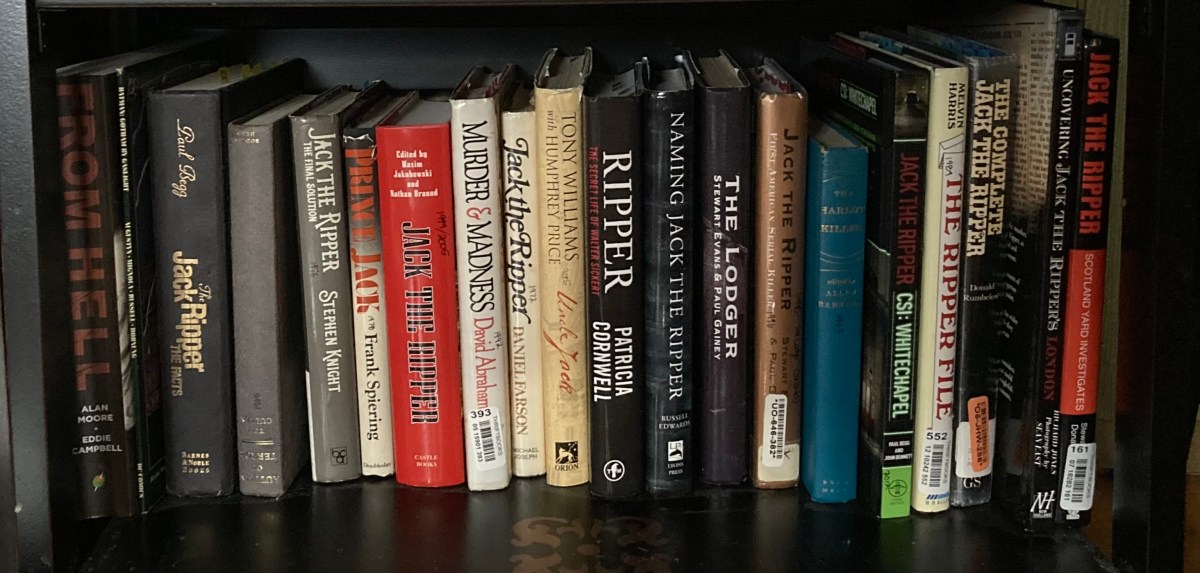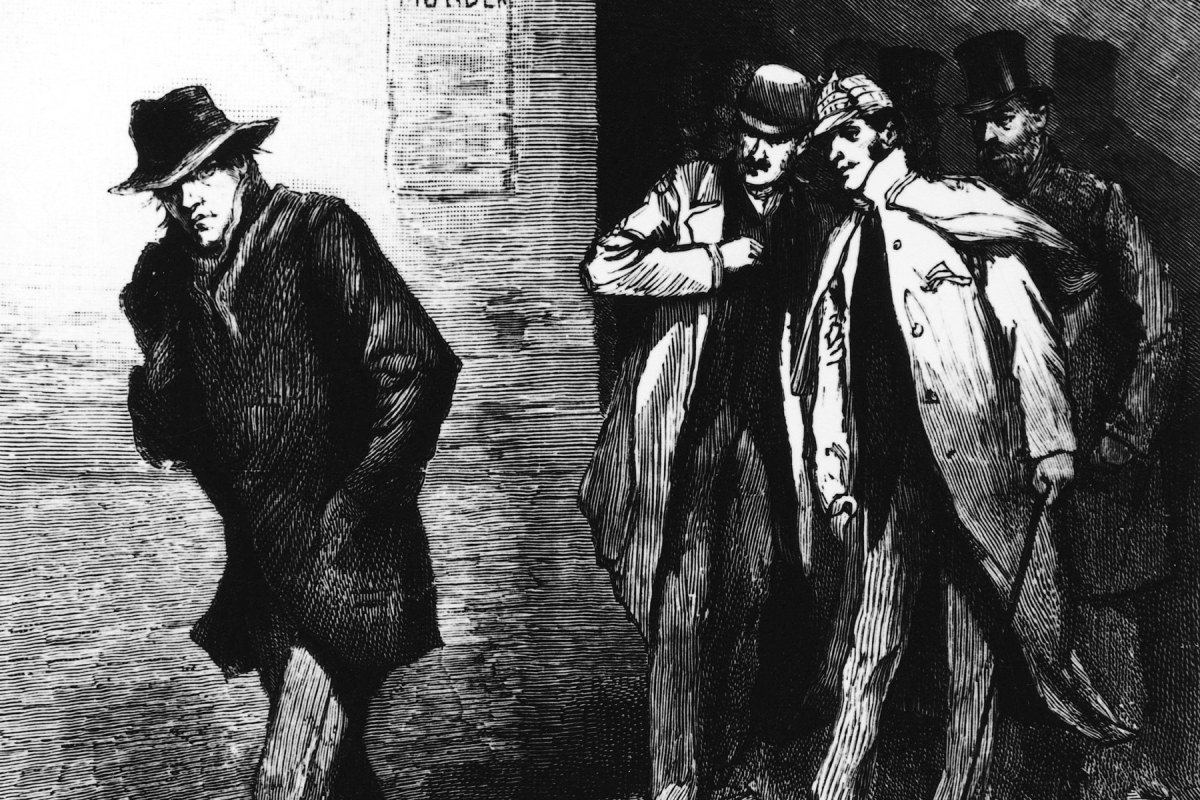
Most serial killers are expected to be men. Female serial killers, the FBI lectures us, tend to use bloodless methods of murder, such as poison or strangulation. Jack the Ripper, therefore, is highly unlikely to have been a women. although the idea was indeed around at the time of the murders. More recently, John Morris has accused not just a woman, but the wife of a man who has himself been named as a Ripper suspect.
Born Mary Elizabeth Ann Hughes, Lizzie married Dr. (later Sir) John Williams in 1872. John became a private doctor to the royal family in 1886 and was named as a Ripper suspect in 2005 by one of his own descendants. Tony Williams and Humphrey Price claimed that John’s missing diaries from the time surrounding the murders meant that he, personally, had been the Ripper and did not want to leave a record of his activities.
In 2012, however, John Morris decided to take things a step further: the diaries are missing, he argues, because they contain John’s worries about his wife, Lizzie, who later confessed to him that she had in fact been the murderer.
The argument here is that, after a childhood of being spoiled and given everything she ever wanted, Lizzie found herself in a childless marriage. Sir John is meant to have decided that the problem lay with his wife, so he sought out another woman to provide him with an heir. He happened upon Mary Jane Kelly, a poor East End sex worker who had at least proven herself fertile because she already had a son, and John embarked on an affair.
Lizzie, having discovered this, flew into such a fit of rage and jealousy that she embarked on an entire murder spree. She’s supposed to have killed the first three of the Canonical Five victims in order to simply prove to herself that she could indeed murder a woman – although why she’d want to practice on women who had done nothing to her isn’t entirely clear. Really, to make this work, there needs to be some sort of explanation as to why she didn’t just go murder her husband’s mistress, since other women died prior to Mary Jane Kelly.
Morris argues that Lizzie, having made certain that she could wield a weapon – perhaps her husband’s own scalpels – somehow tracked down Catherine Eddowes, heard her give the name “Kate Kelly,” and mistook her for Mary Jane Kelly. This is Morris’ explanation for why Catherine Eddowes was so horribly mutilated following her murder: Lizzie used a knife in a fit of feminine pique and wanted to ensure that her husband would never find his mistress attractive ever again.
It also explains the long pause between the murder of Catherine Eddowes and Mary Jane Kelly: Lizzie, upon discovering that she had murdered and mutilated yet another innocent woman, was taken aback and needed some time to regroup. Was she steeling herself for yet another murder? Upset that somehow she was now a multiple murderer and hadn’t yet even worked her way up to her true target? Whatever the reason, Lizzie was still able to take herself in hand in order to murder and mutilate the woman who might have, in time, given her husband the child he wished for.
After which Lizzie did in fact have a mental breakdown, confess the murders to her husband, and throw herself on his mercy (while perhaps blaming him for a bit that she was forced to become a murderer in the first place). John destroyed his diaries, saw that his wife got a rest cure, and the Williamses were safe from suspicion until the early 2000s.
We all know about hell’s fury and women scorned, and Rudyard Kipling would like to inform us that the female of the species is indeed more deadly than the male, but what do you think? Are the Ripper murders really the result of a woman seeking revenge against her husband’s mistress?
Holmgren and Norris not only point out that neither Lechmere – seen here in a photograph from 1912 – nor Paul mentioned seeing any other person in Buck’s Row, even though the murderer must have still been nearby, but map out Lechmere’s life against the murders of the Canonical Five and a previous victim, Martha Tabram. Each of these sites corresponds with Lechmere’s walk from home to work in the autumn of 1888, or to previous homes his family occupied, or earlier jobs he had.
Druitt was a young lawyer who committed suicide in late 1888 after the murder of Mary Jane Kelly. He had been working at a boarding school in order to supplement his income, and was dismissed from that post in late November. There is no evidence supporting a reason for this dismissal, but Druitt killed himself not long after. His body was found floating in the Thames on December 31, 1888, and had been in the water for some time.
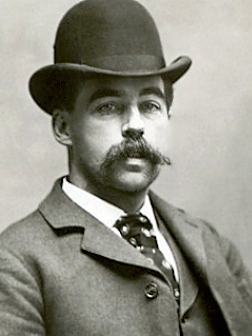
If you knew about Holmes before – and especially if you’ve been eagerly anticipating the murder castle discussion – I’m guessing you learned about him from Erik Larson. The Devil in the White City: Murder, Magic, and Madness at the Fair that Changed America. Larson interweaves Holmes’ story with that of the Columbian Exposition, paralleling the construction of the Fair with the construction of Holmes’ murder castle. The story bounces back and forth until the Fair is over and Holmes can have the pages to himself on his final, strange, itinerant spree, but, during his time in Chicago, Larson depicts Holmes very much as the happy serial murderer, using his mysterious Castle as a human version of a roach motel.
The counter to Larson is one I tell people not to read if they were so starry-eyed over Larson’s Holmes that they can’t picture him any other way. Adam Selzer’s H. H. Holmes: The True History of the White City Devil pulls back the curtain and explains that, well, the murder castle really wasn’t all you thought it was. He describes clerks from the shops on the first floor napping in those “secret” rooms and passageways, and argues that it really wasn’t used as a hotel, after all. When a fire broke out in the middle of the night during the World’s Fair, there weren’t nearly enough people on the street to argue that the third floor was actually being used that way. (Selzer also gives talks and tours, and you can catch him online, although I’d recommend acquainting yourself with the case first, either through his book or some of your own research – he can jump around a lot for people who come in with only the faintest idea of who Holmes is and what myths need to be debunked.)

He’s bumped up the number, certainly. At the trial Holmes was accused of a single murder – even the deaths of Alice, Nellie, and Howard Pitezel were not mentioned, since they did not happen in Pennsylvania. Now he’s progressed to “the greatest criminal in history” with 27 murders.
First, he lied. Some of the people Holmes named actually came forward before his execution two weeks later to inform the world that Holmes had not, in fact, murdered them.