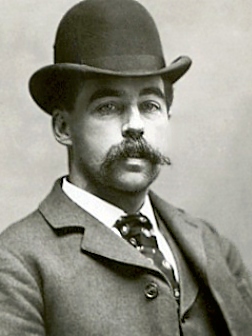
H. H. Holmes and the 27 body problem

There are many considerations that come along with being a serial killer, some of them more practical than others. One of these is “What do you do with the bodies?” In order to be labeled a serial killer in the first place, there have to be multiple victims. Serial killers therefore have to figure out what to do with the bodies so that they don’t get caught. But what are your options if you’re a nineteenth century physician living in Chicago?

One answer is, of course, H. H. Holmes’ “Murder Castle” … and that might offer up some actual solutions in the midst of all of the myth. There were at least some human remains discovered in the basement, but hardly enough to credit Holmes’ claim of 27 total victims, even if the final 4 were killed elsewhere. At times Holmes has also been suspected of buying a “glass-bending furnace” in order to cremate his victims, especially when authors like to multiply that number by a factor of 10. If Holmes used his “castle” as a hotel during the Columbian Exposition, then there are at least 250 bodies that have to be accounted for.

The bodies of his final victims – Benjamin, Alice, Nellie, and Howard Pitezel – were all found. So if Holmes didn’t bury or cremate the others, what happened to them?

  • sunk in a lake – in Holmes’ Own Story, after Holmes says Minnie Williams killed her sister, Nannie, he helped Minnie get Nannie’s body into a trunk and then rowed out into Lake Michigan and threw the trunk over.
  • sold – Holmes had, after all, been a medical student and would have known that medical schools had difficulty finding cadavers for practice. He claimed to have sold some of the bodies to “a party … whose name I withhold” and who paid him between $25 and $45 per body. (Even in his “confession,” Holmes refuses to reveal the names of anyone who supposedly helped him with the 27 murders. This mysterious party is likely still out there, buying corpses for either medical dissection or insurance scams, as Holmes wrote those words.)
  • used for insurance – Holmes claims he killed his first victim because he knew the man was insured for a large sum. He doesn’t explain how he got his hands on any of that money, especially since he gets confused in referencing his own previous stories, but presumably this man’s body had to be identified and returned to his loved ones.
  • left to be discovered – Holmes claims he killed one man after taking him out on a fishing trip. Holmes learned the man had money and presumably killed him in order to rob him. How he explained the absence of his fishing partner at the end of the day isn’t clarified.
  • self-defense – Holmes also says he shot at least one of his victims in self defense. In this case the body was quickly discovered and taken care of.

Even in his written confession to 27 murders, Holmes doesn’t always mention what, exactly, became of the bodies after he killed them. But remember, Holmes was writing in 1896. No one was watching CSI or reading true crime books. When he makes a casual mention of storing a body for months, nobody questions what state it would be in by the time he would have wanted to stage his insurance scam.

Holmes makes one nod to the realities of hiding a dead body when he admits that he selected the Pennsylvania office for Benjamin Pitezel because of its proximity to the city morgue. People in the area would be used to the smell of decomposition, so he hoped that Pitezel’s body would not be discovered until he was unidentifiable. But this raises a question: if he knew that a single dead body could alert the neighbors, how in the world was he supposed to kill over a dozen in one location without being discovered?

Holmes’ confession, lengthy as it is, still leaves numerous questions surrounding his supposed victims, and his reliability already falters because he named victims who were in fact still alive. There is no doubt that Holmes was a murderer, but not of 27 people.
Do your rough drafts ever get … less rough?

The more you write, the better you get at it – the same as practicing any other craft. And on top of writing, you can read (or watch YouTube videos, attend seminars, or buy master classes) about writing. You can get degrees and get published and all the rest, but … does there ever come a time when all the rules and practice mean that your first draft is going to come out perfectly? Well …

As my friend Bob Kubiak tweeted yesterday, “in the moment you’re working, most writing advice is forgettable.”

You can memorize all the rules – no adverbs, said is dead, pick your favorite – but, when it’s time to actually get the words on the page, that’s not what’s in your head. You’re just trying to get it down, to beat the blank space, and especially if the “rules” make you freeze … they go out the window.

Writing is hard. Even if you’re good at it and you enjoy it, it’s hard. How do you get this idea that’s here, in your own head, and turn it into words that will put the same idea into someone else’s head? How do you catch someone’s attention at the beginning and hold it all the way through? How do you make sure that there’s a clear purpose for every point, and it’s all connected with beautiful transitions?

You don’t. Not on the first round. It’s called a rough draft for a reason, and although maybe you get a little smoother the longer you write, they’re still … rough. It’s not supposed to be perfect, and if you really want to be a writer, you’ll have to learn that editing is just as important.

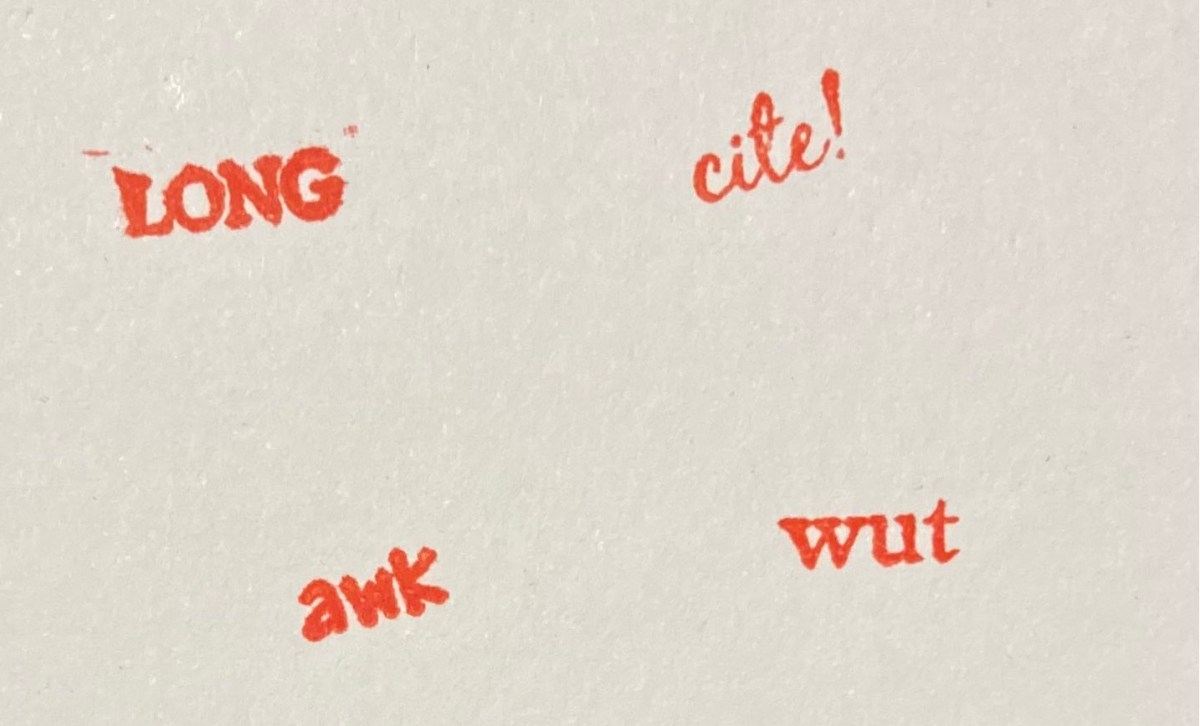
The more I write, the more I recognize my usual first-draft pitfalls. The header photo shows the self-inking stamps I bought for this round: LONG, cite!, awk, and wut. These are four things I find myself writing frequently on my first draft and correcting before anyone else even sees my writing. I’m a big fan of long, meandering sentences; saying things I don’t back up; awkward wording; and just … who even knows? In the moment, I wrote something just to keep the cursor moving so I could get the ideas down on the page, and it doesn’t make sense when I read it later.

But it’s okay. And it’s more than just okay – this is all part of the process. Writing isn’t “one and done.” You don’t bang it out and turn it in. You don’t even bang it out, skim it for spelling errors, and turn it in.

When I set a deadline for a book being due, I have to build all of this in to my personal timeline. I need the chapters drafted by this date, so I can do an initial pass and write the conclusion, but still have time to let it sit before a second pass at more of a distance. And it’s far more than just these four stamps – I’m looking for places where I latch onto a word and want to use it 20 times in a row, or places where transitions are rough (or missing), or places where I get off on a tangent and forget my point.

The function of the rough draft is, in fact, to be rough. There are going to be problems with it. The thing I’ve learned is that you can let it have problems – if you need to forget the rules long enough to get the first draft down, go for it. Give yourself permission to break every single writing rule you’ve ever heard.

Then, when you go back to edit, figure out which ones you really should adhere to.

Writing rules exist for reasons, and if you can understand why people hand out the edicts they do, you can also choose whether or not your work needs to follow it. Your edited work, of course – your rough draft doesn’t have to be readable to anyone but you, and every book or article you’ve ever read has been gone over time and again, usually by multiple people, to make sure the writing gets ideas across as clearly as possible.

Do rough drafts get a little less rough? Sometimes. But some days they’re just as messy as they’ve always been … and that’s okay. All writing has to be edited, but you can’t edit a blank page.

How do you know when it’s time to stop researching and start writing?

So you’ve got an idea and a stack of books. Whether or not your college composition class included They Say, I Say you know that writing an academic piece is stepping into a conversation, and you can’t do that without listening first. The plan is to work your way through the foundational texts and then pick up the more recent works, but how long does this part last? At what point can you stop worrying you’ve missed something important and just … start writing?

This is kind of a trick question. I’ve worded it the way a lot of people approach it: first research, then writing. Finish one line on your to-do list, and then move to the next. But, even though this is a wonderful method for procrastination that doesn’t feel like procrastination, it’s not actually the best way to approach your writing.

It’s a very good way to make sure you never start your writing.

And it’s completely understandable. Writing is hard enough without worrying that you’ve left out some piece of information that the critics will immediately grab and try to wave in your face. Before stepping into the conversation, you want to make sure that you’ve listened to all sides and you’ve got it all down. It’s a scary move, trying to make a point when you feel like you don’t have all the information.

Your first draft isn’t when you step into the conversation. In academics, as in fiction, the first draft is just you telling it to yourself. It doesn’t have to be perfect, because yours are the only eyes that will see it, until you decide otherwise. Your first draft is just for you, and you should start writing as soon as possible. It shouldn’t be research and then writing, but research and writing, happening alongside each other.

You also don’t have to pause in the middle of the page to stop and actually do that research. My first drafts include a number of things in brackets, highlighted, or both, telling me what I’m missing and what I’ll need to put in later. Sometimes it’s just tracking down a quote I know I have, but at the time I didn’t want to interrupt my writing flow to do it. Other times there’s a gap where I know I need more research, but for now I mark the hole so I know what to look for later.

Does this mean my first draft looks like swiss cheese? Sometimes. The further you get into a topic, the fewer holes you’ll have. But does it also mean I’ve beaten both the “blank page terror” and the “but when do I start writing” question? Yes, indeed

If you’re asking yourself if it’s time to start writing today, then “today” is the second-best time for you to start. The first is always in the past, so let it go, and get some words on the page. You won’t get anything published, or get anyone else’s eyes on it (the point at which you do start to join the conversation) until it’s written.

You’ll never be able to read everything on your subject. If someone catches an omission during the review process, excellent. (It also means you’ve got a finite number of pages to read to make your revisions, so don’t get tempted to fall down the rabbit hole again here.) If a critic comes back at you with this one apparently essential piece you missed, earmark that for later reading, too, but also note that this is apparently the only critique they could think of. (Is there personal experience speaking here? It seems likely.) A good review will address questions of your position and argument, and not some article the reviewer has read that you apparently haven’t.

As much sense as it seems to make to finish up your reading before you write, it’s really just a procrastination tactic. And people don’t really work like that, either: all in, and then all out. If you keep reading as you write, and keep exposing yourself to new ideas and new ways of writing, you’ll also be able to sustain longer projects without getting fatigued. (I often refer to reading as “putting words back in my brain,” which is useful, considering how many have to come out of it.)

How do you know when it’s time to stop researching and start writing? You don’t. You never will. So start writing.

Ripper suspect: Robert Mann

This is another suspect that makes most people ask “Who?” He’s not a famous author, painter, or prince, so if you know who Robert Mann is, you’ve either read M. J. Trow’s 2009 book or seen the Discovery Channel documentary. Robert Mann was basically a nobody, making him a prime candidate for being the killer who was never identified.

Mann was the mortuary attendant at the Whitechapel Workhouse, so we know for certain he was in the area at the right time. He even has a direct connection to the murders, since both Polly Nichols’ and Annie Chapman’s bodies were taken to that mortuary. There was even a bit of confusion during the inquest into Polly Nichols’ death so Mann’s name made it into the newspaper reports.

Mann was asked what, exactly, he had done with Polly Nichols’ body, and who was there while he did it. The wounds to her abdomen were not discovered at the scene but only after she had been undressed at the mortuary, and the coroner seems to have gotten very frustrated with Mann’s changing testimony about witnesses. One newspaper reported the coroner concluding his questions with the statement that “It appears the mortuary-keeper is subject to fits, and neither his memory nor statements are reliable.” It appears Mann changed his story too many times to suit the coroner.

At Annie Chapman’s inquest, Mann’s occupation gets specified as being a “watchman,” meaning he wasn’t ever supposed to have touched the bodies at all. Considering how the “mortuary” he was watching was really a shed and not a proper mortuary in the first place, it seems plausible that he could have been asked to help. Right?

M. J. Trow argues that Mann, who died in 1896, was actually the Ripper, so he did a lot more than that.

But … why Mann? Well …

In 1988, to mark the hundred-year anniversary of the murders, FBI agent John Douglass composed a psychological profile of Jack the Ripper. (If you’re a fan of Mindhunter, Douglas is the real-life Holden Ford.) You can read Douglas’ full profile here. A lot of it should be familiar: white male, low social standing, broken family life, socially inept … nothing surprising, and nothing to say it wasn’t Mann.

Trow follows Mann’s life as closely as possible, and there’s nothing in it to conclusively prove that he couldn’t have been the Ripper. He fits the profile, at least, and everyone knows he was around at the time of the murders because his name made the papers. According to Trow, everyone else just overlooked Mann before this, both during his life and after his death. And isn’t that the perfect marker of a serial killer who was never identified?

Mann is an interesting case because he can be shown to at least have been around bodies and death, even if we can’t say for sure that he was obsessed with either, or the creation thereof. He could have just been a resident of the workhouse, stuck with the job they gave him, and confused and overwhelmed by the coroner’s inquest.

Or he could have been a cunning murderer hiding behind the mask.

What do you think? Is Mann one of the top likely Rippers, or was Trow just grasping at straws?

The usual parts of an academic book proposal

So you’re thinking about getting an academic book published. Maybe you’re pretty confident about the writing process, but what about proposing it? There are a number of common elements in an academic book proposal, so it would help to take a moment and think about those just so you know what’s coming.

Although these are common, always (always, always) read the specific requirements of the agent or publisher you are querying. Make sure you include all the information they’re looking for, and in the format they request.

  • sample chapters – you’ll be asked to submit a number of sample chapters. It’s usually low – one to three – and, for the purposes of the proposal, the introduction doesn’t count. It’s helpful to include the intro, though, because it will show how you plan to catch readers’ attention and then how your entire book will be organized. Most academic proposals do not require the entire manuscript to be complete at the time of the proposal.

  • an index or outline – because of this, you’ll be asked to include either an index of chapter titles, or some sort of outline. Most recently I had to provide an abstract for each of the chapters I didn’t submit. This helps you really solidify what your book is going to be about, and shows them that you know enough about your subject to craft a throughline long enough to fill a book.

  • estimated length of the final manuscript – some will ask for word counts and others for page counts, so double-check before making your best guess. Contracts usually come with a range or a limit. The consideration here is writing enough to cover your subject, but not so much that the size of the book drives up printing costs toward something most people will consider to be too expensive. Your book doesn’t need to be long to be good, and you might have to narrow your focus a little if it looks like it might start to grow as you write it.

  • proposed delivery date – because you’re not submitting the entire book, you also get to tell them when, exactly, it will be in their hands. If you think this date is more than a year out, then it’s probably not the time to query. Many academic presses want to know that they’ll have your manuscript that quickly. This also shows them that you know there’s enough information out there, and that it’s accessible enough, for you to complete the manuscript.

  • proposed title – pick a good, informative title, but keep in mind that this will change. The title falls under marketing, and a lot of people will have input on it before your book is published. They factor in things like key words and where those words appear within the title, considering where a lot of internet searches cut off the display. So make it a good one, but don’t stress too much about making your proposed title perfect.

  • comp titles and your book’s niche – I mentioned this last week, but this is part of the marketing: what will be the competition for your book? Who publishes those other titles? What gap will your book fill? Basically, convince them that your book will actually sell and not simply crowd a shelf in the store. Those texts should be fairly easy to name, since you’ve been immersed in the literature as you plan writing your book, but it’s not something many people are used to writing.

  • ideal audience – who is going to want to read your book? Are there specific college classes that will reach for yours instead of whatever’s currently on their standard list? Not everyone in the world will want to buy your book (sorry), but they’ll want to know that the interested group will be large enough to make publishing worthwhile.

  • a list of possible peer readers – if you don’t need peer review, or the publisher doesn’t require it, you won’t have to do this step. If it is needed, then you’ll provide contact information for the requested number of possible peer reviewers. They need to be people with whom you don’t have a personal or professional relationship, in order to preserve the purpose of the peer review process.

  • whether this manuscript is under consideration by any other publisher – it is rare these days to see bans on simultaneous submission due to the length of the process and the fact that “publish or perish” means not being able to sit around and wait for each possible publisher, in turn, to get back to you. If you do already have someone interested, dropping that into the proposal might catch the attention of a publisher you think could be a better fit for the book. If this is the case, include the deadline by which you have to get back to the interested party.

  • any pertinent information about yourself – this is where you can name your credentials and past publications. It helps position you as the expert on your topic and shows that yes, you have experience working with getting feedback on your writing. This is especially useful if you’re querying an agent, who will want to know that you’re familiar with the process of revision and the idea that the document you deliver is not already perfect and can, in fact, be improved.

No matter which path you go with proposing your academic book, make sure to read the submission guidelines in full before delivering the requested documents. Chances are good you’ll have to provide all of the above information in form or another – the submissions page will tell you how many documents to submit and, if they prefer them to be labeled in a specific way.

The submission process itself is a long one and involves a lot of waiting to hear back to find out whether your proposal has been accepted. You want to make sure that the packet you send out is the best you can make it and addresses all the questions the publisher asks, so you’re not caught up in a back-and-forth as they request it again. Make sure you look over the submission requirements carefully and go down each publisher’s checklist, giving yourself enough time to think about the answers to each of these areas.

Writing the proposal is very different from writing the book, and you need to spend enough time thinking about it, too, the way you do with your manuscript.

Ripper suspect: Lewis Carroll

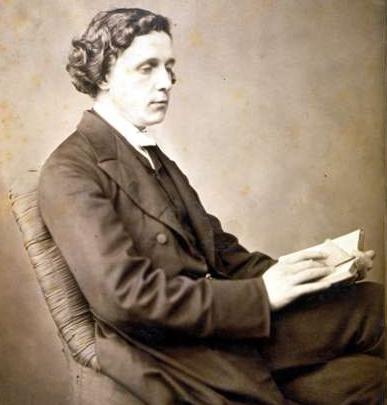
Remember how the you can basically accuse anyone who was alive in 1888 of having been Jack the Ripper? In 1996, author Richard Wallace decided to make the case for Charles Dodgson – pen name, Lewis Carroll. The man who wrote Alice’s Adventures in Wonderland in 1856 was meant to have murdered multiple women in 1888 … and to have confessed to all of it, if anyone happens to be clever enough to see.

The main point (slash problem) is that these confessions and clues are all in anagram form. Even then, at times Wallace needs to misspell something or otherwise get creative with his interpretations.

Most of these messages, Wallace argues, are from two of Carroll’s books: The Nursery “Alice” and Sylvie and Bruno. Both were first published in 1889, which at least works from a timing standpoint. If Carroll had been Jack the Ripper, he would have had time to commit his murders and then confess to him by the time the books went to press. So, clearly, the various lines of verse can be reworked into confessions and descriptions of the murder scenes.

Well. “Clearly.”

The problem with anagrams is that texts can be reworked to say just about anything, given a “codebreaker” with enough determination. Yes, fine, Carroll’s verse can be translated into murder confessions, but that’s only one possible interpretation … and assumes that Carroll started with his confession and worked everything backward into children’s literature. This is a level of dedication and focus at times seen in fiction, but not exactly documented in real life.

If the anagrams convince you, though, you should probably know a few other details. For example, Carroll was vacationing in East Sussex from August 31 through the end of September 1888. That covers the dates of the murders of Polly Nichols, Annie Chapman, Elizabeth Stride, and Kate Eddowes. On November 9, when Mary Kelly was murdered, Carroll was in Oxford.

You might point out that Wallace claims Carroll didn’t work alone – apparently this Ripper was in fact a duo and included his friend Thomas Vere Bayne – but Bayne was in Oxford with Carroll in November. Perhaps Carroll might have made multiple trips into London in order to complete these murders (a similar argument is made for suspects such as Walter Sickert and Prince Albert Victor, Duke of Clarence and Avondale, whose schedules likewise seem to leave little room for murder) but that would be an incredible stretch.

Wallace doesn’t rely solely on his anagrams. He also argues that Carroll’s life and childhood set him up as the sort of man who would indeed kill women for his own pleasure. He even argues, as many authors of the 1990s seem to, that Carroll was a victim before he ever made the murdered women his victims. In spite of these claims, though, there’s nothing in Carroll’s life that points to such acts of violence.

This theory argues that the Ripper was the sort of person who would publicize his crimes for all the world to read while laughing behind his hand because people didn’t realize the actual content of the text. True, there were all those Ripper letters that made it seem like the killer wanted to write about his crimes, and yes, Carroll was an author who wrote about many strange things, but … that seems to be the limit.

If you’re a fan of anagrams, you can turn any piece of writing into a confession of murder. Lewis Carroll is an interesting historical figure who has been examined for many reasons in both his public and personal life, but he wasn’t Jack the Ripper … even if he could be anagrammed into saying so.

So you want to write an academic book proposal

Academics are used to proposing things: special topics courses. Conference presentations. Chapters for edited collections. To an academic, “CFP” means “call for proposals.” We’re used to the idea that we need to sum up our ideas and present them to a group of peers for approval before moving forward.

A book proposal, though still a proposal, is a different genre.

Most of the proposals we write are short. The people reviewing it don’t want to read more than, say, 300 words. We’ve learned to summarize the main ideas while invoking the proper number of references and making ourselves sound both smart and intriguing given a small amount of space. It’s enough to prove to strangers that we can speak on a topic for 15 minutes or give them a 5-7,000 word chapter by the given due date.

A book is, of course, a much longer project, and the purpose of the proposal can be a shift, especially for academics not used to writing things like grant proposals. You’re no longer arguing solely that your research is relevant and interesting, or that you’re an expert able to coherently and intelligently discuss your topic. For a book proposal, you need to shift your thinking slightly and consider facets of marketing.

When I was in graduate school, one of my professors, Bob Johnson, was telling us about the process he went through to propose his book Romancing the Atom. The part he stressed was how it was up to him, the author, to show the niche his book would occupy in the market. He told us that he had to provide the titles and authors of books that were similar and could be seen as competitors to the one he was proposing.

Granted, this shouldn’t be too difficult for scholars who in fact do research in their own field, but it’s a shift from reading books to add to your own argument toward thinking of those books as competition. This is especially true if someone who’s a big name in your field, and whom you may have met, has recently come out with a book: now you have to say why your book, written by a newcomer, would be chosen over this other one by an established researcher.

The publisher wants to know why your book is unique. This means you need to be able to set your idea apart from the others – while still connecting to the field and remaining in conversation – and to tell them why, exactly, people will buy yours instead. What is it about your book that makes it special, aside from the fact that you’re the one writing it? What gaps do the others leave that yours might fill?

We’ll get more into the usual parts of an academic book proposal next week, but this tends to be the main sticking point and the biggest new thing. Market my work? No, no – I just write a short proposal and then go talk about it. Journals have subscribers who are already interested in the sort of content that will be selected to be included, but this is a step taken by the editors of a book collection, too: does this chapter idea fit with the others? Does it make the point we want to make?

Is it the sort of thing someone would see and then want to buy?

But, come on – can’t the publisher have someone do all that work? If it’s marketing, isn’t it their job instead of mine?

Sorry, no. As the expert in your field, you’re the one best positioned to argue for how your work will fit and what new things it offers. The publisher takes care of a lot of things, but making these points in the proposal is really an argument for them to take the risk on your and your book. If they offer you a contract, they’re committing to the costs and hours involved in publishing your book, and they want to know that it’s worth it to them.

So: if you’re thinking of proposing an academic book this year, start also thinking from the side of marketing. Who’s going to buy your book? What does your ideal audience member look like? What classes might want it on their required reading lists? And why should they reach for yours instead of others already out there, either by the same publisher or a competitor?

Ripper Suspect: H. H. Holmes

There’s been this trend lately of explaining unsolved murders by blaming someone who was caught for a different series of murders. While on the one hand it makes sense – at least in these cases the chosen suspect has indeed proven to be a murderer – it can also feel like grasping at straws. In the case of Jack the Ripper, some have proposed that American killer H. H. Holmes was actually responsible for the deaths in Whitechapel in 1888.

If you need to review who Holmes was, here are Part I, Part II, and Part III of his rather lengthy, and often convoluted, story. So: what does Holmes have going for him?

He was alive at the time: check. He was a confessed murderer – at least sometimes: check. And, um … well …

The problem with Holmes is that all of his confirmed murders were very closely tied up in money or other personal gain. Holmes doesn’t seem to have murdered because murder was fun and all he needed to enjoy himself, the way many serial killers are depicted. Holmes was a con artist who talked his way out of situations if he could but killed people to clear the way if he had to. This M.O. does not describe what happened in Whitechapel in the autumn of 1888.

Further, although Holmes was alive at the time, there are no records of his having traveled to England at all. (Adam Selzer looks at this in his book, H. H. Holmes: The True History of the White City Devil, if you want to read about the reasoning behind dismissing this, and other, Holmes rumors.) True, Holmes liked using false names, but Selzer has also tracked down various stateside interactions during those specific months. In none of his various confession or life stories does Holmes mention traveling to England, although he does suggest that Minnie Williams took the Pitezel children there.

It would seem that, if Holmes concocted his 27 supposed victims for his newspaper confession in order to make money and help them sell more headlines, that he really should have mentioned the Ripper murders if he had been responsible. Instead, this confession outlines the murders of people who then turned up to announce they were still alive, and also created fictional people to add to his death toll. It is true that Holmes was accused of many crimes after his arrest, but the Ripper murders were not one of them.

Granted, as a confessed murderer whose confessions must be in doubt, Holmes makes a better Ripper suspect than many. But why accuse him in the first place?

Holmes is marketed as “America’s first serial killer,” while the Ripper often gets the byline of “world’s first.” Even the origin of the term “serial killer” is debated between an American and a Brit. If the Ripper turns out to be American, then Holmes becomes “world’s first” and America can claim the dubious honor and add more titles to the true crime bookshelf.

Was Holmes a murderer? Yes. How many people did he actually murder? That’s still a mystery, but the number is far below his top claim of 27. Did he murder Mary Ann Nichols, Annie Chapman, Elizabeth Stride, Catherine Eddowes, and Mary Jane Kelly? No.

Who did? Good question.

New Year, Same Me

So it’s the time of year when we’re all supposed to be setting new goals, and they really should be SMART ones: Specific, Measurable, Achievable, Relevant, and Time-bound. My husband is really good at this kind of thing and ends up with a whole list of proposed achievements for the new year, and he’ll check in on them and adjust as the months go by. Me? Eh …

Making up goals for a whole year gives me the same sort of feeling I get while looking at a syllabus: I’m supposed to do how much in how long? Even if I’ve taught the class before and I know it’s very much doable, it just seems ridiculous. Insurmountable. After all, how am I supposed to accomplish all this when I’ve never really done much of anything before?

With that attitude in mind, my only real goal for 2021 is to keep better track of what I do accomplish. My husband is better at this, too: he’s been keeping a journal of accomplishments for years at this point. I tried last year, in a blank book, but didn’t keep it up. I felt like maybe I was padding my days (I wasn’t) and worried I might forget something or leave things out (I probably did). But I also had a discussion with someone the other day that made me realize it’s important to at least keep track of my writing progress.

If you don’t have a mentor or someone in your life who’s done it and is therefore able to remind you of how far you’ve come, it’s easy enough to forget. When you’re living it, it doesn’t necessary seem easy, exactly, but come on. If I can do it, surely anybody could do it … right? So what you really need to do is remind yourself that this thought is in fact … wrong.

I’m using my planner as a place to keep track of how many words I write during a session (instead of random notebooks kept haphazardly to prove to myself I’m actually doing something) and to just … keep track of the things I do in fact accomplish. To remind myself that I’m not just a lump on the couch and that, on days when I am, it’s because I’m resting from everything I’ve already done.

How about you? What are your goals for 2021?

Taming the Inner Two-Year-Old

Sometimes trying to write feels like wrestling an angry two-year-old, except you’re the two-year-old. You’re cranky, and distracted, and you’d really probably like to have a snack right about now. The problem is, if you’re writing toward a deadline, you also have to be the adult.

The adult is the part that reminds you of your due dateand your daily goal. The part that points to the calendar and calculates what your new daily goal would be if you slacked off. The part that wheedles and begs … but also the part that can find ways to appeal to the two-year-old inside you.

The other day I was telling someone that things have to be Just So when I’m writing. It’s not a ritual, exactly, but an acknowledgement of my inner two-year-old. The toddler inside my head will take any reason to stop working and give up on something that’s too hard, or will just get distracted by anything else. So I’ve developed a number of things to keep myself focused so, as much as possible, the toddler has nothing to grab onto.

Instead of getting frustrated with myself for not being able to focus in a certain way, I’ve figured out a number of workarounds. It’s one thing to get frustrated with a kid who doesn’t want to do something, and another to try to figure out why the kid is being so stubborn. In these cases, I’ve chosen kindness toward myself and have purposefully organized my writing space and process to give myself the best chance. Weird, right?

Take these sheet protectors. I totally got them for Christmas and I am thrilled because I use them a lot. I like printing things off and having them in front of me so that my screen can be devoted just to the document I’m writing – fewer clicks and fewer distractions for the toddler – but I discovered a while back that I have this thing about writing on what I’ve printed. If it’s notes, I don’t want to do it. Making marks just messes things up.

Enter the sheet protectors. I don’t know why they work for me, but they do: the marks go on the sheet protectors, so I can still color-code to my heart’s content, but the original notes remain unsullied. It’s weird, sure, but it’s a step that I know happens to work for me.

Or how about this one: some days I start with a blank document, and it actually helps. Most days – and for a lot of people – the huge amount of white space is paralyzing. The flashing cursor just counts off all the seconds you should have been writing, but haven’t yet. But, on my worst days, I feel like adding to the original document would be like writing on my notes: sullying something that might not have been perfect, exactly, but isn’t going to be made any better by my current ramblings.

So, on those days, I open a blank document and release myself from any sort of expectations. They don’t even have to be titled properly. I’ve got one called “written doodles” that just worked for me because clearly it didn’t have to be great. They were just doodles, after all. Just me, trying to get my thoughts in order.

Other times it’s the room itself: the proper chair. Background noise, or silence. A better playlist. Turning on a space heater or opening a window. When I’m at my crankiest, I have to tend to all of these things first and make myself as physically comfortable as possible so that my thoughts can then focus on something other than “I’m hungry” or “The tag on this shirt itches.”

You don’t have to power through that kind of stuff. Writing is hard enough as it is without giving yourself more hurdles. The longer you work at it, the more you’ll discover your own little quirks and be able to tackle those straight off, building up your writing space and priming yourself to be as comfortable and distraction-free as possible.

Be nice to your inner two-year-old. Sometimes they really know what they’re doing.