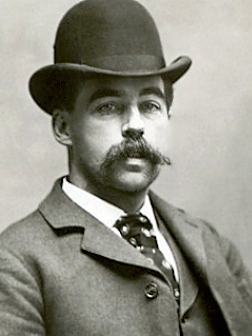
Ripper suspects – Joseph Barnett or George Hutchinson

It’s been a while since I’ve shared some of my research instead of my writing musings, so let’s jump back in to Jack the Ripper and consider a pair of suspects: Joseph Barnett or George Hutchinson. These are an “or” pair instead of an “and” pair, because nobody’s (yet) suggested that they worked together, but the story behind them is very similar.

Both Barnett and Hutchinson are connected to Mary Jane Kelly, the last of the so-called Canonical Five victims of Jack the Ripper. Choosing either Barnett or Hutchinson as the Ripper clearly makes Mary Jane Kelly the last. It actually positions her at the center of all of the murders.

Joseph Barnett was Mary Jane Kelly’s boyfriend. The two of them met in April 1887 and decided to move in together on their second encounter. The vast majority of what we know – or think we know – about Mary Jane Kelly comes from Barnett’s testimony at the inquest after her murder. He lived with her until the end of October 1888, when they quarreled and separated.

Barnett had been living with Mary Jane Kelly at 13 Miller’s Court when they separated. It was a very small room, with only a single bed, and one of the reasons for the separation seems to be that Mary Jane was letting other women sleep there. Since this was the Autumn of Terror where women were being murdered in the streets, and since Mary Jane had a steady room that wasn’t in a lodging house, it seems like it was a kind thing for her to do.

Another instigating factor for their separation also seems to have been the fact that Barnett had lost his job as a fish porter, resulting in Mary Jane Kelly’s return to sex work. Barnett apparently disproved of this as much as he did of her offering their small, shared space to other women, and so he left her. Their separation was the reason why Barnett was not also sleeping at 13 Miller’s Court the night of November 8-9, and why Mary Jane Kelly was alone and murdered there.

Barnett was not a suspect at the time. In fact, Inspector Fredrick Abberline personally cleared him after a four-hour interrogation, which included an inspection of Barnett’s clothes. No blood was found, and Abberline, at least, was satisfied.

The same cannot be said for Bruce Paley who, in 1996, named Barnett as the Ripper. According to Paley, Barnett decided to become the Ripper in order to scare Mary Kelly off the streets and force her to stop making money through sex work out of fear of being murdered. On the one hand, Barnett’s plan seems to have worked if Mary Jane Kelly was worried enough to allow other women to sleep indoors with her. On the other, he apparently couldn’t scare her enough to stop. Thus, Paley argues, Barnett was driven to kill the woman he loved because he couldn’t save her otherwise.

George Hutchinson also became a Ripper suspect not in the 1880s but in the 1990s, this time in a 1998 book by Robert Hinton. Hutchinson was known to the police at the time because, after Mary Jane Kelly’s murder, he made a statement to the police about a man he had seen with Mary Jane Kelly shortly before her murder. Hutchinson, unemployed, apparently had plenty of time that night to hang around Miller’s Court and get a good look at anyone who passed by.

Abberline also interviewed Hutchinson, although he was considered only as a witness and not a suspect. Hutchinson had known Mary Jane Kelly for three years and his incredibly detailed description of the man entering the room with her was explained because Hutchinson thought the man looked “foreign,” which piqued his interest and concern. After all, women were being murdered, so of course he would memorize every detail about any man who seemed to be going into his friend’s room as a client.

Although numerous skeptics have doubted Hutchinson’s description of the Ripper, he wasn’t accused of being the murderer himself until Hinton. And here the story sounds very similar: angry that Mary Jane Kelly was supporting herself through sex work – and not relying on him as her sole sexual partner and source of money – Hutchinson orchestrated the Ripper murders, hoping to scare Mary Jane Kelly into stopping.

Hinton suggests that Hutchinson, after seeing Mary Jane Kelly take that client into her room and that client later depart, snapped. Hutchinson therefore went into 13 Miller’s Court himself, shook Mary Jane Kelly awake – or tried to, considering the reports that she was very drunk that night – and was confronted with the reality of the woman she was instead of the apparent perfection he had preciously imagined. With this ideal shattered, Hutchinson lashed out and killed her.

So: two men who knew Mary Jane Kelly, and were known to have been close to her at the time of her death. One of them was cleared as a suspect by Fredrick Abberline, and the other never even considered to be one. More than a century after the Ripper murders, each in turn became accused of being the Ripper to turn Mary Jane Kelly away from sex work … and into his arms.

What do you think? Was there something in the air in the 1990s? Would a man ever actually turn to serial murder as a way of pursuing the “perfect” woman? Or should we let Barnett and Hutchinson rest in peace?
Jack the Ripper and hypnotism

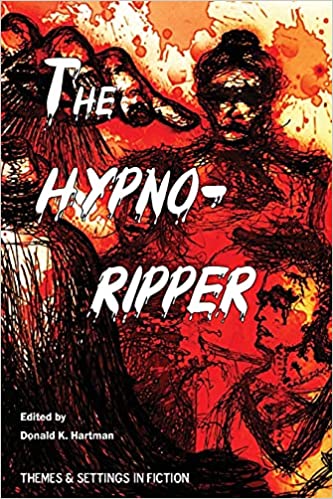
At the beginning of the year, I was contacted and asked if I’d be interested in writing the foreword to a book involving hypnotism (the author’s area of study) and Jack the Ripper (mine). I’ll admit that I was a little dubious even after I agreed, since I tend to avoid fiction about the Ripper but, once I had the proofs in hand, I was fascinated.

Donald K. Hartman collected two Ripper narratives from 1888 and 1889, both of which use hypnotism in their explanation of why the Ripper killed. Hartman also makes a case for both stories as having the same author, with one written under a pseudonym, and goes on to detail the life of Edward Oliver Tilburn. That’s an adventure in and of itself, but I’m going to stick to the Ripper here.

As I mention in my foreword, the obsession with the Ripper story isn’t just about discovering who the Ripper actually was, but also explaining why someone would kill like this. It’s a question of motive, and we ask it of every serial killer. It’s comforting to have an answer – for example, to say “Ted Bundy killed women who looked like the one who dumped him in college,” since that makes his choice of victims somehow explicable and also means that women could do something as simple as changing their hairstyle to keep themselves from becoming his next victim. (It is, of course, always up to women to keep themselves safe.)

The question was especially prevalent in the 1880s because the existence of someone who killed strangers for his (or her) own devices just seemed so foreign. This wasn’t the era of serial killers and CSI – there was no handy term to use for such a person. The backstory that seems done to death in 2021 didn’t exist in the late 19th century. There wasn’t the Crime Classification Manual or interviews with violent offenders to form a framework. The question of “What sort of person would do this?” didn’t have even a vague, profile-heavy answer.

Hartman provides us with reprints of two stories that respond to the question with “Well, hypnotism’s involved, so that explains a lot.”

Twenty-first century readers might have to force their eyebrows down over the hypnotism specifically, but the two stories here have much in common with contemporary narratives. One of them has so many similarities to NBC’s Hannibal that it’s almost a Ripper AU fanfic. There’s no cannibalism, but an innocent younger man crosses paths with an older man whose obsession is dangerous and immoral, and the two of them begin an intense, destructive relationship.

Once the author (or authors) establishes that at least part of the Ripper was due to hypnotism, it clarifies a lot for the Victorian audience. Already the Ripper is involved in something dark and mysterious, on the edges of society, that really shouldn’t be touched. Once a hypnotist is involved, there’s really not much of a stretch to include murder. One outsider easily becomes another, and the danger of the hypnotist is that of Charles Manson: he doesn’t have to be present at the murder to have caused it, and his powers are so great that he can influence someone who’s otherwise innocent to transgress enough and commit murder simply because he wanted them to.

Neither of these stories intends to actually explain who the Ripper was – that is, to honestly name a suspect or explain the crimes. They’re entertainment, and Ripper scholars can pick out all the details the author(s) gets wrong in the telling. But the really fascinating thing to me is how they’re so similar to serial killer fiction we see produced today, and how many themes and tropes we still share with the late 1800s.

What do you think – does a Hannibal-esque retelling of Jack the Ripper pique your interest? Is there value in reading these old attempts to explain the Ripper through outdated fears of hypnotism and control?

Was H. H. Holmes really a “serial killer”?

He gets called “America’s first serial killer,” but H. H. Holmes – born Herman Webster Mudgett – was hanged in 1896 for a single murder. Only one count was ever brought against him a courtroom, and we know by now that his confession to 27 murders isn’t believable. So was he really a serial killer, or is that just part of the myth?

The thing is, Holmes didn’t know the phrase “serial killer” when he was confessing. The backstory that everyone seems to know today – absent father, abusive mother, history of starting fires and harming animals and wetting the bed, etc. etc. – didn’t become common knowledge until the last quarter of the twentieth century. (Mindhunter, anyone?) Although the term may have been coined earlier, it still wasn’t in enough time for Holmes to have known it.

And when you consider the “big names” of serial killing – what Peter Vronsky calls the Golden Age – they look more like Jack the Ripper than H. H. Holmes. The most famous serial killers murder and mutilate for their own personal pleasure, and the crimes are usually messy. These get categories as “lust murders,” and Holmes wasn’t a lust murderer.

The murder for which he was hanged, that of Benjamin Pitezel, was part of an insurance scam. Holmes tried to stage his friend’s murder as some sort of accident so that Pitezel’s widow could collect on the $10,000 life insurance policy … and Holmes could relieve her of much of it.

The Pitezel children – Alice, Nellie, and Howard – are harder to explain, considering the strange journey Holmes took them on before killing them, but he used Alice to identify her father’s body and then all three children to control their mother. Holmes may not have had a plan fully hatched by the time he took possession of Nellie and Howard, and he may have abandoned the children in multiple cities, but he doesn’t seem to have tortured them. When Holmes decided it was time to kill Howard and then the girls, he didn’t use a knife. Holmes opted for poison and suffocation.

His earlier murders, at least the ones it seems reasonable to think he actually committed, weren’t killing for the sake of killing. Holmes killed for money, or when one of his mistresses either tired or annoyed him, but he wasn’t a lust murderer. When Holmes could con someone or talk his way out of something, he did.

Not all serial killers are lust murderers, a subset of hedonistic killers. But Holmes doesn’t really fall under any of the other main categories of visionary, mission-oriented, or power/control, either. He doesn’t come across as looking for revenge, trying to eliminate a certain group of people, or someone who gets any sort of pleasure out of murder. For Holmes, it feels like the next step for a con man when he can’t talk his way out of a situation and he doesn’t particularly care about the sanctity of human life.

Where Holmes does fit the definition, though, is how he killed multiple people at different times and in different locations, returning to “normal life” between the murders. He hid the murders, getting rid of physical evidence and even writing letters to cover up for his victims’ absence when noticed. He knew that what he was doing could lead to legal persecution, but that’s exactly what he used murder to avoid.

So: is Holmes a serial killer? The answer is “Yes, with a few buts.” Yes, but he isn’t a lust murderer like Bundy. Yes, but it’s hard to diagnose him for certain considering the time and place in which he killed.

Yes, but he wasn’t America’s first. Just the first one to show up in most contemporary timelines. Serial murder existed long before the term and the FBI’s Behavioral Science Unit (now the Behavioral Analysis Unit), and therefore long before expert definition and explanation could be applied during their lifetime. Holmes made his mark – and started his own myth – at a time when he couldn’t claim the title for himself.

H. H. Holmes’ victims: Emeline Cigrand

Emeline Cigrand is the eleventh victim H. H. Holmes claims in the newspaper confession published two weeks before his execution. She is likely one of his real victims – not a lie created to bump up his body count.

She was also connected to Holmes long before his confession.

Emeline Cigrand was brought to Chicago to work as Holmes’ stenographer. Depending on the version of the story, Holmes either hired her through a Chicago typewriter firm, or Benjamin Pitezel met her while he was away on the “Gold Cure” for alcoholism and then informed Holmes of the beautiful secretary. Either way, it was known that Emeline Cigrand moved to Chicago in order to work for Holmes.

The story Holmes tells in his confession is the same one he sold her parents after her disappearance: that she had met a man and was going to leave him for her. The difference is that, in responding to Peter Cigrand in a letter, Holmes argued that Emeline had indeed married this unnamed man and had then moved away with him suddenly. In a second letter, sent a few weeks later, Holmes claims that the new “Mrs. Phelps” has been located and her unexplained absence satisfactorily clarified.

The Cigrands carefully examined the last letters they received from their daughter. One of them said she was going to get married, and the very last one lamented that she had in fact married a bad man and would leave him as soon as possible. Upon closer inspection, this last letter was determined to be a forgery.

The truth, at least as Holmes claims it in his confession, centers on the large vault he had installed inside his “Murder Castle.” Because Emeline had become his mistress as well as his indispensable secretary, he couldn’t let her go.

Holmes writes that Miss Cigrand stopped by on her way to her wedding and Holmes offered her a counter proposal: if she wrote a letter to her fiancé telling him that she decided, at the last moment, she could never be happy with him, Holmes would take her to another city and live there with her as husband and wife. The letter to the fiancé made it clear that it would be useless to look for her, thereby covering Holmes’ trail.

He says she was “very willing” to write the letter, except he also tells readers that, at the time he made this proposal, Emeline Cigrand was locked in the room-sized vault. The only way for her to escape it is to agree to write the letter, which she apparently did, before suffering a slow and lingering death.

It seems that, in spite of this turn of events, Emeline did not think to destroy the letter, or perhaps Holmes forged one to the fiancé the way he seems to have done with one to her family. Either way, Emeline disappeared at the end of 1892 and Holmes did not confess until 1896. He maintained that she had married and gone abroad with her new husband.

Emeline Cigrand is believed to be a “true” victim of Holmes, along with Julia Connor (and her daughter) and Minnie Williams because she was known to be his mistress. Holmes killed for money, the way it seems he killed Minnie’s sister, Nannie, but he also killed women once he had tired of them or they became annoying to him. It seems that Emeline Cigrand may have also known more of Holmes’ dealings than he felt comfortable and so, in his mind, the only way to ensure her silence was through her death.

Holmes’ bald statement that he locked Emeline Cigrand in the vault and left her there to die just increased the legend surrounding his Murder Castle and his own status as a heartless killer. While this confession may have allowed her family to gain some measure of closure, it would have also been terrible for them to read.

Ripper Suspect: H. H. Holmes

There’s been this trend lately of explaining unsolved murders by blaming someone who was caught for a different series of murders. While on the one hand it makes sense – at least in these cases the chosen suspect has indeed proven to be a murderer – it can also feel like grasping at straws. In the case of Jack the Ripper, some have proposed that American killer H. H. Holmes was actually responsible for the deaths in Whitechapel in 1888.

If you need to review who Holmes was, here are Part I, Part II, and Part III of his rather lengthy, and often convoluted, story. So: what does Holmes have going for him?

He was alive at the time: check. He was a confessed murderer – at least sometimes: check. And, um … well …

The problem with Holmes is that all of his confirmed murders were very closely tied up in money or other personal gain. Holmes doesn’t seem to have murdered because murder was fun and all he needed to enjoy himself, the way many serial killers are depicted. Holmes was a con artist who talked his way out of situations if he could but killed people to clear the way if he had to. This M.O. does not describe what happened in Whitechapel in the autumn of 1888.

Further, although Holmes was alive at the time, there are no records of his having traveled to England at all. (Adam Selzer looks at this in his book, H. H. Holmes: The True History of the White City Devil, if you want to read about the reasoning behind dismissing this, and other, Holmes rumors.) True, Holmes liked using false names, but Selzer has also tracked down various stateside interactions during those specific months. In none of his various confession or life stories does Holmes mention traveling to England, although he does suggest that Minnie Williams took the Pitezel children there.

It would seem that, if Holmes concocted his 27 supposed victims for his newspaper confession in order to make money and help them sell more headlines, that he really should have mentioned the Ripper murders if he had been responsible. Instead, this confession outlines the murders of people who then turned up to announce they were still alive, and also created fictional people to add to his death toll. It is true that Holmes was accused of many crimes after his arrest, but the Ripper murders were not one of them.

Granted, as a confessed murderer whose confessions must be in doubt, Holmes makes a better Ripper suspect than many. But why accuse him in the first place?

Holmes is marketed as “America’s first serial killer,” while the Ripper often gets the byline of “world’s first.” Even the origin of the term “serial killer” is debated between an American and a Brit. If the Ripper turns out to be American, then Holmes becomes “world’s first” and America can claim the dubious honor and add more titles to the true crime bookshelf.

Was Holmes a murderer? Yes. How many people did he actually murder? That’s still a mystery, but the number is far below his top claim of 27. Did he murder Mary Ann Nichols, Annie Chapman, Elizabeth Stride, Catherine Eddowes, and Mary Jane Kelly? No.

Who did? Good question.

H. H Holmes’ victims: Dr. Robert Leacock

Every serial killer has to start somewhere. The “serial” part means they had to keep going, eventually, but there’s always a first. For H. H. Holmes – at least in his newspaper confession – his first victim was a former medical school classmate, Dr. Robert Leacock.

Holmes attended the University of Michigan for medical school and did indeed graduate. Although “H. H. Holmes” wasn’t his real name, the MD was earned. Many sources trace his murderous intentions back to medical school, where he has also been accused of participating in grave robbing in order to have cadavers on which to learn. This also led to questions of whether enterprising medical students – or those looking to make money off a sale to a medical school – might murder in order to provide the students with learning material.

In his newspaper confession, Holmes actually says very little about Dr. Robert Leacock. He dismisses the murder because it “has been so often printed heretofore” and quickly moves on to the lament that, “like the man-eating tiger of the tropical jungle, whose appetite for bloodlust has once been aroused, I roamed about the world seeking whom I could destroy.” That’s all very dramatic, but it doesn’t tell us much about Leacock.

Earlier, in Holmes’ Own Story, Holmes had written of a previous insurance scam he had run in order to somehow prove that he could not, in fact, have murdered Benjamin Pitezel in a similar scam. The few details he gives about Dr. Robert Leacock’s murder do not quite line up with the information provided in Holmes’ Own Story but, since each is most likely a lie, that’s understandable.

But what’s the tale of the insurance scam he supposedly committed with his former schoolmate?

More than a decade before Pitezel’s death, Holmes supposedly decided to fake his own death using a lookalike cadaver in order to reap the insurance money. (He says that his wife would have been the one to inherit, but his third wife – the one he claimed at the time of the trial – hadn’t even met him yet. Apparently no one caught this inconsistency before his book went to press.) In this version, however, Holmes simply waited for someone to die who would look enough like him to count. He didn’t, according to the book, kill anyone for this scheme.

He also didn’t prepare very well. Holmes wanted to take the lookalike body north into Michigan and leave him, head crushed and with Holmes’ papers in his pockets, to be found and identified. Although Holmes should have had plenty of experience with both cadavers and decay during medical school, he planned poorly for transporting a body secretly by train.

It turns into a whole comedy of errors. The first trunk Holmes had specially made began leaking ice and odors, forcing him to stop and buy a new trunk. It couldn’t be seen to be empty, though, so while the shopkeeper prepared the trunk, Holmes walked back and forth with lengths of pipe he had also newly purchased in order to fill it. Then, when the new trunk was delivered to his hotel, he could pretend that it was full of his belongings.

It didn’t seem to occur to him that anyone involved in this various transactions might notice the oddity and remember him.

While apparently lost in a reverie, contemplating the lookalike corpse who was reclined on more ice in the room’s tub, Holmes’ room was invaded by detectives or secret service men or someone just that exciting. Using lies – common for Holmes – and threats (less common) he managed to get himself out of the initial situation, claiming the dead man was his brother. When Holmes left the hotel, though, he knew he was being pursued. (He was, of course, both interesting and cunning enough that any secret service agent would want to follow.)

Unfortunately for Holmes, the train he took ended up having an accident, delaying him just long enough for the secret service agent to catch up. Holmes did not flee the scene, leaving his suspicious luggage behind. No – instead he put his medical degree to use and cared for fellow passengers who were injured in the crash.

Perhaps since the secret service agent was alone this time, Holmes was able to bribe him, and therefore continue his way north with his smelly, sodden trunk. Holmes sums up the tale quickly by explaining that, a few weeks later, his plan went off exactly as he wished, and he walked away with the insurance money. (His wife, whose presence was never fully explained, is forgotten.)

Later he apparently gifted the trunk to friends who laughed with delight when he told them the tale, because they had always thought it was haunted.

Right. So.

Clearly there are a lot of problems with this story. For one thing, according to Holmes’ Own Story, it should have taken place in the early 1880s. Although he would have indeed been married to Clara (Lovering) Mudgett at that time, during the summer of 1895, when Holmes’ Own Story was published, Holmes was insisting that he was married to Georgiana Yoke and that he had never married another. This was because Georgiana was a witness in his murder trial and, if it were proven that the marriage were bigamous, she could indeed testify against him. Holmes married three women in his lifetime without ever divorcing any of them, and all three were still alive at the time of his death.

There is also the question of the insurance money. Different amounts are stated in Holmes’ Own Story and in his confession to the murder of Leacock. If, for example, Holmes had managed to get his hands on the $40,000 he said came with Leacock’s death, what happened to it? Where was it spent? Holmes never clarifies, and he never explains how he ended up with the money from his own apparent accidental death.

The story as originally told is meant to explain that Holmes, although a rogue, is not a murderer. He waited for a body that would look enough like him to be brought to the morgue rather than searching out his own double and then, even once he started to put his plan into practice, he made a mess of things. Far from being a slick and confident criminal, the Holmes in the original story made mistakes at every turn. He only managed to pull of the scam by bribing someone to look the other way.

It did make for a good story, though, so it also makes sense that Holmes’ confession would reference it. He dismisses a number of people in the same way, but arguing that much has already been written about them, without ever actually clarifying what happened, or how much of what has already been written is true.

Did Holmes actually murder a man named Dr. Robert Leacock in order to fake his own death and reap the insurance benefits? No. This is one of his false confessions, albeit one that may have helped boost sales of his book if by chance some curious reader had missed the adventurous corpse, trunk, and secret service man story.

H. H. Holmes’ victims: Julia and Pearl Conner

Last week we took a look at another pair of Holmes’ claimed victims, named in his confession of 27 murders. Minnie and Nannie Williams were sisters. This week we’re looking at a mother and daughter: Julia and Pearl Conner. They, like the Williams sisters, are very likely true victims of “America’s first serial killer.”

Julia’s husband, Ned, worked at the jewelry counter of the pharmacy in Holmes’ building, which explains how their paths crossed. Holmes and Julia began an affair, and eventually Ned simply left his wife and their daughter. Julia and Pearl remained at Holmes’ hotel, although it wasn’t long before no one heard from them again.

The usual date given for their murders is Christmas Eve, 1891. Julia is meant to have told Holmes that she was pregnant with his child and, not knowing that he was already married, demanded that he make her his wife. Holmes supposedly agreed to marry her as long as she would allow him to perform an abortion.

Julia did not live through the operation. It is possible that Holmes used the abortion as cover for his murderous plans, or that something went wrong and she died when he didn’t intend it. Certainly during his very last confession, given on the scaffold, Holmes admitted that two of his patients died as the result of an illegal operation. One of them may well have been Julia Conner. But what of her daughter?

pearlThe order of events is fuzzy and might go a long way to answering whether Julia’s death was intentional. In his newspaper confession, Holmes says that Pearl’s death was due to poisoning, and that Pearl died after her mother. In Holmes’ confession Julia is his third victim, and Peal his fourth – although apparently there was an accomplice in this case.

Holmes writes of a couple who not only wished to save Pearl, but to give the young girl to their elderly parents so they could raise her. They were the ones who actually gave Pearl the poison, although Holmes personally insisted on it. He “believed the child was old enough to remember of her mother’s sickness and death” and so, in time, Pearl might have said things that would have incriminated Holmes.

Aside from this mention of two guilty accomplices, Holmes also takes care to mention that, due to the suddenness of Julia’s death, he was unable to gain possession of some property she apparently owned. Ever solicitous, and at the time of printing two weeks away from his date with the noose, Holmes writes that he will be sure this note is passed to Julia’s relatives, who have more need of it than he does.

Then again, this is the same man who, earlier, stated that Pearl was off with other relatives until she was old enough to speak for herself and therefore out of danger. The same man who claimed the girl was alive could easily lie about money and property, although his usual MO did indeed seem to be to secure such things before committing murder.

Was Julia Conner’s death an accident, or did Holmes poison Pearl before her mother’s “operation” was even set to begin? Were the human remains discovered in the basement of the building actually Julia’s? It seems likely that Julia and Pearl Conner, like Minnie and Nannie Williams, were indeed victims of “America’s first serial killer,” but some things will never be known for sure.

H. H. Holmes’ victims: Minnie and Nannie Williams

H. H. Holmes – born Herman Webster Mudgett – was hanged after being found guilty of a single murder: that of Benjamin Pitezel. But, as we have seen before, Holmes himself confessed to 27 different murders. (At least, for one newspaper publication.) Who, then, did he confess to murdering?

Minnie Williams plays a large role in most variations of Holmes’ stories. As far as anyone can tell, the truth is that she met Holmes and was convinced to come to Chicago with them and then sign her inheritance over to him before he murdered her. Holmes also used her to lure her sister, Nannie, to the big city around the time of the Columbian Exposition, and Nannie also disappeared. The real Minnie was rather naïve and fell under the spell of a clever con man.

Holmes, though, tells us multiple different stories about her.

In Holmes’ Own Story, his autobiography published before his murder trial, Holmes takes a lot of the accusations that have been leveled at him and turns them to Minnie. Rather than an innocent, Minnie comes to Holmes already having had lovers. In this version, she is the one to pursue him, even getting an apartment where the two of them can live together apparently as husband and wife. This was, according to Holmes, all Minnie’s idea.

When Nannie came to visit, she stayed in the guest bedroom of this apartment. Minnie had to be away for one night and asked her “husband” to keep Nannie company. Nannie, however, insisted that she was fine, so Holmes spent the night elsewhere. When he returned the next day it was to find Minnie already there, standing over Nannie’s dead body. She had come home, seen that the only bed slept in was Nannie’s and assumed her husband had spent the night there, as well. According to Holmes, Minnie killed her sister with a single hot-blooded blow.

Holmes helped Minnie get rid of her sister’s body – by putting it in a trunk and sinking it in Lake Michigan – and then told Minnie he never wanted to see her again.

For her part, Minnie left to seek treatment for her mental health, which explained why her relatives were not able to contact her. She was, of course, ashamed of what she had done.

Luckily for Holmes, though, Minnie seemed to gather herself together enough to be schoolmistress to the three Pitezel children he had collected. (You remember the strange journey he took them on.) In Holme’s Own Story, Minnie Williams was a member of one of the groups, traveling with the children and eventually taking them out of Holmes’ care and away with her to England. She, of course, had to hide because she’d murdered her sister. At one point Holmes ordered a coded message to be put in the newspaper, asking Minnie to reveal herself and the still-living children.

Most of the way through the book, however, Holmes comes to a different conclusion. It seems that Minnie returned to him with a new lover, a Mr. Edward Hatch, who looked very much like Holmes himself. Hatch was the one who in fact murdered the children, but, according to Holmes in this instance, it was done at Minnie Williams’ own bidding.

Holmes speculates that Minnie Williams, a woman he had apparently rightfully scorned, was madly jealous of Holmes’ recent marriage. In order to destroy Holmes’ life, she plotted with her lookalike lover to get Holmes framed for the murder of the children. (Why she had Hatch hide the children’s bodies so well if she wanted Holmes to be clearly known as a murderer is not exactly explained.)

Minnie Williams, therefore, becomes not only a loose woman and guilty of her sister’s murder, but is now the mastermind behind the deaths of the Pitezel children.

In his newspaper confession, when Minnie and Nannie Williams become two of Holmes’ 27 murders, he does at least attempt to undo the damage he has done to Minnie’s reputation. He wronged her not only through murder, but through all the lies he told about her afterward.

Minnie and Nannie Williams become murders 20 and 21 in this recitation, and Holmes heaps on the emotion when he does what he can to clear Minnie’s name. Now she was a “virtuous woman” before he met her, and she was never once “temporarily insane,” especially since it was Holmes, and not Minnie, who had killed Nannie. Once Holmes had various signed documents, he killed her, although he does not specify how. Nannie Williams, according to this version, died locked in the giant safe in Holmes’ murder castle.

Although not all 27 victims Holmes listed in this confession were in fact dead – and some were likely made up completely – Minnie and Nannie Williams are two who very likely died because of Holmes and his greed. Holmes had the habit of using people for all he could get from them, and then disposing them so they could not reveal what he had done. Once the Williams sisters had given Holmes what he wanted, he very likely did murder them

Why I write about serial killers

“How did you get interested in serial killers?” Let’s face it – that’s probably the most common question I get asked once people learn what I do. At least it’s one I actually have an answer to. And even a specific date for.

I was in London in July 2007. My mom was helping me plan the trip and I told her that I had to be there on July 20, because Harry Potter and the Deathly Hallows came out at 12:01am on the 21st. I stood in line, got my book, and made sure to read all of it before leaving my hotel room in the morning, just to make sure I wouldn’t run into any spoilers. Except then I didn’t have anything to read.

I took the underground to the zoo but for some reason on my way back the station I’d used was closed. There was a sign directing people to the next station, and that street took me past a bookshop. (Not there one where I got Harry Potter – that was at King’s Cross Station.) I went in and decided to look for a book about Jack the Ripper, since there were advertisements everywhere for Ripper walks and the like, but they all started after dark. I didn’t feel like trying to find my way back to the hotel that late, all by myself, so I figured hey, let’s see if they have a book.

I ended up asking if they had any books about Jack the Ripper – silly question – and I got directed to an entire bookshelf. I’d been hoping for, I don’t know, a couple books to choose from, instead of a couple dozen, and was honestly stumped. I’d already been given a bit of a long-suffering look when I’d asked if they had any books, so I decided not to ask again. I pulled out the two thickest books and arbitrarily chose Philip Sugden’s The Complete History of Jack the Ripper.

It’s not a small book, and not quick reading. I had it done in a matter of days. And I’d bought my second Ripper book before leaving London. By the time I’d signed the contract to write Ripper’s Victims, I owned around 40. That book cites about 80. At last count, thanks to an app on my phone that helps me keep from buying doubles, I own 120. And those numbers are just for single-subject book-length accounts of the Ripper crimes. (For comparison, in that same app, my general “true crime” bookshelf has 187 titles listed.)

Almost every bookstore has a true crime shelf. It’s the one genre I routinely seek out when I go into them, and the one genre where I still prefer to have paper copies instead of eBooks – it makes citations easier, and it’s easier to scribble notes in the margins or flip back to find that one special quote. When I start organizing an idea I’ll pull books out and reorganize them, grouping certain ones together as a visual representation of my ideas. Plus it’s just cool to have so many bookshelves full of my research.

So how did I get interested in serial killers? I was in London for the ending of Harry Potter, and it turned out that the next book I picked up marked a new beginning.

The Curse of H. H. Holmes

We’ve already spent a lot of time covering the real-life events of one H. H. Holmes, “America’s first serial killer.” If you missed them, check out Holmes story Part I, Part II, Part III, and the murder castle discussion. But maybe all of those are too depressing, considering the man didn’t actually murder 250 people in his custom-designed building. Maybe I’ve taken all the fun out of it.

So. Let’s talk about Holmes’ curse.

We already know that Holmes had his body placed in an extra-large coffin and encased in cement so that no one would be able to dig him up and use him for medical experimentation. He was eventually disinterred for an episode of American Ripper, to dispel the rumor that Holmes himself had snuck away and a lookalike was executed his place, but that just prevented people from reaching in. It did not, apparently, prevent Holmes from reaching out.

The death of anyone who had any connection whatsoever to the Holmes case was considered suspicious … and another victim to add to Holmes’ list. Holmes was said to have “the evil eye” – have you counted how many times Erik Larson mentions his eyes in Devil in the White City? – and, in the two decades or so following his execution, around 30 deaths were attributed to it.

The Superintendent of the Indianapolis Police Force, responsible for the invesigation into Howard Pitezel’s death, was thrown from his horse during a parade. He was, perhaps, lucky – he didn’t die, but he dealt with the effects of his injuries for the rest of his life.

One of the coroner’s physicians who had testified against Holmes at his trial suddenly dropped dead from blood poisining.

The trial judge and lead coroner both died suddenly from previously undiagnosed illness.

The prison superintendent at Moyamensing Prison, where Holmes was held and executed, committed suicide.

The father of one of Holmes’ victims was horrifically burned in a gas explosion.

Frank Geyer, the detective who had finally tracked down Alice, Nellie, and Howard Pitezel, was struck with a sudden illness. He did recover.

The office of the claims manager for the insurance company Holmes had cheated caught fire and burned. Apparently the only untouched items inside were a framed copy of Holmes’ arrest warrant and two portraits of Holmes.

The fiancee of one of Holmes’ defense lawyers died suddenly.

An occupant of Holmes’ Murder Castle committed suicide.

The jury foreman was electrocuted.

Marion Hedgepeth, who had informed on Holmes’ insurance scam, was shot and killed during a holdup.

The Murder Castle itself was mysteriously gutted by fire.

Holmes’ caretaker committed suicide and left a note that said “I couldn’t sleep.” His relatives said he had been suffering hallucinations and may even have been “haunted.”

The list goes on.

It reads rather like Holmes’ own confession to 27 murders, with a variety of people from different walks of life, with various connections to him, and different causes of death. They would never have been linked together at all if not for the name of H. H. Holmes … or for the rumor of the curse that Holmes himself began before his death.

What do you think? Is each and every death on this list completely explicable? Or was Holmes working to increase his body count from beyond the grave?